
Pelican bilge hand pump review: the difference between two minutes and twenty
Getting back into a swamped kayak is only half of a self-rescue. A boat with a hundred litres of lake in it floats low, wallows, and is still actively trying to tip you back out, and you cannot paddle it anywhere useful. Emptying it is the other half of the job, and the tool for that is a hand pump. Canadian rules require a bailer or a manual pump in most paddlecraft for exactly this reason, and the practical difference between the right pump and an improvised cut-down bottle is the difference between clearing the boat in about two minutes or spending twenty on it, cold, in the water you just climbed out of.
Learning self-rescue? Our guide to canoe and kayak safety covers the full sequence, from the first seconds of a capsize to getting back into the boat.
Quick take
A simple manual pump that moves a lot of water for very little money, wrapped in a foam sleeve so it floats if you let go of it, which you will. It is the unglamorous item that makes a paddle float re-entry actually work, and Canadian minimum-equipment rules require a pump or bailer anyway. Buy one, clip it where you can reach it from the water, and accept that emptying a kayak is slower than you imagine even with a good pump.
What it does
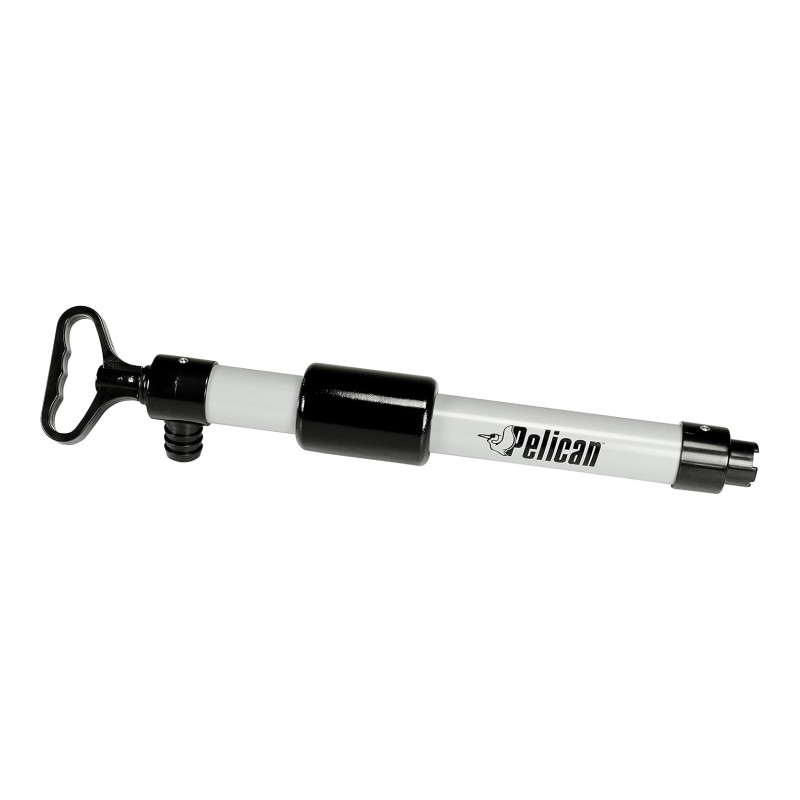
A bilge hand pump is a piston in a tube. You drop the intake end into the water in the bottom of the boat, pull the handle up and push it down, and each stroke lifts water up the barrel and out of the outlet. There is nothing to fail electrically, nothing to charge, and nothing that stops working because the day got cold. That is the entire argument for a manual pump over anything powered, and it is why they remain standard equipment on boats that carry far more sophisticated gear.
This one measures 21 by 4 by 2.75 inches (53 by 10 by 7 cm) and weighs about 0.76 pounds (345 g), which is small enough to sit under a deck bungee and light enough to forget about. The foam sleeve around the barrel does two jobs: it gives cold, wet hands something grippy to hold, and it floats the pump if it goes over the side. That second job matters more than it sounds, because you will be using this while holding onto a boat with one hand in conditions that just capsized you, and a pump that sinks the first time you fumble it has stopped being safety equipment.
One expectation to set: even a good hand pump empties a swamped sea kayak slowly. Owners who have done it describe settling in for a while. That is normal, it is the physics of moving a lot of water by arm power, and it is the reason to practise the whole sequence rather than assuming the pump is the quick part.
What verified buyers say
Across verified-purchase reviews, the same points come up:
- It moves a lot of water quickly. This is the most common single comment, and owners using it in kayaks are satisfied with the volume per stroke.
- Emptying a kayak still takes a while. One owner bailing a 10-foot (3 m) kayak puts it plainly: you are going to be there a while, but it beats the alternative. That is the honest expectation to carry into a real capsize.
- People add a hose. Several owners attach a short length of tubing to the outlet so the water goes where they want instead of back into the boat, and so they do not have to hover over one spot. It is a sensible modification.
- The floating sleeve earns its place. Owners value the grip and the buoyancy, and the pump gets used well beyond boats, for ponds, flooded appliances and buckets.
- Durability is the weak spot. The critical reviews cluster here: a leak at the top housing joint on first use, rusty rivets after a few days, and one pump that seized to the point of being unusable after about two months. This is a cheap tool built to a price, and it should be tested at home and checked at the start of each season.
Worth knowing
Test it before you need it, and test it again each spring, because the failure reports centre on the piston seizing and on leaks at the housing joint rather than on anything you would notice sitting in a hatch. Rinse it with fresh water after salt use and let it dry, which is the single thing most likely to extend its life given the rivet corrosion owners report. Availability is patchy: at the time of writing the American listing is out of stock and the Canadian one ships in about a week, so buy it before the season rather than the weekend you need it. Clip or bungee it within reach from the water: a pump in a sealed compartment is useless after the capsize that sealed the compartment. Consider adding a short hose to the outlet so you are not pumping water back into the boat. And treat this as a consumable rather than a lifetime purchase, which at this price is a reasonable bargain but only if you actually replace it when it starts to stick.
Who it is for
Anyone paddling a kayak or canoe, and legally required for most paddlecraft in Canada, where a manual pump or a bailer is part of the minimum equipment. It matters most to sea and touring kayakers with cockpits that hold a lot of water, and it is the item that makes a solo self-rescue actually finish: a paddle float gets you back into the boat, and this gets the boat back into a state you can paddle. Open-canoe paddlers can use a pump too, though a large bailer tied to a thwart is often faster for the volumes involved. For a sit-on-top kayak with scupper holes, you may not need one at all.
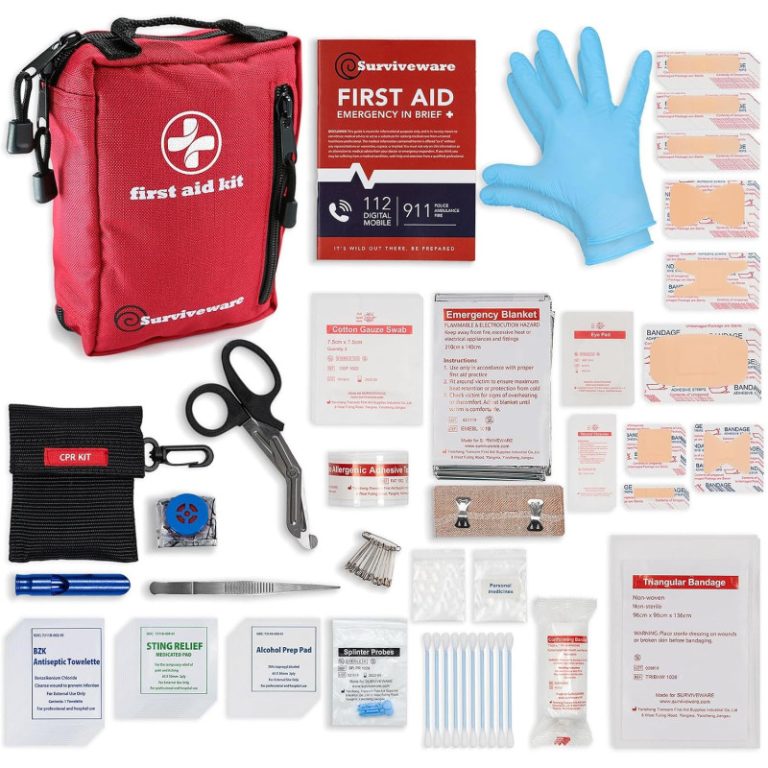
It belongs with the other things secured in the boat rather than on your body: a throw bag for someone else’s emergency, a dry layer in a roll-top dry bag for your own, and a waterproof first aid kit. The things that keep you alive in the first minutes stay on you, starting with the life jacket.
Specs at a glance
Type: manual piston bilge pump · Size: 21 x 4 x 2.75 in (53 x 10 x 7 cm) · Weight: about 0.76 lb (345 g) · Foam sleeve for grip and flotation · No power, batteries or moving electronics · Meets the Canadian manual-pump requirement for most paddlecraft · Best for: sea and touring kayaks · Treat as a consumable, test each season
This link goes to Amazon Canada, sold and shipped by Amazon.ca, because at the time of writing the American listing for this pump is out of stock. Readers in the United States may need to wait for that listing to return or buy an equivalent floating hand pump locally. Wilderness Experts is reader-supported. As an Amazon Associate we earn from qualifying purchases; when you buy through links on our site we may earn a commission at no extra cost to you. It never changes what we recommend.
The Verdict
A bilge pump is the least interesting thing in the boat and one of the few that is legally required, which tells you something about how the rules were written: by people who had watched paddlers try to empty a swamped kayak with a cupped hand. This one moves water fast, floats when you drop it, and costs little enough that there is no argument for going without. Its weakness is longevity, with owners reporting seized pistons and corroded rivets, so rinse it, dry it, test it every spring, and replace it without sentiment when it starts to stick. Then practise the full sequence, float and re-entry and pump-out together, because each part is slower in cold water than it looks on a calm afternoon, and the pump is the part everyone underestimates.