
Tactical fleeces vs. technical backcountry fleeces: what actually belongs in your pack?
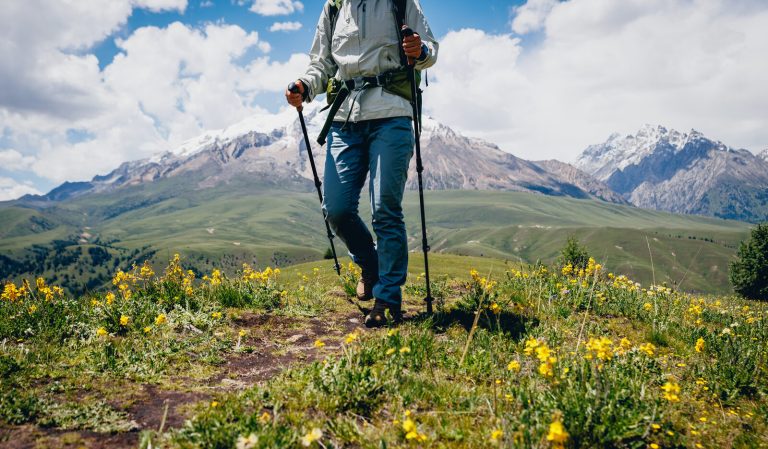
Tactical fleece hoodies are widely advertised: a thick fleece with a wind-blocking outer face, a hood, and a long list of pockets. They are warm, tough and comfortable, and many people who own one wonder whether it will do for hiking as well. The answer depends on the trip. A tactical fleece and a technical backcountry fleece are designed for different work, and the differences become obvious on a long climb with a pack on.
This guide compares the two designs point by point: weight and bulk, breathability, pockets under a pack, how each fits into a layering system, and what happens in rain. It then covers where a tactical fleece is a good choice, and how to check any fleece before you buy it. The layering system as a whole is covered in what to wear in the bush.
Two designs for two purposes
Both garments are made of polyester fleece, and the similarity largely ends there.
- A tactical fleece is designed to be worn as the outer layer and to carry things. The fleece is usually bonded to a smooth, tightly woven outer face that blocks wind and resists abrasion, a construction also called softshell. It has many pockets (chest, sleeve, hand and often lower back), heavy zippers, adjustable cuffs and a structured hood.
- A technical backcountry fleece is designed to be the middle of three layers. It has one task, which is to trap warm air while letting sweat vapour escape, and it leaves wind and rain to the shell worn over it. It is plain by comparison: two flat hand pockets or none, a light zipper, simple cuffs.
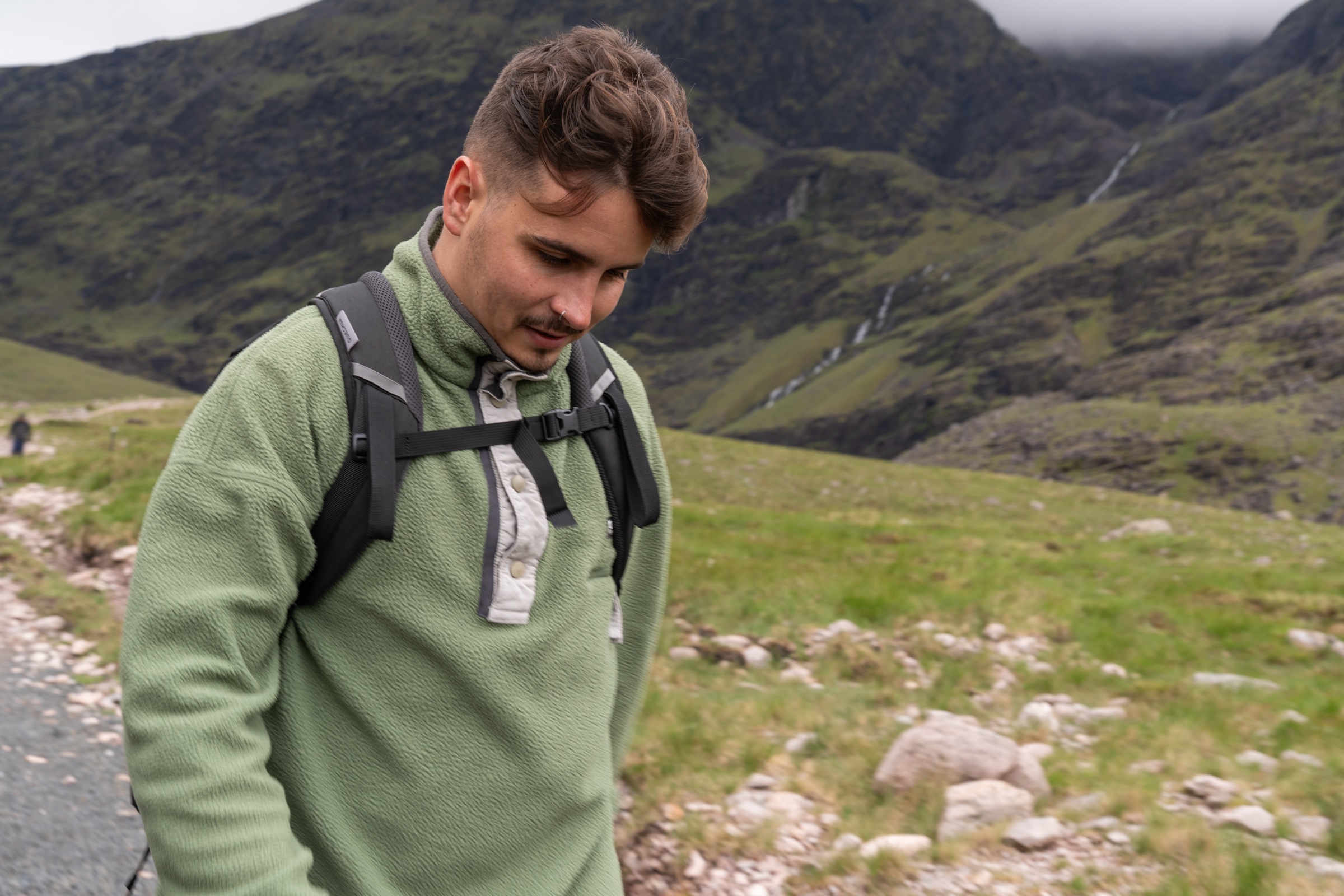
Technical fleece comes in a few forms. Microfleece is thin and light, for mild days or wearing under other insulation. Grid fleece has a waffle pattern of small raised squares on the inside, with thin channels between them that let heat and moisture out; it is the usual choice for hiking hard in cool weather. A classic midweight fleece is thicker and warmer, and is the familiar full-zip jacket.
Weight and bulk
A midlayer spends much of a hiking day in the pack. It comes off at the bottom of a climb and goes back on at the top, so its packed size counts as much as its warmth.
A technical fleece carries almost nothing except insulation. A grid fleece hoody commonly weighs 13 to 15 ounces (370 to 425 g), and a classic midweight jacket about a pound to a pound and a quarter (450 to 570 g). Both compress into a corner of a daypack. A tactical fleece adds a second layer of fabric, pocket bags, zippers, cuff tabs and a stiffened hood, none of which add warmth. Most weigh between a pound and a quarter and two and a quarter pounds (about 560 g to 1 kg), and the bonded fabric does not compress well. The heaviest are more than twice the weight of a grid fleece.
On a short walk the difference is of little consequence. In a pack carried for several days, the extra weight and space would be better spent on a warmer layer, more food, or water.
Breathability on a climb
This is the largest difference between the two, and the one that affects safety.
Walking uphill with a pack produces a great deal of heat and sweat. Plain fleece is very open: air moves through it easily, so sweat vapour leaves and the fabric stays fairly dry. That is also why a plain fleece feels cold in wind, and why it is worn under a shell when the wind picks up.
A wind-blocking face does the opposite. It keeps moving air out, which is exactly what you need when standing still, and it keeps warm, damp air in when you are working hard. On a sustained climb the inside of the garment becomes wet with sweat. When you stop, or reach a windy ridge, that moisture cools quickly, and a damp layer in cold weather is how a tired hiker becomes chilled, the first step toward hypothermia. Opening the front zipper helps, but it does not vent the back and shoulders under a pack.
Pockets under a pack
Pockets are the feature a tactical fleece is sold on, and a pack makes most of them unusable.
- Hand and lower-back pockets sit under the hip belt, the padded strap that carries most of a pack’s weight on your hips. You cannot reach them with the belt fastened, and anything inside is pressed into your hip or spine for the entire day.
- Chest pockets sit under the shoulder straps and the sternum strap (the small strap that joins the shoulder straps across your chest). A phone or a knife there becomes a hard spot under a loaded strap.
- Zippers, cuff tabs and hook-and-loop patches add seams and stiff edges that can rub under straps.
A pack already provides the storage. Hip-belt pockets, a lid or front pocket, and side pockets keep small items within reach without placing them between you and the harness. This applies to a day pack such as the Osprey Talon 22 as much as to a multi-day pack such as the Osprey Atmos AG 65 or Eja 58 (women’s).
Fitting under a shell
The three-layer system works because each layer does one task and any of them can be added or removed. A tactical fleece combines two of the tasks, insulation and wind protection, in one garment, so you cannot have one without the other. On a calm, cold climb you cannot remove the wind layer and keep the fleece, and on a warm, windy ridge you cannot keep the wind layer and remove the fleece.
It is also difficult to wear under a rain jacket. The smooth, stiff face and the bulk of the pockets take up the room a shell allows for a midlayer, the sleeves bind at the elbows, and a structured hood bunches under the shell’s hood. A plain fleece is soft and slides easily under a shell.
Rain
Tactical fleeces are often described as water-resistant. The outer face has a water-repellent finish, and light rain or wet snow will bead and run off for a time. The fabric is not waterproof and the seams are not sealed; in steady rain water comes through, and a thick bonded fabric is slow to dry once it is soaked.
A technical fleece makes no claim to keep rain out. It absorbs very little water, stays fairly warm when damp, and dries quickly. Either way, a rain shell is still required in the pack. Our rain jacket reviews include the Marmot PreCip Eco (men’s / women’s) and the Patagonia Torrentshell 3L (men’s / women’s).
Where a tactical fleece is a good choice
None of this makes a tactical fleece a poor garment. It is a good one for activities where you are not working hard under a pack:
- Short walks in cool, windy weather with a small pack or none, where you never build up much sweat.
- Around camp, at a fire, or on a vehicle-based trip where weight is not a concern.
- Sitting or standing still outdoors: fishing from a boat or a bank, hunting from a stand, watching wildlife, working outside.
- Brush and rough use. The woven face resists snags and abrasion far better than plain fleece does.
- Everyday wear and travel, where the pockets are useful because there is no pack.
If you already own one and hike a few easy miles at a time, wear it. Carry a rain shell, and expect to open the zipper on the hills.
How to check a fleece before you buy
For hiking with a pack, look for the following:
- Hold the fabric to your mouth and blow through it. Air should pass easily. If it does not, the garment is a wind layer, and it will hold sweat on a climb.
- Count the pockets. Two flat hand pockets, set high enough to clear a hip belt, and perhaps one chest pocket, are sufficient.
- Put your pack on over it. Fasten the hip belt and sternum strap and check for zippers, tabs or seams under the straps.
- Put your rain jacket on over it. Raise your arms and bend your elbows. Nothing should bind.
- Squeeze it. It should compress to about the size of a loaf of bread or smaller.
A plain full-zip fleece meets all five and costs little. The Columbia Steens Mountain (men’s) and Benton Springs (women’s) are the two we recommend as a first midlayer. When you need more warmth for less bulk, the next step is a synthetic puffy such as the Columbia Powder Lite (men’s / women’s).
Common mistakes
- Choosing a fleece by its pocket count. Under a pack the pockets cannot be reached and their contents press into you. Choose by breathability, weight and fit under a shell, and use the pack’s pockets for small items.
- Climbing in a wind-blocking fleece. It fills with sweat, and you are chilled when you stop. Climb in your base layer or a plain fleece, and put the wind layer on at the top.
- Treating “water-resistant” as rain protection. The fabric soaks through in steady rain and dries slowly. Carry a waterproof shell on every trip, whatever the forecast.
- Loading the pockets and then putting on a pack. Hard objects under the hip belt and shoulder straps cause sore spots within a few miles. Empty the pockets into the pack before you fasten the belt.
- Wearing a plain fleece as the outer layer on a windy ridge. Wind passes through it and takes the warmth with it. Put your shell on over the fleece before you reach the exposed ground.
Key takeaways
A tactical fleece is an outer layer built to block wind and carry gear; a technical backcountry fleece is a middle layer built to trap warmth and let sweat escape. For hiking with a pack, the technical fleece is the better choice: it is lighter, it packs smaller, it stays drier on a climb, it fits under a shell, and it has nothing under the straps. A wind-blocking fleece holds sweat when you work hard, most of its pockets are covered by a pack’s hip belt and shoulder straps, and water-resistant fabric is not a substitute for a rain jacket. A tactical fleece remains a good choice for short walks, camp, sitting still in the cold, rough use and everyday wear. Before buying any fleece for hiking, blow through the fabric, count the pockets, and try it on under both your pack and your rain jacket.
Fabric behaviour described here follows the general properties of polyester fleece and bonded softshell fabrics. Typical garment weights are drawn from manufacturer specifications and independently measured weights across both categories, and vary by size and model.
Wilderness Experts is reader-supported. As an Amazon Associate we earn from qualifying purchases; when you buy through links on our site we may earn a commission at no extra cost to you. It never changes what we recommend.