
Hypothermia: how to recognize it and warm someone up in the field
Hypothermia does not need a blizzard. Most backcountry cases happen between 30 and 50°F (−1 to 10°C), a wet, windy, ordinary day when someone is tired, underfed, and dressed a little too light. The cold creeps in quietly: first shivering and clumsy hands, then slurred words and stumbling, then confusion so deep the person stops helping themselves. Caught early it is easy to reverse. Left to climb, it stops the heart. This guide covers how to spot hypothermia at every stage and how to rewarm someone safely in the field, before it becomes an emergency you can’t fix.
The underlying principle is a simple ledger: your body makes heat and it loses heat, and hypothermia is what happens when losses outrun production long enough for your core temperature to fall. You lose heat four ways, radiation off bare skin, conduction into cold ground or wet clothing, convection stripped away by wind, and evaporation as sweat and damp dry off you. Wind and water are the fast killers because they attack conduction and convection at once. Understand that ledger and every treatment below makes sense: you are always doing two things. Stopping the losses and adding heat back, in that order.
What hypothermia actually is
Your body works hard to hold its core, the heart, lungs, and brain, at about 98.6°F (37°C). Hypothermia is any meaningful drop below that: roughly below 95°F (35°C) the machinery starts to fail. As the core cools, blood pulls back from the arms, legs, and skin to protect the vital organs, which is why cold hands and feet come first. When those extremities freeze in earnest, that is a localized cold injury, covered in our guide to frostbite, frostnip, and trench foot. Shivering fires up to generate heat, burning fuel fast. If the cold keeps winning, shivering eventually stops, the muscles stiffen, thinking slows, and the heart’s rhythm becomes fragile. None of this requires sub-zero air. It requires only that you lose heat faster than you make it for long enough, and being wet, wind-blown, exhausted, or out of food all tip that ledger the wrong way.
Core temperature is the real measure, but you won't have it
Hypothermia is defined by core temperature, but an ordinary thermometer can’t read low enough and skin feels misleading. In the field you stage it by what the person is doing , shivering, coordination, speech, and alertness, not by a number. The behavioral signs below are what you actually act on.
When it strikes, and who’s at risk
The classic trap is the “cool, wet, and windy” day, not the deep freeze. People dress for the blizzard and get caught by 40°F (4°C) rain. Watch the ledger tip when any of these stack up: soaked clothing (rain, sweat, a river crossing, snow), wind with no shell, a long day with too little food, dehydration, injury or exhaustion, and nightfall dropping the temperature while you’re still out. Alcohol makes it worse by opening the skin’s blood vessels and dumping core heat. Thin, lean, very young, and older people cool faster, and an injured person lying still on cold ground loses heat frighteningly quickly through conduction. If you’re on or near cold water, immersion is a category of its own and moves far faster. See our guide to surviving cold-water immersion and falling through ice.
Recognizing the stages: mild, moderate, severe
Hypothermia is a slide, not a switch, and the single most useful skill is reading which stage someone is in, because the treatment changes sharply between mild and moderate. Wilderness medicine sorts it into three practical stages by signs you can see without a thermometer. The dividing line that matters most: is the person still shivering and thinking clearly, or not?
Mild hypothermia, still shivering, still with you
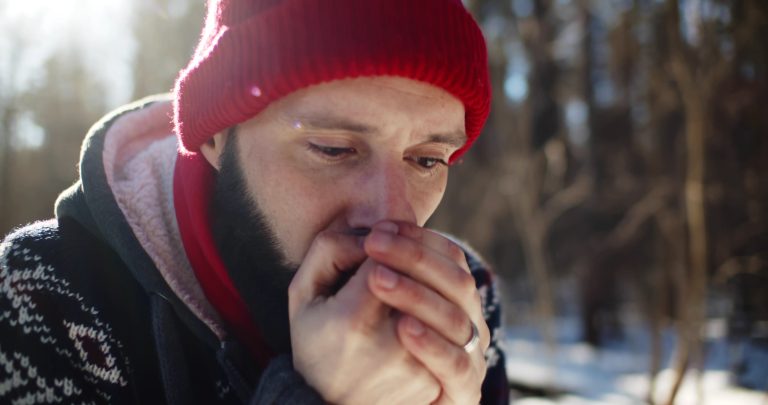
The person is cold and shivering, sometimes hard, but alert and able to talk and follow directions. Look for the “-umbles”: fumbles (clumsy hands, dropping things, trouble with zippers), stumbles (poor footing and balance), mumbles (slurred or slow speech), and grumbles (withdrawal, irritability, apathy). Fine motor skills go first. This is the stage to catch it, mild hypothermia reverses reliably in the field.
Moderate hypothermia. The danger turn
As the core keeps falling, shivering becomes violent and then, ominously, stops . The body has run low on the fuel to shiver. Now you see real confusion, sluggishness, slurred speech, stumbling and falling, and sometimes “paradoxical undressing,” where a disoriented person feels hot and pulls off clothing. Coordination and judgment are failing; the person can no longer effectively rewarm themselves. This is the turn from a problem into an emergency, and it changes how you handle them.
Severe hypothermia, a delicate emergency
The person becomes semi-conscious or unresponsive. Shivering has ceased, muscles are rigid, breathing and pulse are slow, weak, and hard to find, and the skin is cold and may look pale or bluish. They may appear lifeless. Severe hypothermia is survivable, but the cold heart is electrically unstable, so a rough jolt can be fatal. Everything from here is done gently, and evacuation is urgent.
A stopped shiver is a red flag, not a good sign
People assume that when shivering stops, the person is warming up. The opposite is usually true: shivering stops because the body has exhausted the fuel to do it, meaning the cold is winning. Treat the end of shivering. Paired with confusion, as the crossover into moderate/severe hypothermia and a signal to handle the person gently and call for help.
First moves: stop the heat loss
Whatever the stage, the first job is the same. Plug the leaks in the ledger before you add any heat. If the person is injured as well as cold, run the backcountry first aid sequence alongside this, because serious bleeding and a blocked airway outrank cold, and a cold trauma casualty stops clotting properly. In order:
- Get out of the elements. Move into shelter, a tent, a snow trench, or at least behind a windbreak. Every gust you block is heat kept in. Our guide to building an emergency shelter covers doing this with no tent.
- Get off the ground. A cold person lying on cold earth or snow bleeds heat straight down by conduction. Slide an insulating pad, pack, spare clothing, or piled boughs underneath. This is one of the highest-value moves and one of the most overlooked.
- Get the wet layers off. Wet clothing pulls heat out many times faster than dry. Remove soaked layers and replace with dry insulation; if you have nothing dry, wring the layers out and add a windproof shell over them.
- Add insulation and a vapor barrier. Pile on dry clothing, a sleeping bag, blankets, and block wind and rain with a shell, tarp, or emergency blanket.
- Fuel the furnace. If the person is fully alert and can swallow safely, give warm, sweet drinks and simple carbohydrates. Sugar is the fuel shivering burns to make heat.
Treating mild hypothermia
Mild hypothermia. Shivering, alert, coordinated enough to help. Is the good news case. The body can rewarm itself if you stop the losses and give it fuel. After the first moves above:
- Insulate and let shivering work. Shivering is a powerful heat engine; a well-fed, well-insulated shivering person warms themselves. Wrap them up, get them off the ground, and give it time.
- Feed sugar and warm fluids. Warm, sweet drinks. Cocoa, sweetened tea, warm water with sugar or honey. Deliver both heat and the carbohydrate the body burns. Skip alcohol and caffeine.
- Add gentle heat to the core. Warm (not scalding) water bottles or heat packs wrapped in a layer, placed against the chest, armpits, neck, and groin, where big vessels run close to the surface, speed things along. Never put heat sources directly on bare skin.
- Get them moving once warmer. Light activity. Even arm swings, or walking once coordination returns. Generates internal heat. Don’t push a still-shaky person into hard exertion, but gentle movement helps.
- A fire helps for warmth, morale, drying clothes, and heating water. Build one if conditions allow.
Most mild cases turn around within an hour of getting dry, insulated, fed, and out of the wind. If the person is not improving, or shivering is fading while confusion grows. Treat it as moderate and shift approach.
Treating moderate to severe hypothermia
Once a person stops shivering, gets confused, or slips toward unconsciousness, the rules change. They can no longer rewarm themselves, their heart is vulnerable, and your goal shifts from “warm them up fast” to “stop further heat loss, add heat gently to the core, handle them like glass, and evacuate.”
- Handle them extremely gently. A very cold heart can be thrown into a fatal rhythm (ventricular fibrillation) by rough movement, jostling, or being stood upright. Move them slowly and horizontally, and keep them lying flat.
- Insulate completely. Build a hypothermia wrap. This is the core field treatment (next section): a full cocoon of insulation, a vapor barrier, and heat at the trunk.
- Add heat to the core, never the limbs. Heat packs or warm water bottles (wrapped, never on bare skin) go on the chest, armpits, neck, and groin. Warming the arms and legs first is dangerous. It drives cold, acidic blood back to the heart (see afterdrop below).
- Do not give food or drink to anyone not fully alert. A confused or drowsy person can’t protect their airway and may choke. Warm sweet fluids are for alert, mild cases only.
- Protect the airway and monitor breathing. Keep a semiconscious person in a position that keeps the airway clear, and watch that they keep breathing.
- Evacuate. Get help moving now. Severe hypothermia needs a hospital. Activate a satellite messenger or beacon early; warming in the field is to keep them alive until rescue, not a substitute for it.
Danger
A severely hypothermic person can look dead. No obvious breathing, no pulse you can find, cold and stiff, and still recover fully. The cold that endangers the heart also protects the brain. Unless there are injuries clearly incompatible with life, do not assume a very cold person is gone: keep them insulated, handle them gently, start CPR if they have no pulse and you’re trained, and get them to definitive care. Rewarming and resuscitation decisions belong to the hospital.
How to build a hypothermia wrap
The hypothermia wrap, sometimes called a “hypo wrap” or human burrito, is the single most effective thing you can build in the field for a moderate-to-severe casualty. It traps the person’s own warmth, blocks wind and moisture, and holds heat sources against the core. Build it in layers, from the ground up:
- A ground barrier. Lay down a tarp, sleeping pads, or piled insulation so no part of the person touches cold ground.
- Dry insulation around them. A sleeping bag, blankets, or spare clothing, tucked all the way around. This is what actually holds heat.
- Heat at the core. Wrapped warm water bottles or heat packs placed on the chest, armpits, neck, and groin, inside the insulation.
- A vapor and wind barrier. Wrap the whole bundle in a tarp, bivy, or emergency blanket to block wind and stop the insulation from getting wet.
- Cover the head, leave the face out. A huge share of heat escapes from an uncovered head, so insulate it, but keep the face clear so you can watch breathing and airway.
Body-to-body warming, when you have no other heat source. If there is no fire, no heat packs, and no way to warm water, another person is your heater. Have a warm rescuer strip to a thin layer or bare skin and lie chest-to-chest, or back-to-front, against the casualty’s bare trunk, with both sealed inside the same sleeping bag or wrap and dry insulation all around and underneath them. Skin-to-skin over the chest and belly puts the warmth on the core, where it counts. Be realistic about it: a body gives up heat slowly, so this does more to slow further cooling than to rewarm fast, but when it is all you have, it works, and it buys time until better heat or evacuation arrives. Don’t let it delay packaging the casualty or calling for help, and don’t chill a second person into trouble. Swap in a fresh warm body if you have one. For a severe casualty, move them gently as you get into position.
Build the wrap once and disturb it as little as possible. Every time you open it up, the heat you’ve banked escapes. Two people sharing warmth under good insulation hold far more of it than one.
Afterdrop and rewarming mistakes
Afterdrop is the trap that catches well-meaning rescuers. When you warm a cold person’s arms and legs, the vessels there open and cold, oxygen-poor, acidic blood that was pooled in the limbs flushes back to the core, and the core temperature can actually drop further, sometimes triggering a dangerous heart rhythm, right after the person seemed to be improving. This is the reasoning behind almost every rewarming rule: warm the trunk, not the limbs, and handle the person gently so you don’t pump cold blood inward. The classic mistakes:
- Don’t rub or massage the arms and legs. It feels helpful and it’s dangerous. It drives cold blood to the core and can damage cold tissue.
- Don’t plunge them into a hot bath or park them against a roaring fire. Fast, limb-first external heat is exactly what triggers afterdrop. Warm gently and from the core.
- Don’t give alcohol. It opens skin vessels and sheds core heat, the opposite of what you want, and clouds judgment.
- Don’t give food or drink to anyone who isn’t fully alert. Choking risk.
- Don’t make them exercise to warm up if they’re moderate or severe. Exertion pushes cold blood from the limbs to the core and burns reserves a failing body doesn’t have.
- Don’t stop insulating once they look better. Rewarming is slow, and rescue is a fragile moment. This is also the key hazard after a cold-water rescue.
Preventing hypothermia
Hypothermia is far easier to avoid than to treat. The whole game is keeping the ledger positive: stay dry, block the wind, keep eating, and add layers before you’re cold rather than after. Winter travel puts every one of those under pressure at once, and managing them on the move is covered in winter hiking.
- Dress in layers and never in cotton. A wicking base, insulating mid-layer, and windproof/waterproof shell let you adjust; cotton holds water and “cotton kills.” Our guide to what to wear in the bush covers the layering system in depth.
- Stay dry, from rain and from sweat. Shed layers before you sweat through them on the climb, and add the shell before the rain reaches your skin.
- Keep eating and drinking. Your furnace runs on food and water; a fed, hydrated body makes heat. Cold also blunts thirst, so drink on purpose.
- Cover the high-loss areas. A warm hat, hood, and gloves save a surprising amount of heat; block the wind at your neck and wrists. Armpits and the groin are also key heat loss areas.
- Plan for the cold night. Camp warm with a real sleep system and ground insulation. See how to stay warm through a cold night.
- Watch your companions. People rarely notice their own early hypothermia, the apathy and muddled thinking hide it. Use the buddy system and act on the first “-umbles” you see in someone else.
Common mistakes
- Not recognizing it as hypothermia. Clumsiness, grumpiness, and slow decisions get written off as tiredness. In the cold, treat them as hypothermia until proven otherwise.
- Assuming it needs to be freezing. Most cases happen in wet, windy conditions well above freezing. Respect the 40°F (4°C) rain as much as the snow.
- Rubbing the limbs or rewarming them first. The instinct to warm cold hands and feet directly can cause afterdrop. Warm the core.
- Giving food, drink, or alcohol to a confused person. Choking risk when not alert; alcohol sheds core heat regardless.
- Manhandling a severe casualty. Rough movement can stop a cold heart. Slow, flat, and gentle.
- Leaving the person on the ground. Conduction into cold earth or snow is a massive, silent heat leak, insulate underneath first.
- Giving up too early. “Not dead until warm and dead”. Cold, still, apparently lifeless people have walked out of hospitals.
At elevation, cold and thin air compound each other, and the confusion of moderate hypothermia is easy to mistake for the confusion of altitude sickness. On a high trip, consider both, and remember that the altitude answer is always to lose elevation.
What to carry
- A windproof, waterproof shell and dry insulating layers . Kept dry in a pack liner or dry bag, they’re your first defense and your rewarming material.
- An emergency bivy or blanket . A few ounces that becomes the vapor barrier of a hypothermia wrap.
- An insulating pad . The fastest way to get a cold person off the heat-stealing ground.
- A reliable fire kit , a ferro rod lights when soaked; pair it with dry tinder and read how to start a fire in any conditions.
- High-energy food and a warm drink mix . Sugar and carbohydrate are the fuel the body burns to make heat.
- A first aid kit and chemical heat packs for the core.
- A satellite messenger or beacon , to summon evacuation for a moderate or severe casualty.
Read our guide to staying warm through a cold night
Key takeaways
Hypothermia is a ledger of heat lost against heat made, and it kills most often on wet, windy, unremarkable days, not just in deep cold. Read the stages by behavior: mild is shivering and clumsy but alert, and it reverses with shelter, dry layers, ground insulation, sugar, and time. The turn comes when shivering stops and confusion sets in, from there, handle the person gently, build a hypothermia wrap, add heat only to the core, never the limbs, withhold food and drink from anyone not fully alert, and evacuate. Beware afterdrop: don’t rub, don’t use hot immersion, don’t relax the moment they look better. And never write off a cold, still casualty, not dead until warm and dead. Best of all, keep the ledger positive from the start: stay dry, block the wind, keep eating, and layer up before the cold gets a foothold.
Adapted in part from the U.S. Army Survival Field Manual (FM 3-05.70 / FM 21-76), Chapter 15, “Cold Weather Survival,” with the Wilderness Medical Society Clinical Practice Guidelines for accidental hypothermia (2019 Update) and the Revised Swiss staging system. This is general education, not a substitute for medical training or professional care.
Wilderness Experts is reader-supported. As an Amazon Associate we earn from qualifying purchases; when you buy through links on our site we may earn a commission at no extra cost to you. It never changes what we recommend.