
What to wear in the bush: layering and fabrics for every condition
Ask an experienced hiker what keeps them comfortable in the bush and they won’t name a single magic jacket, they’ll describe a system. What you wear outdoors is less about any one garment than about layers you add and shed as the day changes, built from fabrics that keep working when they’re wet and never the one fabric that quits. Get the system right and you stay warm, dry, and cool on cue; get it wrong and the weather makes the decisions for you. This guide covers how to choose and combine clothing for every condition you’ll meet in the backcountry. The layering system, the fabrics that matter, and exactly what to wear when it’s cold, wet, hot, windy, or buggy.
The core idea is simple: you dress in layers, each with one job, so you can fine-tune your warmth minute to minute instead of being stuck in one thick coat. A base layer moves sweat off your skin, a midlayer traps warmth, and a shell blocks wind and rain. Add the discipline of choosing fabrics that insulate even when damp . Wool and synthetics, never cotton, and you have a kit that adapts to almost anything. This is the on-the-body companion to staying warm through a cold night and hiking in the heat, and it underpins the clothing in the Ten Essentials.
The three-layer system
Nearly all outdoor clothing wisdom collapses into one framework: the three-layer system. Instead of one heavy garment, you carry three lighter ones, each doing a distinct job, and you combine them to match the moment. From the skin out:
- Base layer . Sits against your skin and moves sweat away so you stay dry and don’t chill.
- Midlayer . Traps the warm air your body generates; this is your insulation.
- Shell , the outer layer that blocks wind and sheds rain, protecting the warmth underneath.
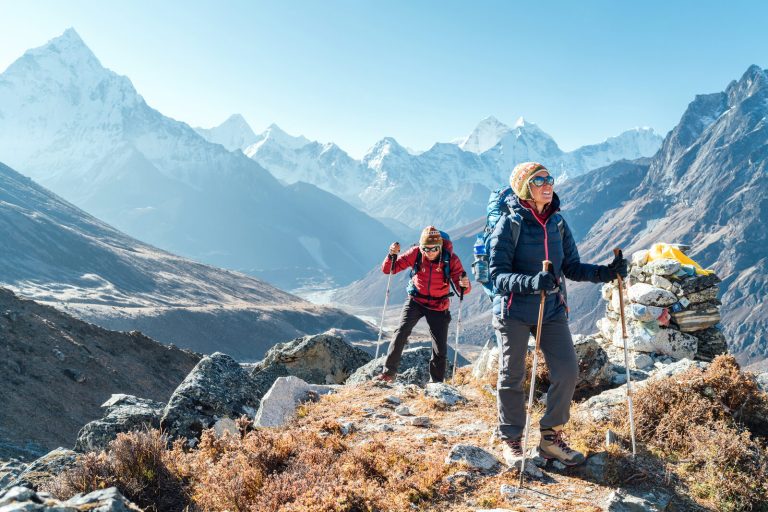
The power of the system is that you adjust it constantly. Starting a cold climb, you strip to the base layer so you don’t sweat through everything; at a windy summit you add the midlayer and shell; sitting down to rest, you throw on a puffy before you cool off. The mantra experienced hikers repeat is “be bold, start cold” , begin a little chilly, because you’ll warm up fast once you move, and sweat is the enemy in the cold. The single most common beginner mistake is to overdress, soak the base layer with sweat, and then freeze the moment they stop.
Adjust before you have to
Shed a layer before you’re sweating and add one before you’re shivering. Managing your layers a few minutes early keeps your base layer dry, and a dry base layer is what keeps you warm all day.
Fabrics: what to wear, what to never wear
What your clothing is made of matters as much as how you layer it, because in the backcountry your insulation will get wet, from sweat, rain, or snow, and the only thing that matters is whether it keeps working when it does.
Never rely on cotton. Cotton, jeans, a T-shirt, a hoodie, most everyday clothes. Soaks up water, holds it against your skin, stops insulating entirely, and pulls heat out of you as it dries. In cold, wet conditions that’s not just uncomfortable, it’s dangerous; the saying “cotton kills” exists because wet cotton is a leading path to hypothermia. Save cotton for hot, dry desert days where its slow-drying, cooling effect actually helps, and nowhere else.
Instead, build your kit from three materials:
- Merino wool , the finest all-rounder for skin-contact layers. It regulates temperature across a wide range, keeps insulating when damp, and resists odor so you can wear it for days. Ideal for base layers and socks.
- Synthetics (polyester, nylon, fleece, PrimaLoft-type fills). Dry fast, wick well, cost less, and keep insulating when wet. The workhorse of midlayers and active base layers.
- Down , the best warmth for its weight and packed size, unmatched for cold-but-dry conditions. Its one weakness: it collapses and stops insulating when soaked, so it needs to be kept dry.
The one rule that saves lives
If you remember nothing else: keep cotton out of your cold-weather and wet-weather clothing. Wet wool and wet synthetics still keep you warm; wet cotton makes you cold and can kill you.
Layer 1: the base layer
Your base layer is the thin garment against your skin, and its job is moisture management first, warmth second. It moves sweat off you so you don’t get a clammy chill when you slow down. Choose merino wool for the best regulation and odor control, or a synthetic for fast wicking and durability on high-output days; weights run from light (for aerobic effort and warm weather) to midweight 250-gram (the versatile cold-weather choice) to heavyweight (for deep cold and low activity). A snug fit is what lets it wick, so base layers are cut close.
Where to start depends on how hard and how often you go out. A budget synthetic set, the Thermajane (women’s) or Thermajohn (men’s) thermal set. Is a fine first base layer for cold, easy days and camp. Step up to merino once you’re moving more and staying out longer: the MERIWOOL Merino 250 (women’s · men’s) is the value wool layer, and the Smartwool Classic Thermal Merino 250 (women’s · men’s) is the refined do-everything piece most experienced hikers settle on.
Layer 2: the insulating midlayer
The midlayer is your warmth. It works by trapping the heat your body produces in lofted fabric or fill, and you choose it by how cold it is, how wet it might get, and how much weight and pack space you’re willing to spend:
- Fleece . Cheap, breathable, and reliably warm even when damp; bulkier and not windproof, so it lives under a shell. The forgiving first midlayer, the Columbia Benton Springs (women’s) or Steens Mountain (men’s).
- Synthetic puffy , warmer than fleece for less bulk, keeps insulating when wet, and shrugs off flurries; the versatile all-conditions choice, like the Columbia Powder Lite (women’s · men’s).
- Down puffy , the most warmth for the least weight and pack size, unbeatable when you can keep it dry, like the Mountain Hardwear Ghost Whisperer (women’s · men’s).
Many hikers carry two pieces of insulation in the cold: a lighter one worn while moving, and a warm puffy kept in the pack to throw on the instant they stop. The rule of thumb, put the puffy on before you get cold, not after . Matters because insulation only traps heat you still have; it can’t make more.
Layer 3: the shell
The shell is your armor against wind and water, and it protects everything underneath. There are two kinds. A rain shell is waterproof: a seam-taped, coated or membrane jacket that keeps rain out. A wind shell is a thin, breathable layer that blocks wind without the full waterproofing. Lighter and airier for cool, dry, blustery days. Most people carry a rain shell, because it does both jobs.
Rain shells climb a ladder of capability. A budget 2-layer jacket, the Columbia Arcadia II (women’s) or Watertight II (men’s), handles occasional rain; a 2.5-layer vented shell like the Marmot PreCip Eco (women’s · men’s) is the breathable default for regular hikers; a 3-layer Gore-Tex hardshell, the Outdoor Research Aspire 3L (women’s) or Foray 3L (men’s), stands up to hard mountain storms; and a near-weightless Frogg Toggs suit is the emergency backup that lives in the pack. The key feature to want is venting , pit zips or core vents, because even the best shell traps your own sweat, and dumping heat without taking the jacket off is how you stay dry from the inside too.
Dressing for cold
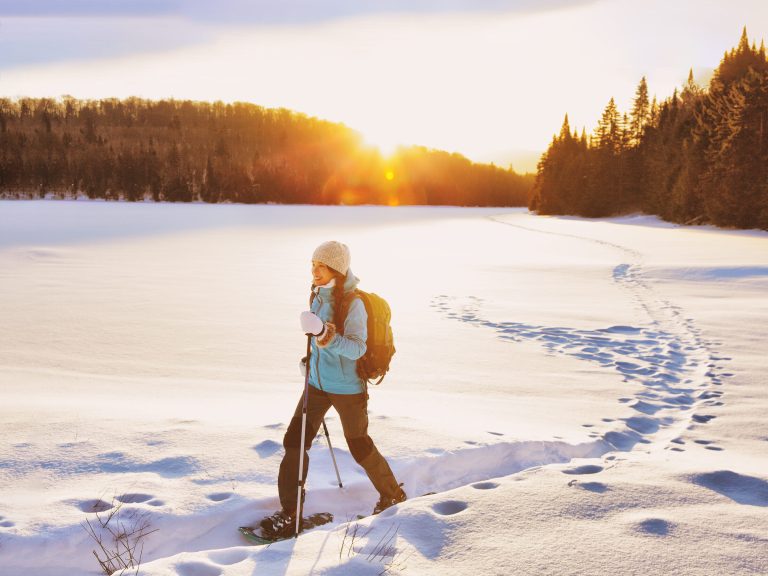
Cold is where the whole system pays off. Build from the skin out: a midweight merino base layer, an insulating midlayer (or two, a fleece to move in, a puffy for stops), and a wind- or waterproof shell. The discipline that keeps you warm is sweat management: start cold, vent early, and shed layers before you sweat, because a base layer soaked with perspiration will freeze you the moment you stop. Cover the big heat-losers, head, neck, and hands (see below), and add your puffy at every rest before the chill sets in. Applying all of this while working hard on snow, where your own sweat is the main threat, is covered in winter hiking. For the sleeping side of cold, see staying warm through a cold night.
Be bold, start cold
On a cold-weather climb, strip down until you’re slightly chilly before you start moving. Within ten minutes you’ll be glad you did, and your base layer will still be dry when you reach the top and add layers back.
Dressing for wet
Rain is a test of both your fabrics and your shell. The moment moisture is in play, cotton is out and wool or synthetic layers are in, because you must assume you’ll get at least a little wet and your insulation has to keep working when you do. Put a waterproof, seam-taped shell over the top, and choose insulation that tolerates damp, fleece or synthetic fill over down when the forecast is genuinely wet. Vent the shell as you climb so you don’t soak the inside with sweat, keep a dry base layer sealed in a bag for camp, and protect your down puffy in a dry bag. Wet, cool, and windy is the classic recipe for hypothermia, so err toward more shell and more synthetic insulation than you think you need.
Dressing for heat and sun
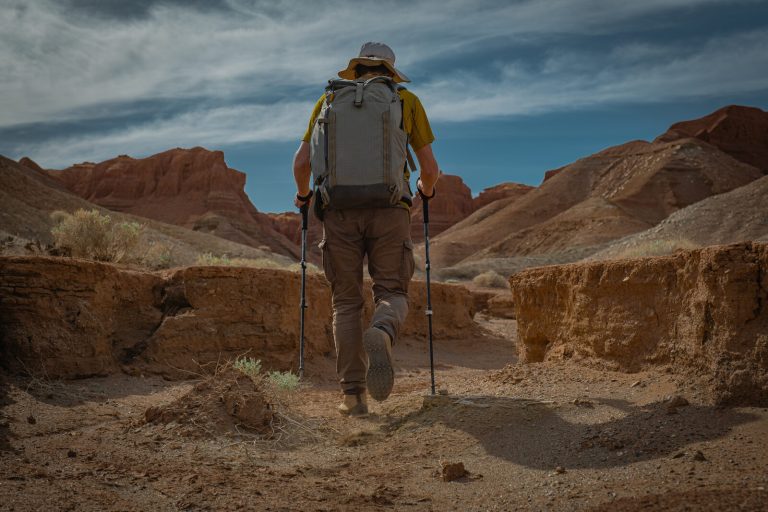
Hot weather flips the instinct: covering up keeps you cooler and safer than stripping down. Wear loose, light-colored, full-coverage clothing , long sleeves, long pants, a sun hoody, and a wide-brim hat, in a light synthetic or a sun-protective fabric. Covered skin is shaded from direct and reflected sun, and a little sweat held against the skin cools you as it evaporates; bare skin just heats and burns. This is the one place a loose, light cotton or linen shirt can help, in genuinely hot, dry desert country where its slow evaporation cools you. Round it out with sunglasses and sunscreen. The full hot-weather playbook, timing, water, and pace, is in how to hike in the heat.
Dressing for wind
Wind steals heat far faster than still air by stripping away the warm layer your body builds around itself, the wind-chill effect, and it cuts straight through fleece and other breathable insulation. The fix is a shell: even a thin wind shirt over a base and midlayer transforms how warm you feel on an exposed ridge. Carry a windproof outer layer any time you’ll be high, open, or above treeline, and put it on before you’re chilled. In cold wind, a shell over a puffy is dramatically warmer than the puffy alone.
Dressing against bugs
In blackfly and mosquito country, clothing is your first and best defense. Loose, full-coverage layers in tightly woven fabric keep biters off your skin. They can bite through thin, tight fabric, so looser is better, and light colors attract fewer insects than dark ones. A head net weighs nothing and saves your sanity in a bad hatch, and permethrin-treated clothing plus exposed-skin repellent handle the rest. Tuck pants into socks and cuff your sleeves in tick country, and see avoiding bites and stings for the details.
Head, hands, and feet
You lose real heat from your head, neck, and hands, and cold, wet feet end more trips than almost anything. Round out the clothing system with:
- Head and neck . A warm hat (wool or synthetic) for cold, a wide-brim hat for sun, and a buff or neck gaiter that does double duty as face and neck protection.
- Hands . Liner gloves for cool days, insulated waterproof gloves or mitts for real cold; carry a spare dry pair, because wet gloves stay cold.
- Feet , merino or synthetic socks, never cotton (a value merino multi-pack, the everyday Smartwool Hike Light Cushion in men’s too, or the lifetime-guaranteed Darn Tough Light Hiker in men’s), plus well-fitted, broken-in boots matched to the terrain, a budget day-hike boot (Columbia Newton Ridge: women’s · men’s), the do-it-all Merrell Moab 3 (women’s · men’s) in the middle, up to a supportive backpacking boot (Lowa Renegade women’s / Salomon Quest 4 men’s). A dry spare pair of socks is one of the highest-value comforts you can carry, and swapping to them at camp helps prevent blisters and cold feet. Rotating several pairs also spreads the wear, which is the single best way to make good socks last.
A note on fit, women’s and men’s
Layering works the same for everyone, but fit is not a cosmetic detail, it’s function. Gender-specific garments are cut for different proportions through the shoulders, torso, and hips, and that cut is what lets a base layer actually sit against the skin to wick, a midlayer to layer smoothly, and a shell to seal out weather without gapping. A base layer that’s too loose won’t move sweat; a shell cut for the wrong shoulders lets wind and rain in. When you build your system, size each layer to fit over the ones beneath it, base layers snug, midlayers with a little room, shells roomy enough for everything under them without binding. Every product in this guide is linked in both a women’s and a men’s cut. Pick the one built for your proportions.
Common mistakes
- Wearing cotton. The classic and most dangerous error, jeans and cotton tees soak up sweat and rain and stop keeping you warm.
- Overdressing at the start. Beginning a climb in all your layers soaks your base in sweat; start cold and add later.
- Waiting too long to adjust. Add a layer before you shiver and shed one before you sweat. Reacting late means you’re already wet or chilled.
- Leaving the shell in the pack. A wind shell only helps if it’s on before the ridge, not after you’re cold.
- Skimping on the extremities. No hat, cotton socks, or one pair of gloves undoes an otherwise good system.
- Trusting down in the rain. Wet down quits; carry synthetic insulation or keep the down bone-dry.
What to pack, by trip
Match the kit to the outing:
- Fair-weather day hike , synthetic or wool tee, a light insulating layer, and a packable rain/wind shell, whatever the forecast.
- Cool or shoulder-season day , a merino base layer, a fleece or puffy, a rain shell with venting, a warm hat, and gloves.
- Cold or alpine trip , midweight merino base, a fleece to move in and a puffy for stops, a wind/waterproof shell, warm hat, insulated gloves, and spare dry socks and base layer.
- Hot, exposed country , loose light-colored long sleeves and pants, a sun hoody and wide-brim hat, sunglasses, and a light shell for the wind.
Always carry one more insulating layer than you think you’ll need. It’s the cheap insurance that turns a forced stop, an injury, or a late night into an inconvenience instead of an emergency.
Key takeaways
Dressing for the bush isn’t about owning the perfect jacket, it’s about carrying a small kit of layers, built from fabrics that keep working when wet, and managing them as the day changes. Learn the three layers, base, mid, shell, keep cotton out of your cold and wet clothing, cover your head, hands, and feet, and adjust early and often. Do that and you can walk into cold, wet, hot, windy, or buggy country and stay comfortable and safe. Start with a solid base layer (women’s · men’s), add the right insulation (women’s · men’s), top it with a vented rain shell (women’s · men’s), and the weather stops making your decisions for you.
Wilderness Experts is reader-supported. As an Amazon Associate we earn from qualifying purchases; when you buy through links on our site we may earn a commission at no extra cost to you. It never changes what we recommend.