
NRS Vapor PFD review: the low-profile vest that disappears
The step up from a first life jacket is not more flotation. Every approved vest floats you; the difference is how much of your attention it takes to wear one. The NRS Vapor is built around that idea: thin foam panels, a pre-curved shape, and a cut low enough that after twenty minutes you stop registering it. That matters more than it sounds, because the vest that gets worn is the vest that works, and the reason so many life jackets are found in the boat rather than on the body is that they were tiring to wear.
Choosing your first vest? Start with our guide to canoe and kayak safety, which covers what type to buy, how to fit one properly, and why an inflatable is the wrong choice for paddling.
Quick take
The vest to move up to once you know you will keep paddling. Certified by both the U.S. Coast Guard and Transport Canada to the Level 70 standard, built from thin layered foam panels that curve to your torso instead of sitting on it, and made by the company most serious paddlers treat as the benchmark. One caveat we will not bury: it is a recent redesign, so the pool of long-term owner reports is still small, and our confidence rests on the certification and the construction rather than on years of accumulated field reports.
What it does
The Vapor is an inherently buoyant Type III vest, which under the harmonized system the U.S. Coast Guard and Transport Canada now share is a Level 70 buoyancy aid. It carries about 16.3 pounds (72 N) of flotation, a little more than the class minimum, and the certification is real on both sides of the border: NRS has it approved through Underwriters Laboratories of Canada as well as the USCG, which is the specific thing that so many otherwise excellent American paddling vests lack.
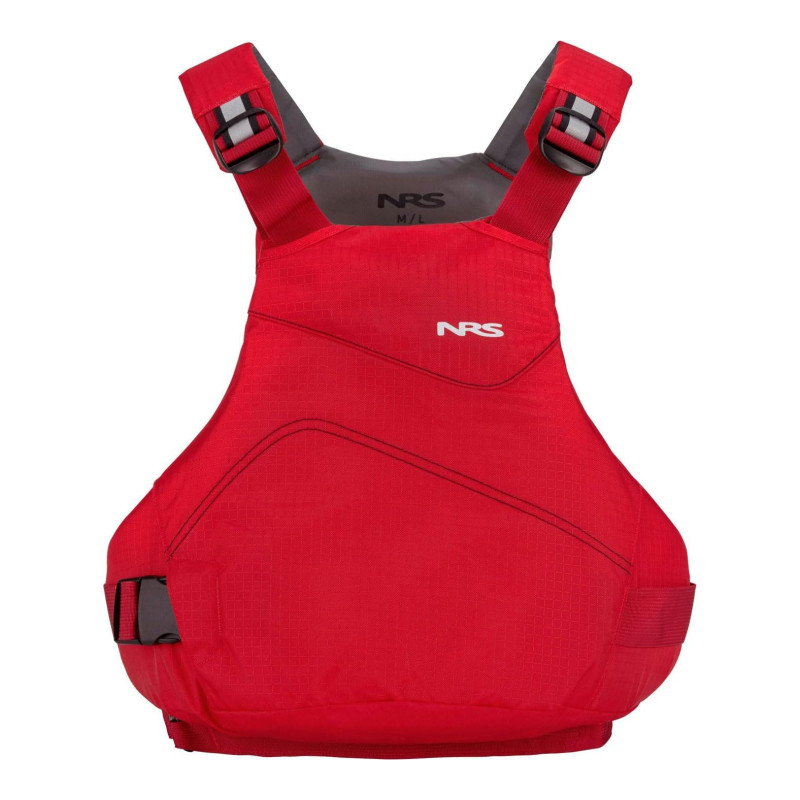
What distinguishes it is how the foam is arranged. Rather than one moulded slab, the Vapor layers multiple pieces of lightweight closed-cell foam cut to shape, building a pre-curved panel that already has your torso’s bend in it before you put it on. The effect is that the vest does not have to be forced into shape by the straps, so it can be cinched properly without feeling like a corset, and it does not gap at the bottom when you rotate through a stroke. NRS builds it as a single unisex design rather than separate men’s and women’s versions, with the adjustment range doing the work that separate cuts usually do.
The rest is deliberately plain. A front entry zip, adjustable shoulders and sides, and a low-bulk profile that clears a kayak backband. There is no fishing-vest array of pockets and rod holders, which is the point: this is the vest for people who want the flotation and the fit and nothing that snags.
What verified buyers say
We have to be straight about the evidence here. The Vapor in its current form is a recent redesign, and the verified-owner base is small: a handful of reviews on NRS’s own store and a few more on retail listings split across colours. That is not enough to characterise long-term durability, and we are not going to pretend otherwise. What the existing reports and the wider record on NRS vests support:
- The fit is the reason people buy it. Owners describe the pre-curved panels as noticeably more comfortable than a flat-foam vest, particularly across a long day in a seat, and rate it highly on comfort specifically.
- Low profile is not marketing. Owners moving from bulkier vests report a real difference in how little it interferes with a paddle stroke and how much cooler it sits.
- NRS’s reputation does real work here. Paddlers who buy this brand cite long service life on previous NRS vests and the company’s standing in whitewater and rescue as the reason they did not shop on specification alone.
- The unisex fit is a genuine variable. A single design covering all body shapes puts more weight on getting the size right, and this is the vest to try on in a shop if you have that option.
We will revisit this review once the owner base matures, and if durability reports turn out worse than the construction suggests, we will say so here.
Worth knowing
This is a buoyancy aid, not an offshore jacket: it keeps a conscious person floating and will not reliably turn an unconscious wearer face-up, which is the right trade for paddling and the wrong one for offshore work. It is also not a whitewater rescue vest, and if you need a quick-release harness you need training to go with it, not just the hardware. There are no real pockets, so plan on a lash tab and a knife rather than storage. Buy it from somewhere with a returns policy and fit it properly on arrival: do up every buckle, tighten from the bottom straps upward, and have someone pull hard on the shoulders. If it rides toward your ears on dry land, it will ride over your face in the water. And treat our rating as provisional until the long-term reports exist.
Who it is for
This is for the paddler who has decided this is a thing they do. If you are buying a first vest for occasional lake afternoons, the Onyx MoveVent Dynamic does the job for much less and is approved on both sides of the border too. The Vapor earns its money when you are out often enough that comfort compounds: full days, touring distances, repeat weekends, the trips where a bulky vest slowly persuades you to take it off. It is not for anglers who want a wearable tackle box, and it is not for whitewater without the training that goes with a rescue vest.
Wear it as part of a system rather than on its own: a whistle and signal mirror on the shoulder strap, a fixed-blade knife where a numb hand can reach it, and a satellite messenger in a chest pocket rather than in the boat. Keep a dry layer sealed in an roll-top dry bag and know what cold water does to you, because the vest buys the time and the knowledge spends it.
Specs at a glance
Type: inherently buoyant Type III / Level 70 vest · Approval: U.S. Coast Guard and Transport Canada (ULC) · Flotation: about 16.3 lb (72 N) · Construction: layered closed-cell foam, pre-curved panels · Fit: single unisex design, adjustable shoulders and sides · Entry: front zip · Pockets: none, lash tab only · Best for: touring, repeat-use recreational paddling
This link goes to NRS, the manufacturer. We have no affiliate relationship with them and earn nothing if you buy through it. We link it because this is the product we would carry, and because it is somewhere you can reliably get it in both countries. In Canada, MEC stocks NRS as well.
The Verdict
The NRS Vapor is the vest to buy when comfort has become the deciding factor, which is sooner than most new paddlers expect. Layered pre-curved foam, a genuinely low profile, and certification on both sides of the border make it the right upgrade from an entry vest, and NRS is the company whose gear turns up in rescue courses and guide fleets for reasons that have nothing to do with marketing. Our one reservation is about evidence rather than the product: the current version is new enough that nobody has owned one for five seasons yet, so we are rating the construction and the certification and telling you plainly that the long-term record is still being written. If that trade bothers you, the Onyx below it is proven and cheap. If it does not, this is the vest that stops being something you have to think about wearing.