
Emergency whistle & signal mirror review: the cheapest way to call for help
The cheapest, lightest piece of safety gear you own may also be the one that saves your life. A whistle and a signal mirror weigh almost nothing, never need a battery or a subscription, and let you call for help when your voice is gone and your phone has no signal. Everyone who goes outdoors should carry both.
Quick take
Essential, near-free insurance for every pack. A loud whistle carries far further than your voice and works long after shouting has worn it out; a signal mirror can flash a rescuer or aircraft from miles away. Neither needs power or a signal. This is not a replacement for a satellite device on serious trips. It is the baseline every hiker, from first-timer to expert, should always carry.
What it does
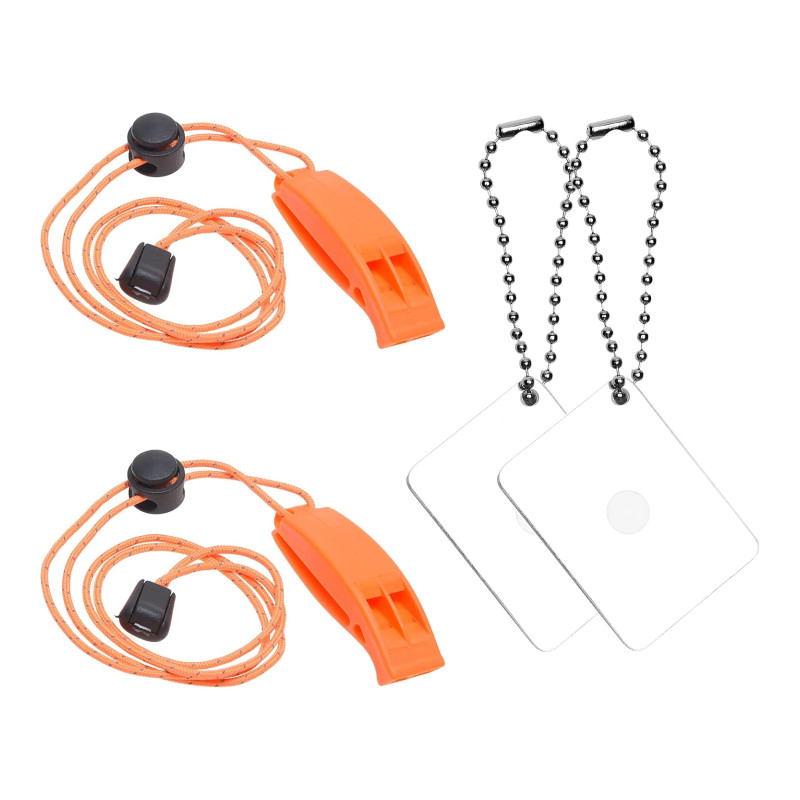
This simple kit pairs the two oldest and most reliable ways to attract attention: sound and light. The pealess ABS whistle produces a piercing tone that travels much farther than a human voice and takes far less energy to sustain, critical when you are injured, cold, or exhausted. The reflective acrylic signal mirror bounces sunlight toward a target, a searcher, a boat, an aircraft. In flashes that can be seen for miles on a clear day. Both clip to a pack or hang on the included reflective lanyards, add essentially no weight, and never fail because a battery died or there was no cell coverage. The internationally recognized distress signal is three of anything: three whistle blasts, repeated.
What verified buyers say
Verified-purchase owners consistently make the same points:
- Loud and lightweight. The whistle draws praise for a surprisingly piercing tone in a tiny, weightless package.
- Cheap peace of mind. Buyers like having a no-battery backup signal for hiking, boating, and their kids’ packs.
- Genuinely reflective mirror. Owners note the mirror throws a bright, usable flash in sunlight.
- Comes as a pair. Reviewers appreciate getting two of each to stash in multiple packs, cars, and kits.
Worth knowing
These are backups, not a substitute for real rescue communication on remote trips, a whistle only reaches people within earshot, and a mirror needs sunlight and a line of sight to work. For genuine backcountry emergencies far from help, carry a satellite messenger or personal locator beacon that can summon rescue from anywhere. The acrylic mirror is not optical-glass grade, so aiming takes practice. Learn the two-finger aiming technique before you need it. Attach the whistle where you can reach it instantly, not buried in your pack.
Who it is for
Everyone. This is the rare piece of gear a genuine expert carries on a hard trip and you would hand a first-timer on their first hike, cheap, weightless, foolproof, and universally useful. There is no reason not to have a whistle on every pack and a mirror in every kit. Treat it as the always-on baseline, and add a satellite device on top for serious, remote objectives.
Specs at a glance
Type: emergency signaling (audible + visual) · Whistle: pealess ABS, reflective lanyard · Mirror: reflective acrylic signal mirror · Power: none required · Best for: a baseline call-for-help signal in every pack
Wilderness Experts is reader-supported. As an Amazon Associate we earn from qualifying purchases; when you buy through links on our site we may earn a commission at no extra cost to you. It never changes what we recommend.
The Verdict
A whistle and a signal mirror are the cheapest, most reliable way to call for help ever made. No power, no subscription, no signal required. Everyone should carry them, every trip. For real emergencies deep in the backcountry, pair them with a device that can reach rescuers from anywhere: see our reviews of the Garmin inReach Mini 2 and SPOT X satellite messengers and the subscription-free ACR ResQLink beacon, and always tell someone your plan before you go.