
Camp saws: folding saws, bow saws, and how to cut wood safely
Ask an experienced backcountry traveler which tool processes the most firewood with the least risk and the answer is rarely an axe. It is a saw. A good folding saw weighs a few ounces, cuts faster than a hatchet on anything wrist-thick or smaller, and does it without the wild swings and flying chips that send people to the emergency room far from help. This guide explains the whole family of camp saws, how the blades and teeth work, what a saw does in the field, and how to cut wood cleanly and safely.
There is no single “best” camp saw, only the right one for how you travel and how much wood you cut. A tiny folding saw for a day hiker’s fire and a full bucksaw for a basecamp woodpile are both correct answers to different questions. Learn the handful of ideas below and you will be able to pick up any saw and know, at a glance, what it is good for, and why it belongs in your kit alongside a knife and, sometimes, a shovel.
Why a saw beats an axe for most people
An axe has its place, but for the vast majority of campers a saw is the smarter first tool, for three reasons. It is safer: the blade is enclosed or braced and moves in a controlled back-and-forth stroke, with none of the momentum of a swung axe that can glance off a knot into a shin. It is more efficient on small wood: for anything up to wrist thickness, a saw cuts faster and wastes almost no energy, while an axe shines only on splitting larger rounds. And it is lighter and more compact: a folding saw disappears into a pack for a fraction of an axe’s weight.
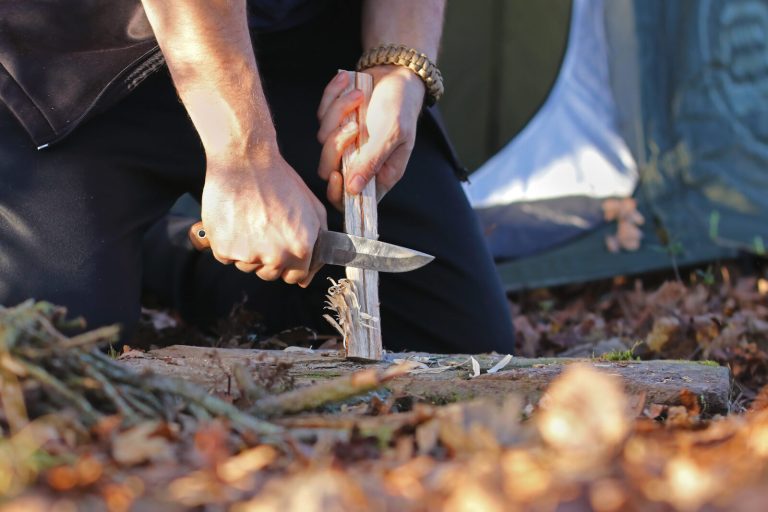
The honest division of labor is this: a saw cuts wood to length, and a knife (by batoning, splitting with a struck baton) or an axe splits it to expose dry inner wood. Carry a saw plus a stout fixed-blade knife and you can process almost any firewood you will realistically need, the backbone of our fire-building method , without ever swinging an axe.
Types of camp saw
Camp saws come in three practical families, from pocket-sized to woodpile-serious:
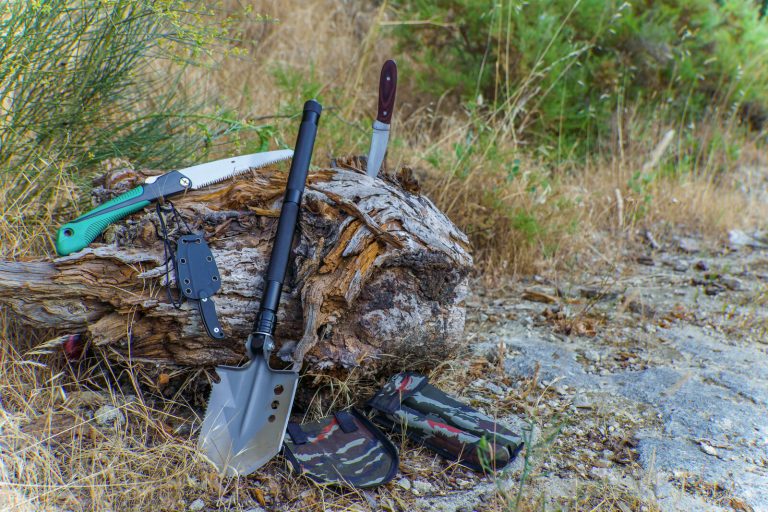
- Folding saw , a blade that folds into its own handle like a big pocketknife, locking open for use. This is the do-everything backcountry saw: light, safe to carry folded, and enough blade (15–25 cm / 6–10 in) to cut firewood, shelter poles, and downed limbs. If you buy one camp saw, buy this.
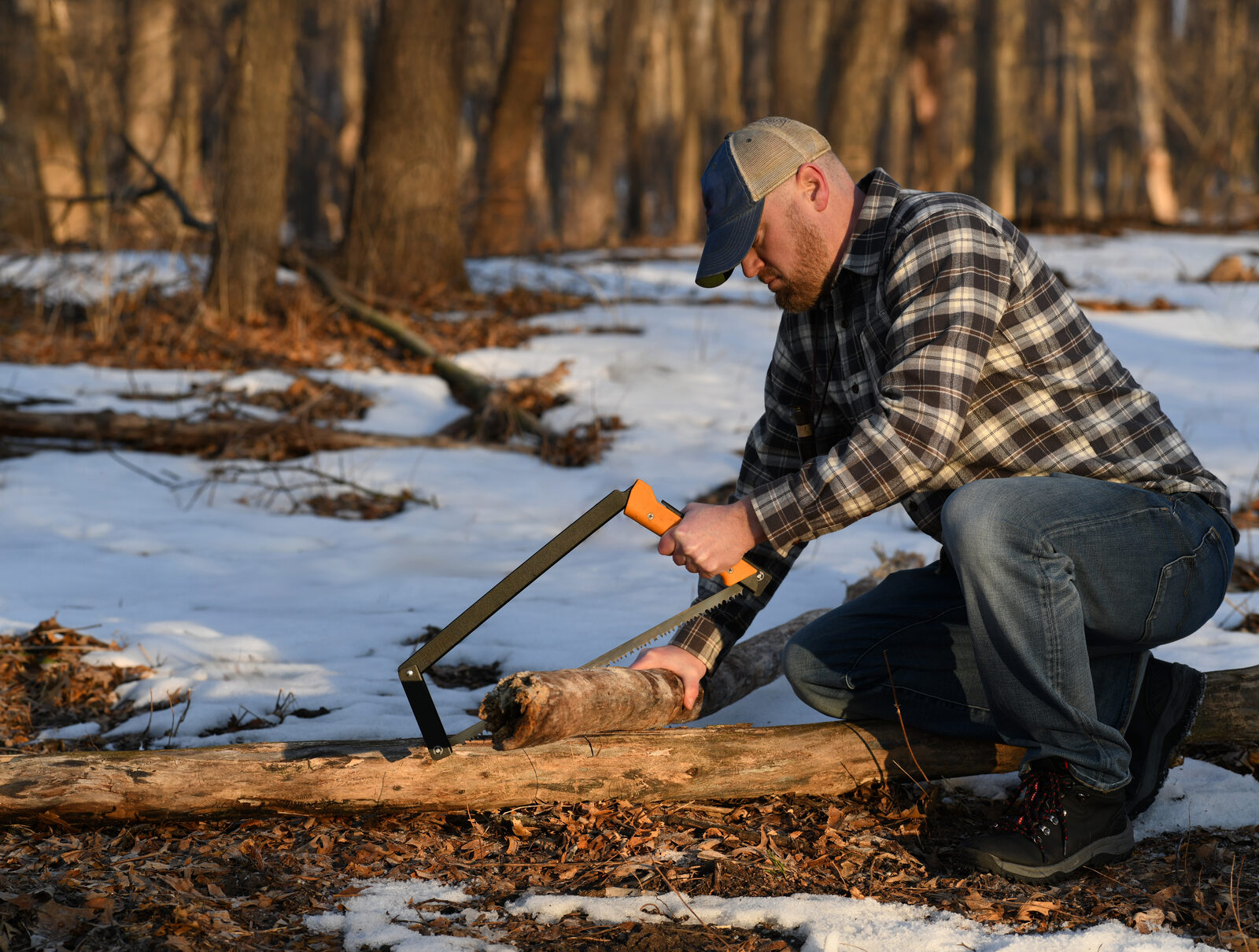
- Bow saw / bucksaw . A thin blade held under tension in a rigid frame (a fixed steel bow, or a take-apart wooden bucksaw you assemble in camp). The frame lets a long blade cut big rounds fast, so it is the basecamp and winter-camp choice where you process a lot of wood. The trade is bulk: even folding and take-down models are larger than a pocket folding saw.
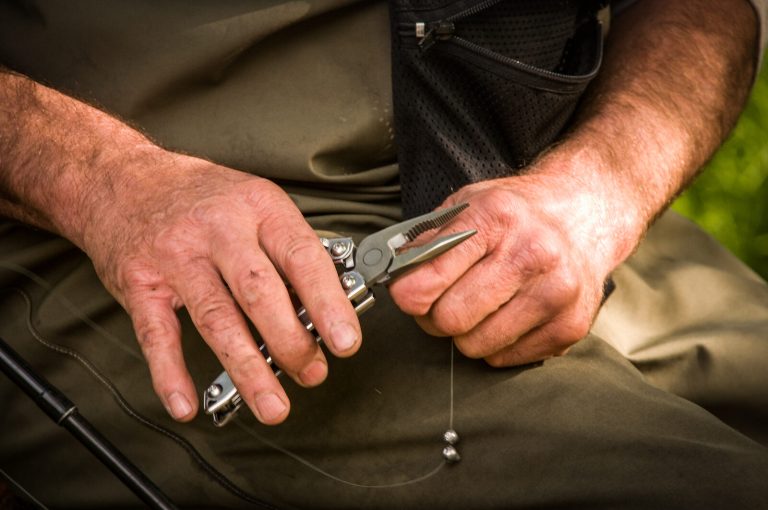
- Pocket & survival saws , wire saws, chain “pocket chainsaws,” and tiny folding blades meant for emergency kits. A rope-handled pocket chainsaw can cut surprisingly well; flimsy wire saws are a last resort that kink and snap. Treat these as backups, not your main tool.
Blades and teeth, decoded
The blade does the work, and a few terms explain why one saw glides while another skates:
- TPI (teeth per inch) . How fine the teeth are. Fewer, bigger teeth (low TPI, ~6–9) clear sawdust and cut green and softwood fast; more, smaller teeth (high TPI) cut slower but smoother and suit dry, hard wood. Most camp saws use a coarse, aggressive tooth pattern on purpose.
- Pull-cut vs. push-cut , many modern folding saws (Japanese-style) cut on the pull stroke, which keeps the thin blade in tension so it stays straight and cuts fast with little effort. Traditional saws cut on the push. Know which you have and let it do the work on that stroke.
- Set . The teeth are bent slightly alternately left and right so the cut (the kerf) is wider than the blade, which stops the blade from binding. Worn or bent set is why an old saw pinches and sticks.
- Hardpoint / induction-hardened teeth . The teeth are heat-treated to stay sharp far longer than the rest of the blade. They cut aggressively for a long time but generally cannot be re-sharpened, when they finally dull, you replace the blade, not the saw.
- Replaceable blade . Better folding and bow saws let you swap a fresh blade in seconds, which is the practical way to “sharpen” a hardpoint saw.
Rule of thumb
For general backcountry use, choose a folding saw with a coarse (~7 TPI), replaceable, pull-cut blade. It clears sawdust, cuts green wood fast, and a spare blade weighs nothing, the most useful all-round setup for firewood and camp chores.
What a saw does in camp
A saw earns its place because it touches several camp jobs a knife alone does slowly and an axe does dangerously:
- Firewood. Buck (cut to length) dead branches and downed limbs into fire-sized pieces quickly and quietly, then split the fatter pieces with a batoned knife to reach dry inner wood. This is the fast lane to a fire in our fire guide.
- Shelter and camp craft. Cut poles, stakes, and ridgepoles to length and saw clean notches for a tarp ridge or a frame, the structural cuts behind an emergency shelter and a well-built campsite.
- Clearing. Trim a fallen limb off a trail or tent site, and cut back the branch stub or root that would otherwise puncture your tent floor.
- Snow and winter. A coarse blade cuts firm snow blocks for a wall or shelter, and processes the larger quantities of firewood a cold camp demands.
- Food and game. A dedicated (or well-cleaned) blade cuts through bone when processing game, a job that ruins a knife edge.
Cut dead and down, and legal
Leave No Trace and most land rules mean you cut only dead, downed wood, never living trees or standing snags (which are wildlife habitat), and in many parks you gather only, with no cutting or fires at all. Check the local rules before you saw, and favor small dead branches you can break or buck over felling anything. See our Leave No Trace guide.
Sawing technique
Sawing is easy to do badly and tiring when you do. A little technique makes it fast and safe:
- Brace the wood, not your body. Steady the branch against a log, a rock, or the ground. Never across your knee or hand. A sawbuck or a simple forked branch holds a piece still so both the wood and your free hand stay put.
- Start with a guided stroke. Begin with a slow pull (on a pull-cut saw) to seat the teeth in a groove, resting the blade against your thumb knuckle, knuckle, never fingertip , then lengthen into full strokes once the cut bites.
- Use the whole blade and let it cut. Long, smooth strokes at a steady rhythm do the work; pushing down hard just binds the blade and tires you. Let the saw’s weight and teeth do it.
- Beat the pinch. As you near the bottom of a supported limb, the kerf tries to close and grab the blade. Cut partway from the top, then finish from the underside, or support the far end so the offcut falls away cleanly instead of pinching.
- Mind the last stroke and the fall. Know where the cut piece will drop and keep your legs clear. Cut a hair proud of your intended length. You can always trim, but you cannot add wood back.
Using a saw safely
A saw is the safest wood tool, but the teeth are unforgiving and a wound far from help is serious.
- Keep your free hand behind the blade’s path, never in front of or under the cut. Most saw injuries are to the hand steadying the wood.
- Fold or sheath it the instant you finish. An open folding saw left on the ground is a rake for shins and fingers; close it or return a bow-saw blade to its guard between cuts.
- Lock check. On a folding saw, make sure the open-lock is fully engaged before you bear down, so it cannot fold on your fingers mid-stroke.
- Watch the tension and the frame. On a bow/bucksaw, keep the blade properly tensioned; a loose blade wanders and snaps, and a snapped tensioned blade whips.
- Gloves and footing. A grippy glove on the guiding hand helps, and solid footing on level ground keeps a slip from turning into a cut.
Care and blades
A saw needs little care, but the little it needs matters. After use, knock off the sawdust and wipe the blade dry; sap and moisture rust a blade fast, so a light wipe of oil before storage keeps it gliding. Do not put a wet blade away folded or cased.
Most modern camp-saw blades are hardpoint . You do not sharpen them, you replace them, so carry a spare and swap it when cutting slows and the blade starts to burnish rather than bite. Traditional (non-hardpoint) bow-saw and bucksaw blades can be filed and re-set, but for most people a fresh replacement blade is faster and cheaper than learning to set teeth. Keep spare blades flat and dry, and check the folding lock or frame tension now and then so the tool stays solid under load. (For the tools you do sharpen, see our companion guide to sharpening and tool care.)
Choosing your saw
Match the saw to how much wood you actually cut:
- Day hikes and fast-and-light trips: a compact folding saw with a 15–18 cm blade. A few ounces, safe folded, and plenty for a small fire and camp chores. The right saw for almost everyone.
- Basecamp, canoe trips, and cold-weather camps: a bow saw or take-down bucksaw. The rigid frame and long blade chew through a real woodpile when you are staying put and burning a lot.
- Emergency and vehicle kits: a pocket chainsaw or a small folding saw as a compact backup that can still process meaningful wood if you are stuck.
Most people are best served by one good folding saw, paired with a knife for splitting. Add a bucksaw only when you know you will be processing a lot of wood in one place. Our reviewed picks: the budget Corona RazorTOOTH, the bushcraft-standard Bahco Laplander, and the packable Agawa BOREAL21 bucksaw.
Key takeaways
For nearly everyone, a saw, not an axe, is the safest, most efficient way to turn downed wood into firewood and shelter poles. Pick a folding saw with a coarse, replaceable, pull-cut blade for general use, or a bucksaw when you camp in one place and burn a lot. Cut only dead and down wood, brace the piece instead of your body, keep your guiding hand behind the teeth, and fold the saw the moment you stop. Pair it with a knife for splitting and you can process almost any camp firewood without ever swinging a blade. Then keep it working with our guide to sharpening and tool care.
Drawn from established bushcraft and field practice, including the fire-craft and shelter sections of the U.S. Army Survival Field Manual (FM 3-05.70 / FM 21-76) and Leave No Trace guidance, combined with modern saw design.
Wilderness Experts is reader-supported. As an Amazon Associate we earn from qualifying purchases; when you buy through links on our site we may earn a commission at no extra cost to you. It never changes what we recommend.