
Multitools in the field: how to actually use one in the backcountry
A multitool is the backcountry equivalent of a toolbox you can clip to your belt. It will not out-cut a real knife or out-dig a shovel, but when your stove clogs, a pack buckle shears, a tent pole splits, or a boot sole starts to flap two days from the trailhead, the pliers-and-blade bundle in your pocket is often the only thing that gets you moving again. This guide explains what a multitool is (and is not), what each tool inside is actually for, how to use one safely in the field, and how to choose the right one.
The key idea is that a multitool is a repair tool, not a cutting tool. It complements the knife you carry for fire and food; it does not replace it. Understand the handful of ideas below and you will know what to reach for, what to leave home, and which of its dozen gadgets actually earn their weight.
What a multitool is, and isn’t
A multitool is a folding tool built around a pair of pliers, with a blade and a handful of other implements folded into the handles. That pliers-first design is what separates it from a Swiss-Army-style pocketknife (built around a blade, with tools added) and from a real fixed-blade knife. The pliers are the point: gripping, twisting, bending, and pulling are exactly the jobs your hands and a knife cannot do.
What a multitool is not is a substitute for a proper knife or saw. Its blade is short, folds, and lives behind a pivot that traps grit, so it is a light-duty cutter for cordage, tape, and food, not a tool for batoning firewood. Think of it as the fix-it kit that rides alongside your knife, not instead of it.
The tools inside, decoded
Multitools bundle a rotating cast of implements. Here is what each is really for, so you can judge which you need:
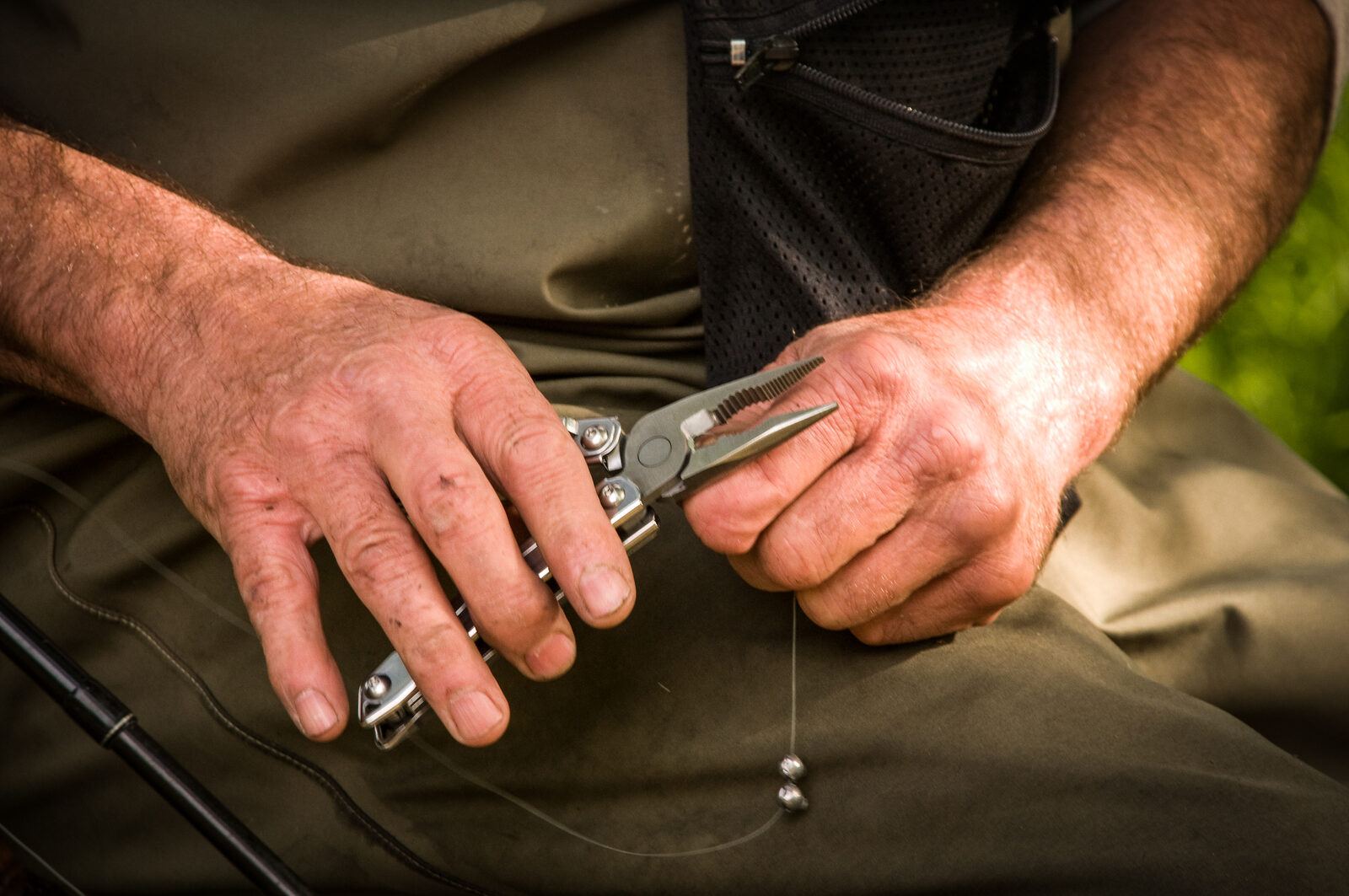
- Pliers (needle-nose + regular) , the heart of the tool: grip a hot pot lifter, pull a stubborn tent stake, bend wire, straighten a bent pole, extract a fish hook or a splinter. Often with a wire cutter at the jaw base.
- Knife blade , the light-duty cutter for cordage, food, and tape.
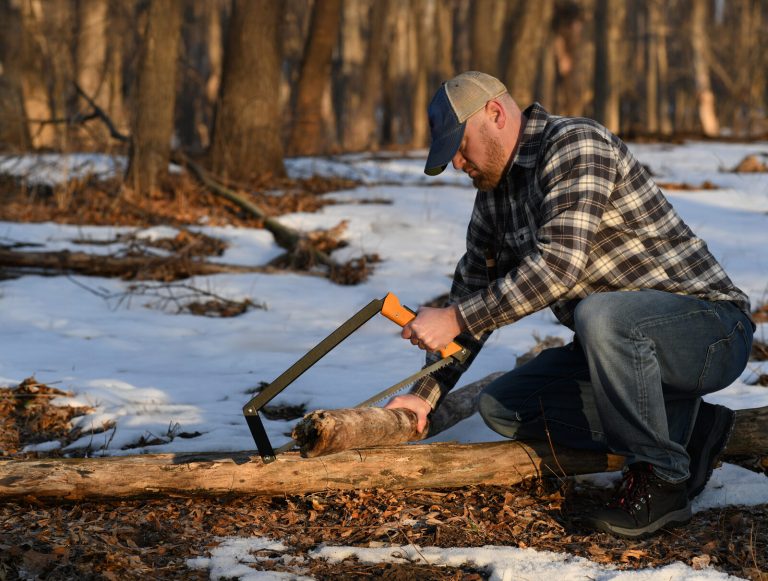
- Saw , a short wood/bone saw; handy for small branches, though no match for a real camp saw.
- Scissors , underrated in the field: trimming tape, moleskin for blisters, cordage, and bandages cleanly.
- Screwdrivers & bit driver , flat and Phillips (or an interchangeable bit driver) for eyeglasses, stoves, bindings, and gear screws.
- Can/bottle opener , still the fastest way into tinned food.
- Awl , punches holes in leather, webbing, or a new belt notch; can help stitch a torn pack.
- File . Smooths a burr, sharpens a hook, or works down a broken nail or a rough repair.
- Pry bar / pocket clip / bottle-cap lever , the small extras that vary by model.
Multitool vs. dedicated knife
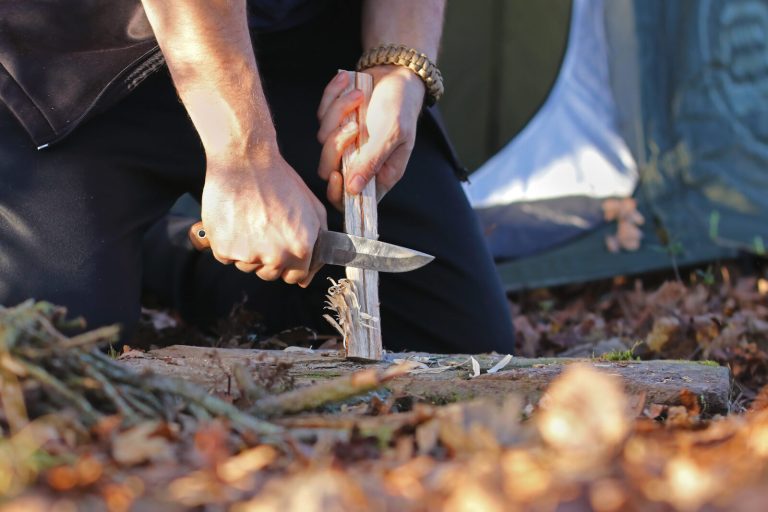
New backcountry travelers often ask which to carry. The answer is usually both, because they solve different problems. A fixed-blade knife is your primary cutter: it carves feather sticks, splits kindling, preps food, and handles hard use with a strong, easy-to-clean blade. A multitool is your primary fixer: pliers, drivers, and scissors for the mechanical problems a knife cannot touch.
If weight forces a single choice, match it to the trip. For a wilderness/bushcraft outing where fire and shelter dominate, take the knife. For travel, gear-heavy trips, cycling, or hunting where repairs and fiddly tasks dominate, the multitool may earn its place first. Most people settle on a light fixed blade or folder for cutting and a multitool for everything else.
What a multitool does in the field
A multitool earns its weight on the problems that end trips when you cannot solve them:
- Gear repair. Tighten a loose stove or binding screw, splint a snapped tent pole with the pliers and some tape, re-seat a blown pack rivet with the awl, cut and re-thread a broken cord, the repairs behind the “repair kit” item in the Ten Essentials.
- Stove and cookset. Grip a hot pot, clear a clogged jet, tighten a fuel fitting, and open a tin. The pliers and drivers do what fingers cannot.
- First aid. Scissors trim tape, moleskin, and bandages; needle-nose pliers and tweezers pull splinters, ticks, or a barbed hook, a real asset in a backcountry first-aid pinch.
- Fire and food. The blade shaves tinder and preps food, the pliers lift a pot off the coals, and the can opener gets you dinner.
- The hundred small problems. The reason a multitool lives in a survival kit and a glovebox: the unpredictable fixes a trip throws at you, far from a hardware store.
Features that actually matter
Ignore the tool count on the box and look at how the tool works in the hand:
- Locking tools. Blades and implements that lock open will not fold on your fingers under load. This is the single most important safety feature; favor it.
- Outside-accessible blade. A knife or scissors you can open without unfolding the pliers means you can cut one-handed, fast, without deploying the whole tool.
- One-hand opening. Handy when your other hand is holding the thing you are fixing (or a rope, or an injury).
- Bit driver vs. fixed drivers. An interchangeable bit driver fits far more screws (including the odd sizes on modern gear) than a couple of fixed flat/Phillips blades.
- Full vs. keychain size. Full-size tools give real plier leverage and longer blades; keychain tools trade power for grams. Pick honestly for your trip.
- Build and warranty. Stainless construction resists the rust a pocket tool will see, and a strong warranty (the better brands run 25 years) tells you the maker trusts the hinges.
Rule of thumb
Count useful tools, not total tools. A multitool with locking implements, an outside-opening blade, a bit driver, scissors, and solid pliers beats a 30-function novelty every time. If you will never use the “18th tool,” it is just weight.
Using one safely
A pocket full of folding steel deserves respect, especially when a cut or a pinch far from help is a real problem.
- Lock before you load. Make sure a blade or implement is locked open before you put force on it; an unlocked tool can fold on your fingers.
- Mind the pinch points. Closing pliers and folding handles catch skin. Keep fingers clear of the hinges as tools swing home.
- Cut away from yourself, and brace the workpiece against something solid, not your palm, the same discipline as any knife.
- Deploy the right tool fully. Half-open implements slip; open the one you need all the way and fold the others out of the way.
- Keep it clean and dry so the locks and pivots work when you need them. A gummed-up lock that will not engage is a hazard.
Care and maintenance
A multitool lives in grit, sweat, and pocket lint, so a little care keeps every tool working. Rinse or wipe it clean after a dirty job, then dry it fully . The pivots and springs are where rust starts. Work a drop of light oil into each hinge and the plier joint now and then so the tools open smoothly and the locks seat positively; wipe the excess so it does not collect dust.
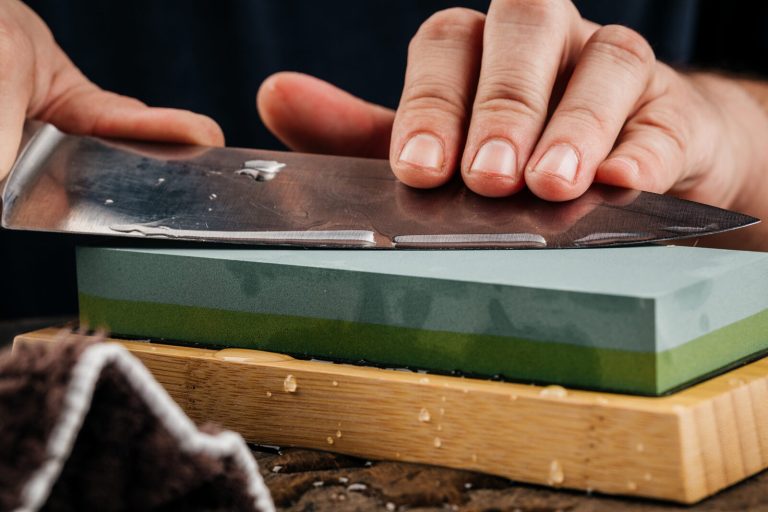
Keep the knife blade and scissors sharp, a few passes on a small stone or the tool’s own file, because a dull folding blade skates and slips. If a lock gets gritty, flush the pivot, dry it, and re-oil. For the full sharpening and rust-prevention routine that covers your knife, saw, and multitool together, see our companion guide to sharpening and tool care.
Choosing your multitool
Match the tool to how much you will fix and how much weight you will carry. Our three reviewed multitools map cleanly onto the common needs:
- Keychain / ultralight: the Gerber Dime , a tiny 12-in-1 that clips to a zipper and still gives you spring-loaded pliers, scissors, and a blade for a fraction of an ounce. The grab-and-go answer.
- Do-everything full size: the Leatherman Wave+ , the benchmark: locking, outside-opening blades, real pliers, a bit driver, scissors, and a 25-year warranty. The one most people should own.
- Heavy-duty: the Leatherman Surge , bigger, stronger jaws and a larger saw for those who genuinely work their tool hard, at the cost of weight.
For most backcountry travelers, a full-size tool like the Wave+ is the sweet spot; drop to the Dime when every gram counts, or step up to the Surge when you truly abuse it. Whatever you pick, remember it rides alongside a real knife, not in place of one.
Key takeaways
A multitool is the fix-it kit of the backcountry: pliers first, with a blade and a handful of implements for the mechanical problems a knife cannot solve. Judge one by its useful tools, locking implements, an outside-opening blade, a bit driver, scissors, solid pliers. Not its function count, and carry it as a complement to a proper knife, never a replacement. Keep it clean, dry, and oiled so the locks work when a stove clogs or a pole snaps miles from help. Not sure where to start? Read our field reviews of the Gerber Dime, Leatherman Wave+, and Leatherman Surge.
Drawn from established field practice and modern multitool design, alongside the repair-kit and first-aid principles in the U.S. Army Survival Field Manual (FM 3-05.70 / FM 21-76).
Wilderness Experts is reader-supported. As an Amazon Associate we earn from qualifying purchases; when you buy through links on our site we may earn a commission at no extra cost to you. It never changes what we recommend.