
Axes and hatchets: choosing, using, and maintaining a camp axe
An axe is the tool that built the north woods. Nothing splits a seasoned round, fells a standing dead tree, or hews a flat face on a log the way a good axe does, and nothing else in the kit hurts you as badly when it goes wrong. This guide covers the whole family, from a belt hatchet to a splitting maul: what the parts are called, how the types differ, what an axe actually does in camp, and how to swing, sharpen, and carry one without putting the bit through your boot.
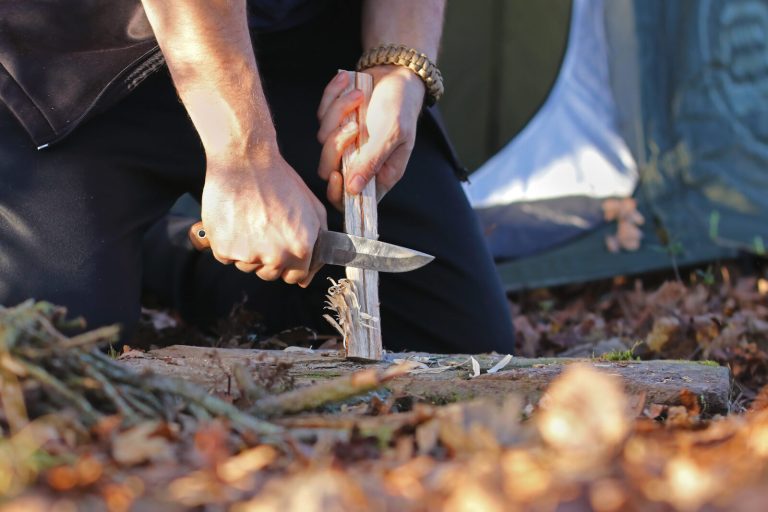
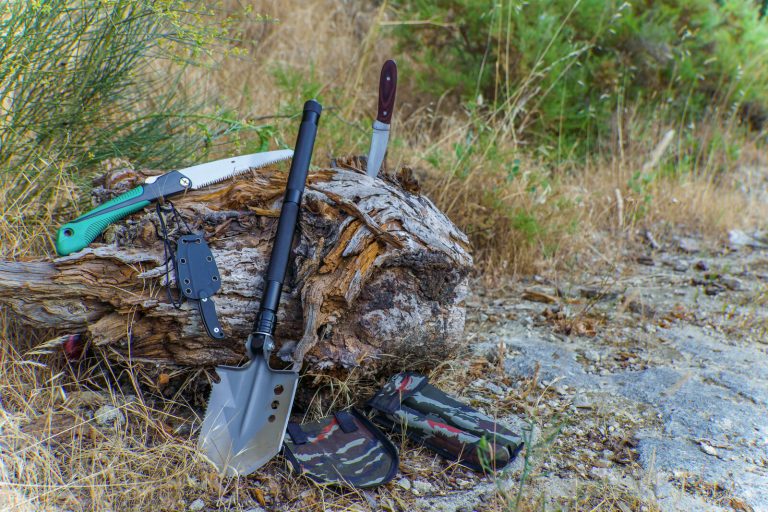
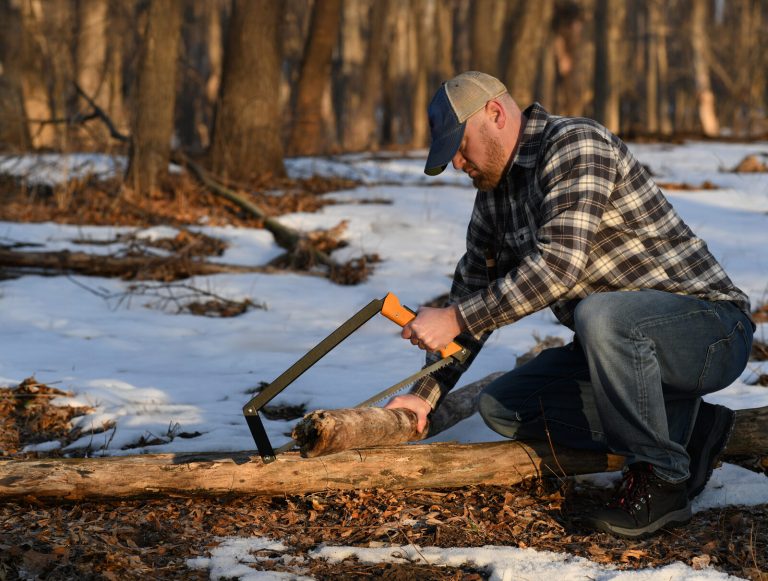
First, an honest word on when to bring one. For most three-season campers, a saw plus a stout knife cuts and splits all the firewood you realistically need, more safely and for less weight. An axe earns its place when you split a lot of seasoned wood, camp long or cold in one spot, or want to fell and hew. The jobs a saw and knife do slowly or not at all. Understand the ideas below and you will know both how to use an axe and whether you need one.
Hatchet, hand axe, felling axe, maul
“Axe” covers a range of tools sized for very different jobs:
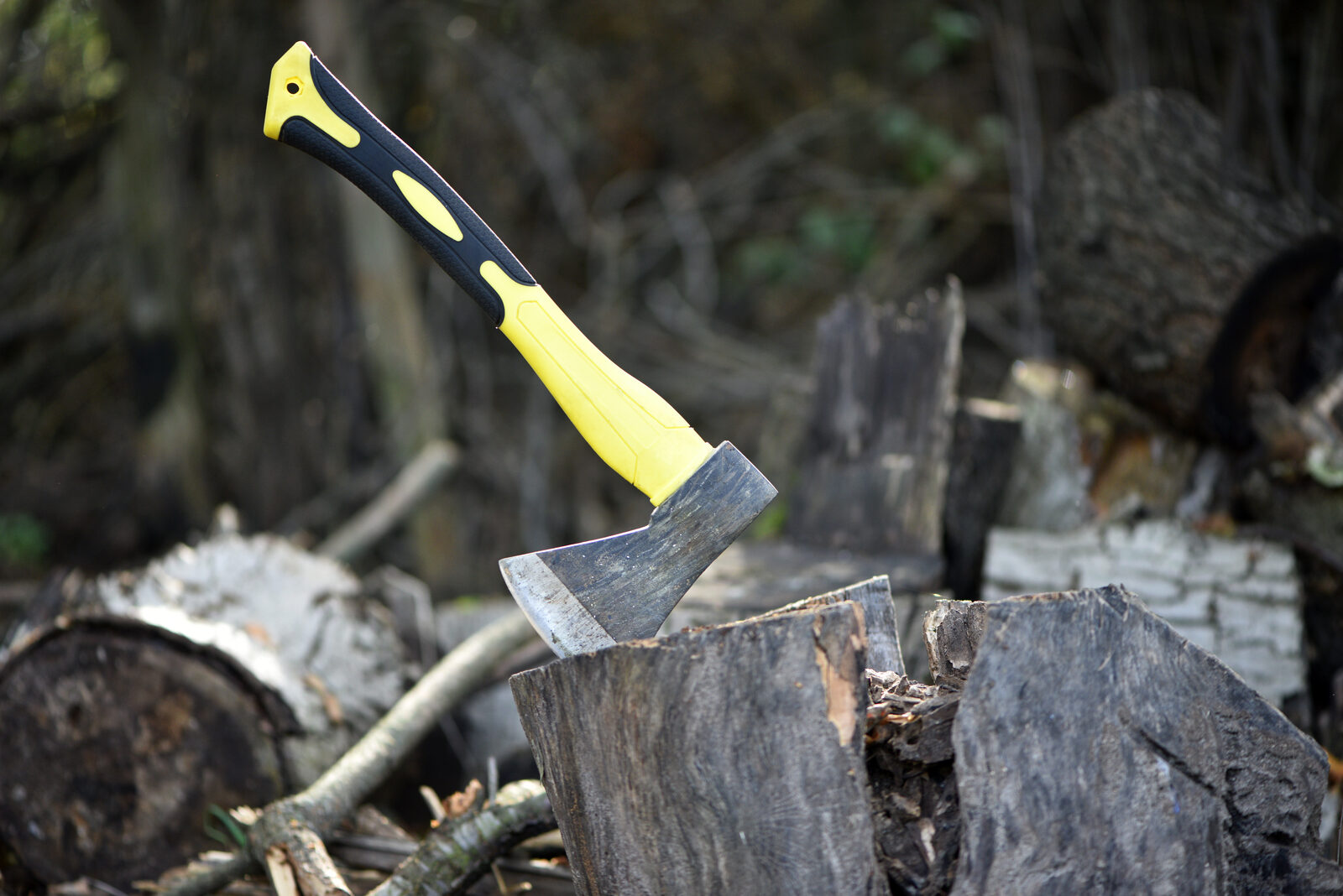
- Hatchet , a short, one-handed axe (about 10–14 in / 25–36 cm) light enough to wear on a belt. Great for splitting kindling, limbing, and driving stakes with the poll; too short to fell or split big rounds safely, and the short handle puts your hand close to the miss.
- Hand axe / camp axe / boy’s axe . A mid-size axe (roughly 19–28 in / 48–70 cm) that is the classic bushcraft and car-camp choice. Long enough to split real firewood and take down small dead trees, short enough to pack and carve with. If you own one axe, this is usually it.
- Felling / full-size axe , a long (28–36 in), two-handed axe built to cut across the grain and fell trees. Powerful at a fixed camp or homestead; overkill and heavy for backpacking.
- Splitting axe / maul . A heavy, wedge-shaped head made to split with the grain, not cut across it. A maul (heavier, blunter) is the basecamp firewood tool; it is the wrong shape for felling or carving.
- Tomahawk & specialty . Light, thin-headed axes for throwing or tactical use; handy and packable but a jack-of-trades, not a dedicated splitter or feller.
Rule of thumb
Match the axe to the job: a hatchet for kindling and small chores on a light trip, a hand/camp axe for all-round bushcraft and car camping, and a maul for splitting a real woodpile at a fixed camp. Bigger is not better. An axe you can control safely beats a heavy one you cannot.
Anatomy of an axe, decoded
Axe talk names every part of the head and handle. Here is the map:
- Bit / edge . The sharpened cutting edge that does the work.
- Toe and heel , the top and bottom corners of the bit.
- Cheek , the side face of the head behind the edge; a convex cheek helps pop split wood apart.
- Poll (butt) , the flat back of the head. On a proper axe it is for light hammering (stakes, batoning), but never for striking steel wedges unless the poll is hardened for it.
- Eye , the hole the handle passes through.
- Beard , the part of the bit that dips below the eye; a “bearded axe” gives a longer cutting edge for carving.
- Haft / handle , the shaft, usually hickory or ash (or modern composite). The knob is the swelled end you hold; the belly and throat are its curves.
- Shoulder , where the handle meets the head; keep this from striking the wood (an overstrike) or you will crack the haft.
- Hang . How the head is aligned to the handle; a well-hung axe lands the edge square where you look.
Head, steel, and handle
Three things determine how an axe cuts and lasts:
- Head weight and grind. A heavier head splits harder but tires you faster and is less precise; a lighter head carves and limbs better. A thin bit slices and fells; a thick, wedge bit splits. This is why a felling axe and a splitting maul are shaped so differently, one parts the grain sideways, the other drives through it.
- Steel and hardness. A good axe is forged carbon steel, hardened at the edge to hold a bite yet tough enough not to chip on knots and cold wood. Like a knife, carbon steel rusts, so it wants drying and a light oil.
- Handle material and grain. Traditional hickory or ash hafts absorb shock and are field-repairable; look for straight grain running end-to-end (a run-out grain snaps). Modern fiberglass/composite handles are nearly unbreakable and weatherproof but transmit more shock and cannot be re-hung by hand. Handle length sets both power and safety: longer = more power and more clearance below your body; shorter = more control but the miss lands closer to you.
What an axe does in camp
An axe earns its weight on the heavy wood jobs a knife and saw struggle with:
- Splitting firewood. The headline job: split sawn rounds down to stove-sized pieces and dry inner wood, faster than batoning a knife once the wood gets thick. It is the muscle behind our fire-building method once you move past pencil-and-thumb kindling.
- Felling and bucking dead wood. Take down a standing dead tree and cut it to length where a saw would be slow, though for most bucking a saw is still safer and cleaner. Cut only dead, down wood (see the caution below).
- Limbing and shaping. Trim branches off a log and hew a flat face or a notch for shelter framing. The structural work behind an emergency shelter.
- Carving and fine work. Choke up near the head and use a hand axe for controlled carving. Points, wedges, pot hooks. The way you would a big knife.
- Pounding. The poll drives tent stakes and can baton a stubborn split, a hammer built into the tool.
Cut dead and down, and legal
Leave No Trace and most land rules mean you fell and cut only dead, downed wood, never living trees or standing snags (which are wildlife habitat), and many parks prohibit cutting and fires entirely. Green wood also barely burns. Check the local rules, and in popular areas skip the axe and gather small dead wood by hand. See our Leave No Trace guide.
Swinging and splitting technique
Technique is what makes an axe both effective and safe. Power comes from accuracy and mechanics, not from a harder swing:
- Always split on a chopping block. Stand the round on a low, solid block (a big log round) so the edge stops in the block, not the ground or your leg. Never split a piece held in your hand or braced against your foot.
- Aim for the near edge, not the center. On a big round, aim toward the far side or the edges and work around; targeting the exact center on the first blow just buries the bit.
- Let the axe do the work. Slide your top hand down to meet the lower as you swing, drop the head with gravity and a relaxed snap of the wrists, and let the head’s weight split the wood. Muscling it is less accurate and more tiring.
- Use the kneeling / contact method for a hatchet. With a short axe, kneel and keep the workpiece low, or use the contact split . Set the bit in the wood, then lift both together and bring them down on the block so the wood, not your hand, takes the shock. You can also baton a hatchet through a split by striking the poll with a wooden club.
- Mind your follow-through. Set your stance so that if the axe misses or goes through, its path continues into the block or the ground beside you. Never toward a shin, knee, or foot. If you cannot guarantee that, do not take the swing.
Using an axe safely
The axe is the most dangerous tool in camp, and an axe wound, usually to the thigh, knee, or foot, is a life-threatening bleed far from help. Treat every swing with that in mind.
- Clear the blood circle. Sweep an arm’s-plus-axe arc around you; keep people well back and nothing you value inside it.
- Kneel or widen your stance so a follow-through passes into the block or the ground, not your leg. Kneeling to split with a hatchet is a deliberate safety choice, not a beginner’s crutch.
- Never split against your hand, foot, or the bare ground. Always a block; never a rock (it chips the edge and throws shards).
- Watch the overstrike. On a miss, the handle just below the head slams the wood and cracks; aim so the bit, not the haft, meets the target.
- Sharp, not dull. A dull axe glances off instead of biting, more dangerous, not less. Keep it keen.
- Sheath it, always. A bit guard (mask) goes on the moment you stop. Carry an axe at your side with the head in hand, edge out, and never hand someone an unsheathed axe.
Care, sharpening, and the handle
An axe rewards the same care as any carbon-steel tool, plus attention to the handle. After use, wipe the head clean and dry it, with a light film of oil on the steel before storage; oil or wax the wooden haft occasionally so it does not dry out and loosen. Store it dry, edge sheathed, hung up rather than left head-down in the dirt.
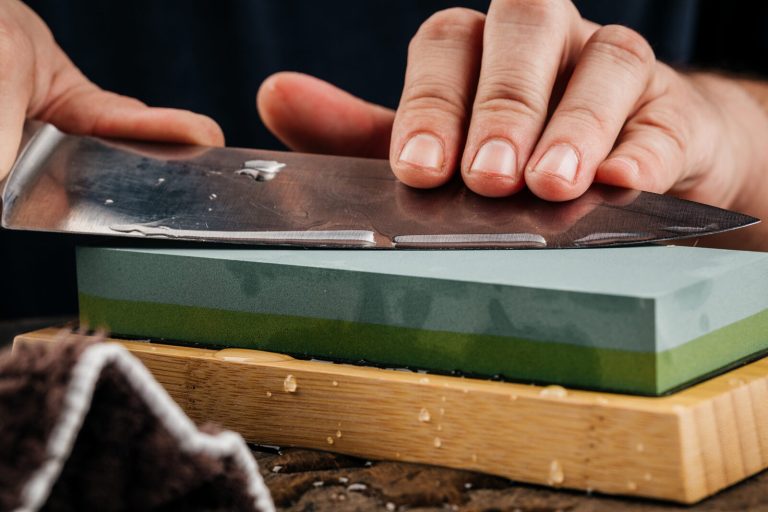
Sharpen with a file, not a fine knife stone: brace the head, push a mill file into the edge following the existing bevel (a fairly steep, durable ~25–30°), work from the middle out to toe and heel, then remove the burr with a round stone or puck and finish on a strop. Keep the original convex profile. Do not thin an axe to a knife edge or it chips in hard wood. Check the head is tight on the haft before every session; if it works loose, re-wedge or re-hang it. A head that flies off mid-swing is a serious hazard. The full edge-and-rust routine that covers your axe, knife, and saw together lives in our guide to sharpening and tool care.
Choosing your axe
Match the axe to how you travel and what you cut:
- Light trips and kindling: a quality hatchet , but for many backpackers a saw and knife do the same jobs more safely for less weight, so bring the hatchet only if you will really use it.
- All-round bushcraft and car camping: a hand / camp axe (~24 in / 60 cm, hickory haft). The one-axe answer. Splits firewood, limbs, carves, and packs.
- Fixed basecamp firewood: a splitting axe or maul for volume, and a full felling axe only if you are genuinely felling and bucking a lot of standing dead wood.
Our reviewed camp-axe picks: the value Fiskars X7, the forged Estwing Sportsman’s Axe, and the benchmark Gränsfors Small Forest Axe. Whatever you choose, a well-hung axe of moderate weight that you can swing accurately, kept sharp and sheathed, is worth more than a heavy head you cannot control. And remember the honest division of labor: an axe splits and fells, a saw bucks to length, and a knife carves and processes . Most trips are covered by two of the three.
Key takeaways
An axe is unmatched for splitting seasoned rounds, felling dead trees, and hewing wood, and it is the tool most likely to injure you, so bring one only when the job calls for it and treat every swing with respect. Pick the size for the work: a hatchet for kindling, a hand axe for all-round camp use, a maul for a real woodpile. Always split on a block, kneel or set your stance so a miss lands in wood or ground and never your leg, keep the bit sharp and sheathed, and dry and oil the head. Keep it keen with our guide to sharpening and tool care , and for most trips, remember that a saw and a knife will do the wood work more safely than an axe alone.
Drawn from established axe-craft, bushcraft, and woodcraft practice, alongside the wood-processing and safety guidance in the U.S. Army Survival Field Manual (FM 3-05.70 / FM 21-76) and Leave No Trace principles.
Wilderness Experts is reader-supported. As an Amazon Associate we earn from qualifying purchases; when you buy through links on our site we may earn a commission at no extra cost to you. It never changes what we recommend.