
GV Huron Review: the traditional snowshoe worth owning
Traditional snowshoes are not a museum piece. On flat, wooded, deep-snow country, which describes an enormous amount of the Canadian and northern United States winter, a wood-and-rawhide shoe floats better for its size, runs quieter, and does not load itself with snow the way a solid deck does. The GV Huron is the pattern to start with, and GV is the reason our guide to winter hiking and snow travel treats these as a live option rather than history.
Quick take
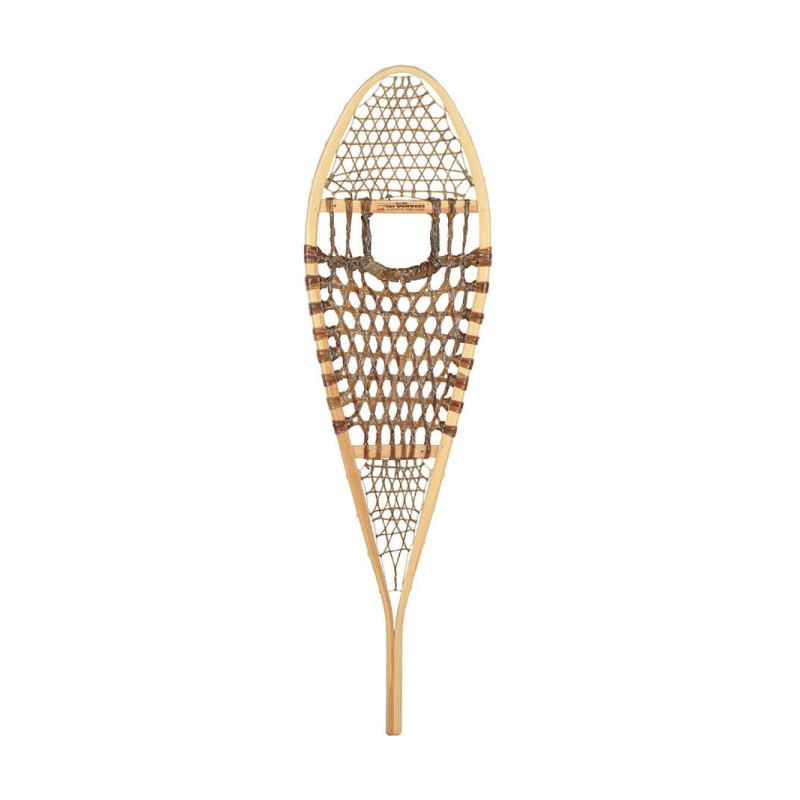
The all-rounder of the traditional patterns, and the right one if you are buying a single pair of wooden shoes. A steam-bent white ash frame strung with varnished cowhide babiche, in five sizes from 9 x 29 to 14 x 48 inches (23 x 74 to 36 x 122 cm), with synthetic lacing available if you would rather not maintain rawhide. The long tail keeps it tracking straight, the open webbing drops snow through instead of carrying it, and it is genuinely quiet. It has no metal traction hardware and no heel lift, so it is wrong for anything hard, steep or icy. Bindings are sold separately, which catches people out.
What it does
The Huron is the shape most people picture when they picture a snowshoe: a broad rounded forebody tapering to a long straight tail, taking its name and its geometry from the Huron-Wendat nation. It was the working shoe of the coureurs des bois and the trappers, and it is still made for hunting, trapping and long days in thinned forest and open field. The geometry does two things. The width gives flotation across the whole stride rather than only underfoot, and the long profiled tail drags slightly, which keeps the shoe aligned with your direction of travel instead of wandering as you walk. GV builds the frame from steam-bent white ash and strings it with cowhide babiche under a high-quality varnish, which is what stops the rawhide degrading, and offers the same frames with synthetic lacing for anyone who would rather not think about maintenance at all. Sizes run 9 x 29, 10 x 33, 11 x 36, 12 x 42 and 14 x 48 inches (23 x 74, 25 x 84, 28 x 91, 30 x 107 and 36 x 122 cm), specified as width by length in the traditional way rather than by the single-length charts modern shoes use, and they run larger than a modern shoe for the same person. What it does not have is any metal underneath. Grip comes from the lacing and the frame edge pressing into snow, which is sufficient on soft snow and reasonable on crust, and nowhere near enough on hard steep ground or ice.
Why this maker
Traditional snowshoes are a category where the manufacturer matters more than usual, because the difference between a shoe that lasts thirty years and a decorative one hanging over a fireplace is entirely in the frame stock, the lacing and the varnish. GV is in the Quebec City region, is the largest snowshoe manufacturer in North America, and builds the full traditional range alongside a modern aluminum line, which means the wooden shoes are current production rather than a nostalgia sideline. They sell all five patterns the tradition recognises: the Alaskan for open flat country and deep soft snow, the Huron and the Ojibwe as the all-rounders, and the bear paw and modified bear paw for tight bush where manoeuvrability beats flotation. If you want the pattern rather than this specific one, the guide explains which shape suits which ground.
What owners say
This is a small, traditional category with nothing like the review volume of a mass-market snowshoe, and we would rather say so than pretend otherwise. The consistent points from long-term owners of traditional wooden shoes:
- They last decades with basic care. The frame outlives its owner’s interest more often than it breaks, and rawhide that is dried properly and re-varnished occasionally stays serviceable for a very long time.
- The quiet is the point for hunters. Wood and babiche on snow is close to silent, where an aluminum frame with a solid deck clatters. This is the reason the pattern persists in hunting and trapping country.
- Flotation per unit of area is better. Owners running both types report sinking less on a traditional shoe of the same nominal size, and not carrying a load of snow on the deck with every stride.
- The binding is the decision. Long-term users treat the harness as the part worth spending time on, and the simple lampwick and leather designs as an advantage because they can be repaired in the field with what is already in the pack.
Worth knowing
Bindings are sold separately. This is normal for traditional shoes and it still catches buyers out, so budget for a harness at the same time and fit it at home with the boots you will actually wear, in gloves, until you can do it cold. Choose your lacing deliberately: rawhide needs drying after every use and occasional re-varnishing, and left wet it will stretch and rot, while the synthetic option needs neither and costs you nothing but authenticity. Size from the maker’s own chart rather than a modern one, because these run larger for the same person and are specified width by length. And be clear about the ground. There is no toe crampon, no frame rail and no heel lift, so a sustained climb burns your calves and a firm traverse gives you very little to hold with. On anything hard, steep or icy you want a modern shoe with teeth. This is a tool for flat and rolling deep snow in the trees, and inside that envelope nothing does it better.
Who it is for
The Enthusiast who knows their winter is forest and flat country rather than mountain, plus anyone hunting, trapping, or travelling quietly enough to want to see animals. It is a considered second pair for many people and a deliberate first pair for anyone whose ground genuinely suits it. If your days involve packed trail, crust and moderate slopes, buy the MSR Evo Trail instead, and if they involve sustained climbing or firm traverses, the MSR Lightning Ascent is the shoe with the steel to do it. Carry traction for any hard section regardless of which shoe is on your feet, and wear gaiters, which matter less here than on a solid deck but still keep the snow out of your boot.
Specs at a glance
- PatternHuron, also called Michigan
- Framesteam-bent white ash
- Lacingvarnished cowhide babiche, or synthetic
- Sizes9 x 29 to 14 x 48 in (23 x 74 to 36 x 122 cm)
- Traction hardwarenone
- Heel liftnone
- Bindingssold separately
- Listed weightunavailable
- Best forflat and rolling deep snow in trees
This link goes to GV Snowshoes, the manufacturer, in the Quebec City region. We have no affiliate relationship with them and earn nothing if you buy through it. We link it because traditional snowshoes are not carried by the outdoor chains, including MEC, and going to the maker is the only reliable way to get one. GV ships to both Canada and the United States.
The Verdict
Buy the Huron because your winter is trees and deep snow and flat ground, not because it looks good on a wall. Inside that envelope it floats better than a modern shoe of the same size, sheds snow instead of carrying it, and is quiet enough to change what you see in a day. Outside it, on anything hard or steep, it gives you almost nothing and you should be on a shoe with steel underneath. Get the size from GV’s chart, buy a binding at the same time, and decide honestly whether you want to maintain rawhide or would rather have the synthetic lacing. Our guide to travelling safely on snow and ice covers the patterns, the sizing convention and how to tell which kind of day you are looking at.