
Snakes, spiders, and stinging insects: avoiding bites and stings
The animals most likely to hurt you in the backcountry are not bears or cougars. They are small, common, and easy to step on. Snakes, spiders, scorpions, ticks, and stinging insects account for far more backcountry injuries than any large predator, and most of those incidents are preventable with a little knowledge and care. This guide covers avoiding venomous and biting creatures, and treating a bite or sting calmly and correctly when avoidance fails.
The governing principle is that nearly every one of these animals would rather be left alone. Snakes bite defensively when surprised or cornered; wasps sting to protect a nest; spiders and scorpions strike when trapped against skin. Bites and stings happen at the points of accidental contact, a hand placed on an unseen ledge, a foot into tall grass, a boot pulled on over a sheltering scorpion. Control those contact points and you prevent the great majority of incidents. Our guide to avoiding and handling wildlife encounters covers the large mammals; this one covers the small things that actually get most people.
Avoidance: watch your hands and feet
Most bites and stings land on hands and feet, because that is where we make blind contact with the world. A few habits prevent the majority of them:
- Look before you place a hand or foot. Don’t reach onto a ledge, into a woodpile, or under a rock or log you can’t see the far side of. Step onto logs, not over them, so you can see what is on the other side.
- Watch where you sit and gather. Scan before sitting on a rock or log, and before collecting firewood.
- Cover your skin in snake and tick country. Boots and long trousers (gaiters help) hugely reduce snakebite and tick attachment. Most snakebites strike the lower leg or the hand.
- Shake out your gear. In desert and warm regions, spiders and scorpions crawl into boots, clothing, and sleeping bags overnight. Shake out and check boots and clothes before putting them on.
- Use a light at night. Many bites happen after dark when people step on what they can’t see. Carry a headlamp and use it.
- Keep a clean camp. Food and sweet drinks draw wasps and ants; managing food and rubbish keeps them away from you.
Snakes: avoiding and treating bites
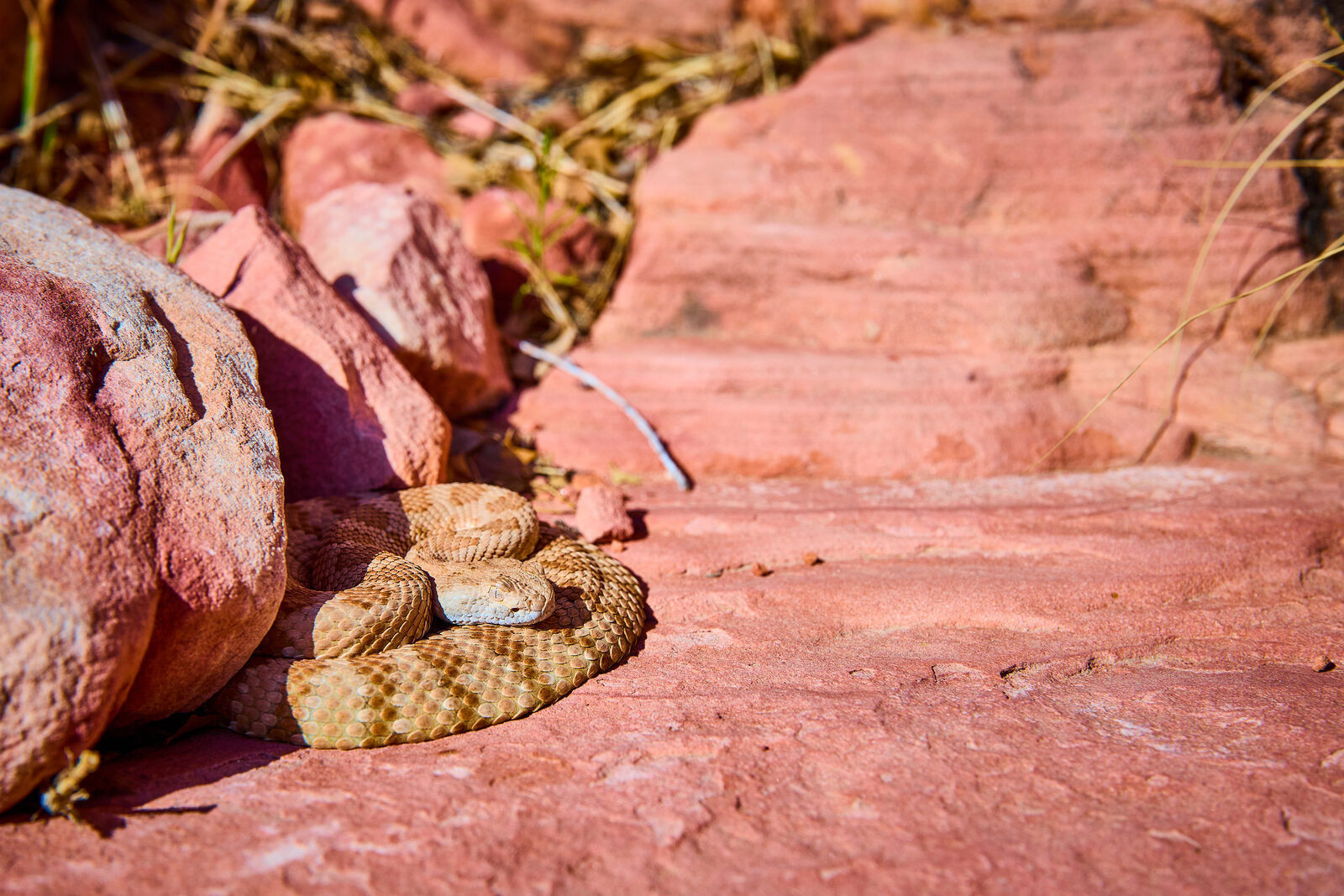
Venomous snakes across North America are mostly pit vipers, rattlesnakes, copperheads, and cottonmouths, plus the rare coral snake. They are not aggressive; almost every bite follows a surprise or an attempt to handle or kill the snake. Give any snake a wide berth. If you see or hear one, stop, locate it, and back away slowly, most bites happen within striking range, roughly the snake’s body length. Never try to catch, kill, or move a snake; a large share of bites happen to people doing exactly that.
If a bite does happen, stay calm, panic and exertion speed venom through the body. The modern first-aid approach is simple:
- Move away from the snake so it cannot bite again, and get the person calm and still.
- Call for help and plan evacuation immediately. Definitive treatment for a venomous bite is antivenom at a hospital. Time matters. Start arranging evacuation at once.
- Keep the bitten limb still and roughly at or below heart level, and keep the person as calm and inactive as possible to slow venom spread.
- Remove rings, watches, and tight clothing near the bite before swelling starts.
- Clean the wound gently and cover it. Mark the leading edge of swelling and the time with a pen so responders can track how fast it is spreading.
What NOT to do for a snakebite
Do not cut the wound, do not try to suck out venom or use a suction device, do not apply a tight tourniquet, and do not apply ice. These old methods cause harm and do not remove venom. Do not give alcohol or caffeine. Get the person to medical care; antivenom is the treatment, and speed matters.
Assume any bite from an unknown snake could be venomous and evacuate. Even a “dry” bite or a non-venomous bite should be cleaned and watched for infection.
Spiders and scorpions
Dangerous spiders are few. In North America the two to know are the black widow (glossy black, red hourglass underneath; venom causes intense muscle pain and cramping) and the brown recluse (a violin-shaped mark; its bite can cause a slow-healing sore). Both are shy and hide in dark, undisturbed places, woodpiles, sheds, the insides of stored boots and gloves. Prevention is the same as for scorpions: don’t reach blindly into dark spaces, and shake out anything that has sat overnight.
Scorpions shelter under rocks, bark, and in footwear in warm and desert regions. Most stings are painful but not dangerous, like a bad bee sting; a few species can cause more serious reactions, especially in children. Treat a spider bite or scorpion sting by cleaning it, applying a cold compress to reduce pain and swelling, keeping the person calm, and watching for a spreading or severe reaction. For a black widow bite, a suspected recluse bite, a child, or any severe symptoms, seek medical care.
Ticks. The small ones that spread disease
Ticks are the most consequential of all these creatures for most hikers, because they transmit disease, Lyme disease, Rocky Mountain spotted fever, and others, and they are easy to miss. They wait on grass and brush and latch onto you as you pass.
- Prevent: wear long trousers tucked into socks, treat clothing with permethrin and skin with repellent, stick to the center of trails, and avoid brushing through tall grass.
- Check daily: do a thorough body check each evening, focusing on warm, hidden spots, waistline, groin, armpits, behind the knees and ears, and the hairline. Ticks are often no bigger than a poppy seed.
- Remove correctly: grip the tick with fine tweezers as close to the skin as possible and pull straight out with steady pressure. Do not twist, crush, or burn it, and do not smother it with grease. That can make it regurgitate. Clean the bite and your hands afterward.
- Watch the site: note the date. See a doctor if a spreading “bull’s-eye” rash, fever, or flu-like aches develop over the following days to weeks. Early treatment matters.
Bees, wasps, and stinging insects
For most people a bee or wasp sting is painful but minor. If a honeybee leaves its stinger behind, scrape it out sideways promptly with a fingernail or card rather than pinching it, which can squeeze in more venom. Wash the site, apply something cold to reduce pain and swelling, and keep an eye on it. Wasps and hornets can sting repeatedly and will defend a nest aggressively, if you disturb one, cover your face and walk (don’t flail) away from the area. Managing food and sweet drinks in camp keeps the numbers down.
Anaphylaxis: the true emergency
The real danger from stings, and occasionally bites, is a severe allergic reaction. Anaphylaxis can kill within minutes and is the one insect emergency that demands instant action.
Know the signs of anaphylaxis, act immediately
After a sting or bite, watch for hives spreading beyond the site, swelling of the lips, tongue, or throat, difficulty breathing or a tight throat, wheezing, dizziness, or a feeling of impending doom. This is a life-threatening emergency. If the person has an epinephrine auto-injector (EpiPen), use it at once, call for emergency help, and evacuate urgently. A second dose may be needed if symptoms return.
If you know you are allergic to stings, carry two epinephrine auto-injectors and make sure your companions know where they are and how to use them. Even after epinephrine works, the person needs emergency medical care, because symptoms can rebound.
Bite-and-sting myths to drop
- “Cut and suck a snakebite.” It doesn’t remove venom and it causes damage. Immobilize and evacuate instead.
- “Tourniquet a bitten limb.” Cutting off blood flow risks the limb without helping. Keep the limb still and below the heart.
- “Ice a snakebite.” Ice worsens tissue damage. Don’t.
- “Burn a tick off.” Heat and grease make it worse. Pull it straight out with tweezers.
- “Only exotic species are dangerous.” Common local ticks and the ordinary allergic reaction to a common wasp hurt far more people than rare venomous creatures.
What to carry
- A first-aid kit , with fine-tipped tweezers for ticks, antiseptic, antihistamine, and dressings.
- An epinephrine auto-injector , essential if you or anyone in your group has a known sting allergy; carry two.
- Insect repellent and permethrin-treated clothing , the frontline against ticks and biting insects.
- Gaiters and long trousers , physical protection against snakes, ticks, and brush.
- A headlamp , so you can see where you step and reach after dark; see our Black Diamond Spot 400 review.
- A way to call for help , a whistle and, on remote trips, a satellite messenger or PLB for evacuating a serious bite or reaction.
Key takeaways
The small creatures are the ones that get most people, and nearly every bite and sting is preventable: watch where you put your hands and feet, cover your skin, shake out your gear, check for ticks daily, and never handle a snake. If a bite happens, stay calm, immobilize, and evacuate. Skip the folk remedies, which do harm. Know the signs of anaphylaxis and carry epinephrine if you are at risk, because that is the one reaction measured in minutes. Respect the small things and the backcountry stays a place you share, not one that hurts you.
Adapted in part from the U.S. Army Survival Field Manual (FM 3-05.70 / FM 21-76), Chapter 4 and Appendices F and G, on bites, stings, venomous snakes, and dangerous insects and arachnids, with modern civilian first-aid guidance. This article is general information, not a substitute for medical care.
Wilderness Experts is reader-supported. As an Amazon Associate we earn from qualifying purchases; when you buy through links on our site we may earn a commission at no extra cost to you. It never changes what we recommend.