
How to protect your food and camp from animals
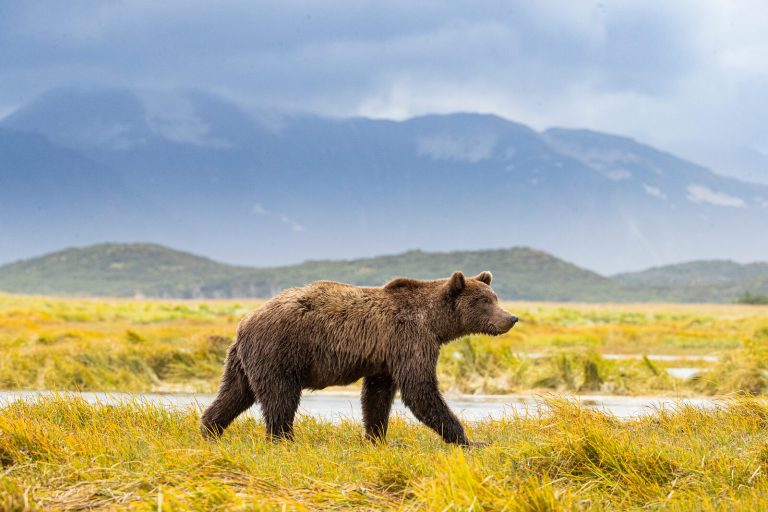
Most dangerous wildlife encounters aren’t random, they’re invited, by the smell of food in camp. A bear that learns to raid coolers, a family of rodents that chews through a pack for a candy bar, a raccoon that empties your food bag overnight: every one starts with a careless camper and food left within reach. Protecting your food protects your trip, your safety, and the animals themselves, because a food-conditioned bear is often a dead bear. This guide covers how to store food and manage odors so that nothing in the backcountry has a reason to visit your camp.
The underlying principle is that wild animals are opportunists driven by their noses, and easy calories teach them to come back. Do not attract predators and scavengers by leaving food lying around camp, instead put every scented item somewhere animals can’t reach and can barely smell, well away from where you sleep. Break the link between your camp and an easy meal and the encounters simply don’t happen. This is the food-management side of our broader guide to avoiding and handling wildlife encounters, and it starts with how you choose and set up a campsite.
Why food storage matters
Leaving food accessible does three kinds of harm. It puts you at risk, by drawing bears, big cats, and other animals right to where you sleep. It ruins trips, when a rodent chews through your pack or a bear makes off with three days of meals miles from the trailhead. And it kills wildlife: an animal that learns to get food from people loses its fear, becomes a danger, and is often killed by managers as a result. “a fed bear is a dead bear.” Good food storage is both self-defense and conservation. In many parks it’s also the law, with approved canisters or lockers required and fines for non-compliance.
What counts as a “smellable”
Animals are drawn by odor, not just food, so far more than your dinner needs to be stored. Treat all of the following as “smellables” to be secured away from your tent:
- All food, snacks, drinks, and spices, including sealed and packaged items.
- Trash, food wrappers, and used cooking water.
- Toothpaste, sunscreen, lip balm, soap, and bug spray.
- Cookware, utensils, and the clothes you cooked or spilled food in.
- Anything scented at all, even if it isn’t edible.
If it has a smell, it goes with the food. The clothes you cooked in, in particular, should not be the clothes you sleep in.
The camp triangle
Organize camp so that the three scented zones are far apart. Set up a triangle with your tent, your cooking area, and your food storage each separated by at least 100 yards (90 m), with the kitchen and storage downwind of where you sleep. Cook and eat away from your tent, store food away from both, and never bring any smellable, not a granola bar, not toothpaste, into the tent overnight. This spacing means that if an animal investigates the food smell, it does so far from your sleeping body. Choosing a site with this layout in mind is part of good campsite setup.
Never keep food in your tent
The most dangerous mistake in bear country is sleeping with food, snacks, or scented items in your tent. It invites an animal to tear into the one place you’re most vulnerable. Everything with a smell goes in the canister, the hang, or the locker. Never beside your head.
Bear canisters
A hard-sided bear canister is the most reliable and now often-required method: a rigid, lockable barrel that bears can’t open, crush, or carry off effectively. It works everywhere, above treeline, in terrain with no good hang trees, and in areas where bears have learned to defeat hangs, which is why many parks mandate approved canisters. Pack all your smellables inside, close it, and set it on the ground at least 100 yards (90 m) from your tent, ideally wedged among rocks or logs so it can’t be rolled into water or off a cliff. Don’t tie it to anything. A bear can use the cord as a handle. The trade-offs are weight and bulk, but a canister needs no tree, no skill, and no time to rig, and it doesn’t fail in the night.
Hanging a bear bag
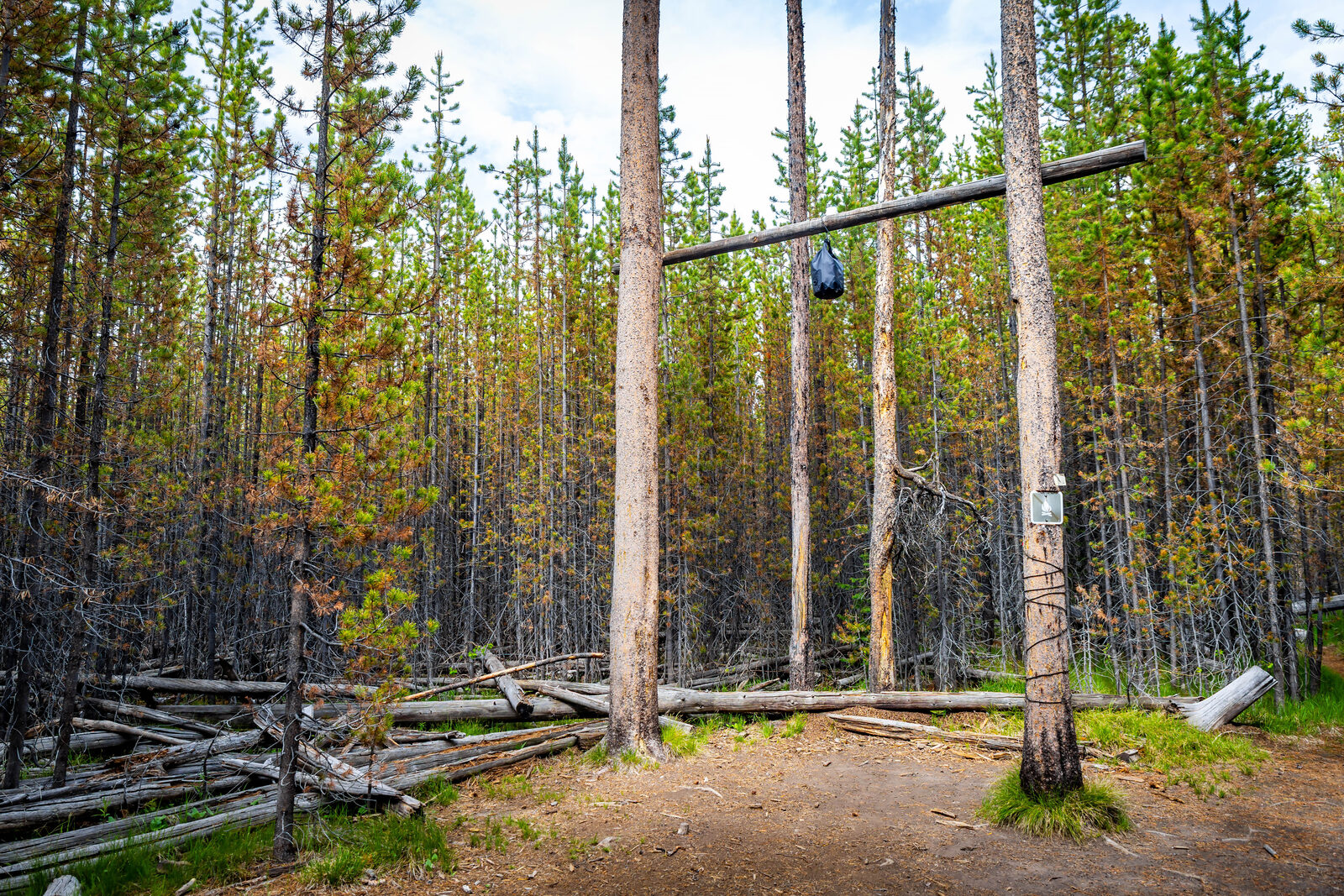
Where canisters aren’t required and good trees exist, a proper bear hang keeps food out of reach. The target is food suspended at least 12 feet (3.7 m) off the ground and 6 feet (1.8 m) out from the trunk and any branch, high enough a standing bear can’t reach it and far enough out that it can’t be reached from the tree.
The reliable method is the counterbalance or “PCT” hang: throw a weighted cord over a sturdy branch well out from the trunk, haul your food bag up to the branch, then clip a second bag or stick as a counterweight and push it up with a stick so both hang out of reach with no cord tied off low for an animal to bite through. Do your hang before dark. Rigging one by headlamp is miserable, and site it well away from your tent. Be honest about whether the trees allow a real hang; a lazy bag dangling six feet (1.8 m) up from a low branch is just a piñata for a bear, and in many areas bears have learned to defeat weak hangs entirely.
A bad hang is worse than none
A food bag hung too low, too close to the trunk, or tied off within reach teaches bears that camps mean food. If you can’t achieve a true 12-feet (3.7 m)-up, 6-feet (1.8 m)-out hang, use a canister or a provided locker instead. Half-measures create problem bears.
Lockers, boxes, and developed sites
Many established campgrounds and backcountry sites provide metal bear lockers or food storage boxes. Use them, and latch them fully every time, since a locker left open is worse than none. At a trailhead or car campsite, store food in a hard-sided vehicle (trunk, out of sight) rather than a tent or cooler left out, and roll up windows. In areas with provided infrastructure, that infrastructure is almost always the required and safest option; check the local rules before you go.
Rodents and small raiders
Bears get the headlines, but mice, marmots, raccoons, ringtails, and squirrels ruin more trips, and they can reach places bears can’t. They’ll chew through a pack, a tent, or a stuff sack to get at food, and packrats will gnaw gear for the salt. A hard canister defeats them too; a hang deters larger raiders but not a climbing mouse. In rodent-heavy areas, keep food in the canister, hang packs with pockets open so a curious mouse doesn’t have to chew its way in, shake out boots and bags, and never leave crumbs in the tent. At popular sites the local rodents are bold and practiced. Assume anything reachable will be reached.
Clean-camp habits
- Cook away from your tent and keep the kitchen small and tidy; wipe up spills immediately.
- Pack out all trash and food scraps. Don’t bury garbage, animals dig it up. Strain food bits from dishwater and pack them out; scatter the grey water well away from camp.
- Change out of cooking clothes before bed and store them with the food if they’re food-scented.
- Store everything the moment you’re done eating, not at bedtime, most raids happen in the quiet hours around dusk and dawn.
- Keep a clean camp all day, not just overnight; an unattended lunch spot draws animals too.
- Leave the site cleaner than you found it, for the next camper and the local wildlife, core Leave No Trace practice.
Common mistakes
- Storing only “food.” Toothpaste, sunscreen, and trash all smell like a meal. Secure every scented item.
- Keeping snacks in the tent. The single most dangerous habit in bear country. Nothing scented sleeps with you.
- A token hang. Too low or too close to the trunk trains bears. Hit 12-up and 6-out, or use a canister.
- Tying the canister off. A cord is a handle. Leave it free among rocks, away from water and drops.
- Storing at bedtime. Dusk raids happen first. Secure everything the moment the meal ends.
- Ignoring the small stuff. Mice and marmots wreck gear. Hard storage and no crumbs beat them too.
What to carry
- An approved bear canister . The fail-safe, required in many parks; needs no tree and no skill.
- A bear-bag kit , 40+ feet of cord, a throw bag or rock sack, and a dry sack, for hanging where canisters aren’t required.
- Odor-resistant or dry bags , to corral smellables and cut the scent your camp gives off.
- A pack you can hang or empty . Kept crumb-free and pockets open in rodent country.
- Trash bags . To pack out every scrap; nothing edible stays in camp.
Read our wildlife encounters guide
Key takeaways
Nearly every dangerous animal encounter in camp traces back to accessible food, so the surest way to stay safe is to give wildlife no reason to come. Treat everything scented as food, separate your tent, kitchen, and storage into a wide triangle, and lock your smellables in a canister, a proper 12-up-6-out hang, or a provided locker. Never in your tent. Don’t forget the mice and marmots, keep a clean camp from the first meal to the last, and pack out every scrap. Do it well and the animals pass your camp by, which keeps both you and them alive. Exactly how it should be.
Adapted in part from the U.S. Army Survival Field Manual (FM 3-05.70 / FM 21-76), Chapter 11, “Dangerous Animals” (avoiding predators by not leaving food in camp and staying aware of your surroundings), combined with modern Leave No Trace and land-management food-storage practice (bear canisters, hangs, and lockers).
Wilderness Experts is reader-supported. As an Amazon Associate we earn from qualifying purchases; when you buy through links on our site we may earn a commission at no extra cost to you. It never changes what we recommend.