
Outdoor Research Rocky Mountain High Gaiters Review: keeping snow out of your boots
Gaiters are the piece of winter kit people skip and then wish they had not. Snow packs into the gap at the top of the boot, melts against the sock, and refreezes, and by mid-afternoon a small oversight has become the cold, wet feet that start trench foot and frostbite. The Outdoor Research Rocky Mountain High is the long-running answer to that gap: a tall, tough, uncomplicated gaiter that closes the boot off at the knee.
Quick take
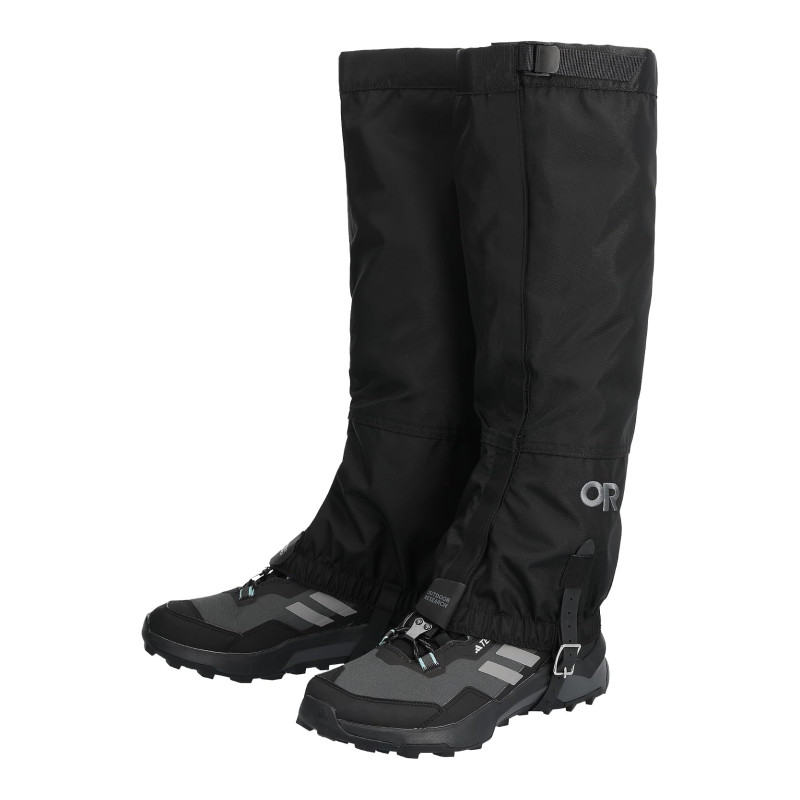
A full-height gaiter that does the one job properly: keeping snow, scree and mud out of the top of your boot. Rugged coated nylon packcloth, a wide hook-and-loop front closure you can work in gloves, an instep strap and a top buckle to stop it creeping down the calf. It is water-resistant rather than waterproof, which is the deliberate trade for breathability and cost, and it is the right call for hiking where a waterproof laminate would soak from the inside. The top buckle is the part that breaks. Sized right and looked after, this is a gaiter that lasts years.
What it does
The Rocky Mountain High is a full-length leg gaiter, running from the boot to just below the knee, built from a rugged 420 denier nylon packcloth with a water-resistant polyurethane coating. It seals the boot cuff against the two things that ruin a winter day: snow coming in over the top on any ground deeper than your ankle, and grit, mud or scree working in on the way home. The front closes with a reinforced hook-and-loop strip about an inch (2.5 cm) wide, which is the detail that matters most in the cold, because you can open and close it wearing gloves and without taking a boot off. An instep strap runs under the sole to hold the bottom down, a lace hook stops the front riding up, and an adjustable webbing strap and buckle at the top keep the whole thing from sliding down your calf over a long day. The coating is deliberately water-resistant rather than a waterproof membrane, so the fabric breathes and sheds snow instead of trapping the moisture your legs are producing.
What verified buyers say
Verified-purchase owners, including winter hikers, hunters, desert scramblers and long-distance walkers, converge on a few points:
- They do the core job. The most common report is simply that snow stays out of the boot, with owners crediting the elasticated boot-end fit for sealing the cuff rather than merely covering it.
- The fabric takes abuse. Buyers describe consecutive days on sharp limestone and coarse sandstone with the fabric and the instep strap intact, which is the durability people are actually buying at this height.
- Light enough to carry on spec. Several owners note they bring them without knowing whether they will be needed, which is the behaviour that makes gaiters useful in the first place.
- They keep more than snow out. Regular mention of mud, grit and trail debris, and of arriving at camp clean enough to get into a tent without bringing the trail in.
Worth knowing
Two consistent complaints, and both are worth planning around. The top buckle is the failure point: owners with several pairs report the plastic buckle cracking well before the fabric wears out, which renders the gaiter useless until you replace it. Carry a spare strap or a length of cord if you are going somewhere committing. Second, sizing runs small, and calf circumference matters more than shoe size, so measure rather than guessing and size up if you are between options or wearing insulated boots. Do not expect a waterproof shell: this is a coated fabric, not a laminate, and in sustained wet snow or rain it will wet through eventually. That is the correct trade for a hiking gaiter, because a fully waterproof one soaks you from the inside when you are working hard, but it does mean this is not the tool for standing in slush all day.
Who it is for
The committed winter walker, which is why this sits in our Enthusiast tier. Someone who is out often enough that snow above the ankle is normal, and who wants a gaiter that survives several seasons rather than one. Our guide to winter hiking and snow travel puts gaiters on the carry list for any day with snow deeper than your ankle, and this is the version we would buy for that. They pair naturally with traction on a hard day and with snowshoes on a soft one, where the deck throws snow up the back of your leg with every stride. If your winter is shorter and gentler, an ankle-height gaiter covers the trail-debris job for less bulk. If you are heading into sustained alpine wet or expect to be kicking steps in crusted snow all day, the heavier expedition versions in the same family are built for that punishment.
Specs at a glance
- Typefull-height leg gaiter
- Fabric420D nylon packcloth, PU coated
- Water resistancewater-resistant and breathable, not waterproof
- Closurereinforced hook-and-loop front, about 1 in (2.5 cm) wide
- Retentioninstep strap, lace hook, top buckle and webbing
- Listed weight6.8 oz (193 g) · pair, men's
- Best forsnow above the ankle, scree and mud
Wilderness Experts is reader-supported. As an Amazon Associate we earn from qualifying purchases; when you buy through links on our site we may earn a commission at no extra cost to you. It never changes what we recommend.
The Verdict
For the weight and the space they take, gaiters return more comfort than almost anything else you can put in a winter pack, and the Rocky Mountain High is the durable, sensible version of them. Buy them a size up, measure your calf, accept that they are water-resistant rather than waterproof, and treat the top buckle as the part to watch. Then pair them with the rest of the winter footing system: MICROspikes when the ground is hard and slick, Evo Trail snowshoes when it is soft and deep, and our guide to travelling safely on snow and ice for reading which is which.