
Oboz Bridger Insulated Review: an insulated boot you can actually hike in
There is a real gap between a three-season hiking boot worn with a thick sock and a pac boot built for standing still in hard cold. The Oboz Bridger Insulated sits in it: a proper hiking boot, with a supportive midsole and a lugged outsole you can walk on all day, that happens to carry insulation and a waterproof membrane. It is the answer for the winter days our guide to winter hiking and snow travel describes, where you are moving but the ground never thaws.
Quick take
An insulated boot you can actually hike in, which is rarer than it sounds. Waterproof nubuck upper over a B-DRY membrane, 200 gram 3M Thinsulate, and a real hiking chassis underneath rather than the soft rubber-and-felt construction of a snow boot. It takes a snowshoe binding and a traction device without complaint. The last runs narrow, which is the single thing to know before ordering, and a minority of hard-use owners report seams giving out sooner than the price suggests. For a moving winter hiker who wants warmth without giving up the boot, this is the one.
What it does
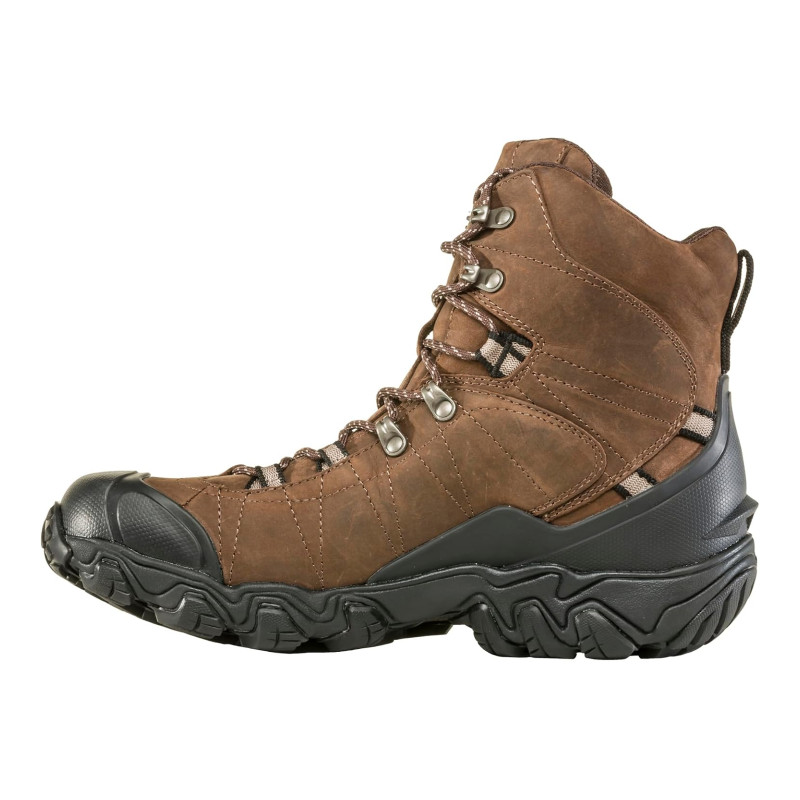
Most people solve winter footwear badly in one of two directions. They wear a summer boot and thicker socks, which crushes circulation and makes their feet colder rather than warmer, or they buy a heavily insulated pac boot and discover it is miserable to walk any distance in. The Bridger Insulated is built for the middle: Oboz starts from a hiking boot and adds winter to it, rather than starting from a snow boot and hoping it hikes. The upper is waterproof nubuck leather over a B-DRY waterproof breathable membrane, which is the part that matters most, because a membrane that lets vapour out is what stops your own sweat freezing against your foot at the first stop. Insulation is 200 gram 3M Thinsulate, which is a deliberately moderate amount: enough for a moving hiker on a cold day, not enough for standing around at a trailhead in deep cold, and that restraint is the right call for the intended use. Underneath is a genuine hiking sole and midsole, so the boot supports a loaded pack on frozen uneven ground, and the shaft, at 8 inches (20 cm) in the men’s and 7 inches (18 cm) in the women’s, is tall enough to work with a gaiter and stiff enough for a snowshoe binding. Oboz also builds a 10 inch (25 cm) version for deeper snow.
What verified buyers say
Verified-purchase owners include winter hikers, snowshoers and people who work outdoors through northern winters, and the pattern is consistent:
- Comfortable from the first day. The most common praise is that they need little breaking in, which is unusual for a leather winter boot and is what repeat Oboz buyers say keeps them with the brand.
- Warm while moving, without bulk. Owners working in near-zero conditions describe them as warm enough for a full day on their feet while still feeling like a boot rather than a moon boot.
- They last for people who look after them. Several buyers report multiple pairs bought over years, wearing older pairs for rough work and newer ones for hiking.
- The insole is unusually good. Oboz ships a genuinely supportive footbed rather than the flat foam most makers include, and long-term owners specifically mention it.
Worth knowing
The last runs narrow. This is the most repeated fit note across the review pool, and it matters more in a winter boot than a summer one, because the entire point is room for a thicker sock without compressing your foot. Order the wide if you are anywhere near the boundary, and if you cannot get wide in the colour you want, choose fit over colour. Some owners also report the boot rubbing at the ankle before it softens. The honest reservation is durability under heavy daily use: a minority of buyers have had stitching and seams break down within a few months of constant wear, which is disappointing at this level, and the reports of poor warranty follow-up are worth knowing about even though most owners never need it. For weekend winter hiking rather than daily work wear, that risk is much smaller. Finally, be clear about what 200 gram insulation is and is not: it is right for a hiker who keeps moving, and it is not enough for standing still in hard cold, where a genuine pac boot is the correct and different tool.
Who it is for
The Enthusiast who has decided winter hiking is a thing they do, and who has worked out that a summer boot plus thick socks is not the answer. If your winter outings are occasional and gentle, the stiff waterproof three-season boots already in our catalogue, the Salomon Quest 4 GTX or the women’s Lowa Renegade GTX, sized up for a thicker sock, will serve you perfectly well and cover three more seasons besides. Choose the Bridger Insulated when the ground stays frozen all day, when you are snowshoeing regularly, or when your feet are the thing that ends your winter walks early. Wear it with gaiters for anything above the ankle, and expect to add traction when the trail turns hard, because no boot tread substitutes for spikes on ice.
Specs at a glance
- Typeinsulated waterproof hiking boot
- Upperwaterproof nubuck leather
- MembraneB-DRY waterproof breathable
- Insulation200 g 3M Thinsulate
- Height8 in (20 cm) men’s, 7 in (18 cm) women’s, 10 in (25 cm) also made
- Fitnarrow last, wide sizes available
- Listed weight3.1 lb (1.4 kg) · pair, men's 8 in (20 cm)
- Best forwinter hiking and snowshoeing while moving
These links go to MEC, which stocks both the men’s and the women’s boot first-party. We have no affiliate relationship with them and earn nothing if you buy through them. We link MEC rather than Amazon because a boot has to be bought in your size and width, and Amazon’s listings for this model are scattered single-size offers rather than a full size run. In the United States, REI and Oboz both carry it.
Find the men’s at MEC Find the women’s at MEC
The Verdict
The Bridger Insulated is the boot for the winter hiker who is tired of choosing between cold feet and a boot that cannot walk. It hikes like a hiking boot because it is one, the membrane and the moderate insulation are matched to somebody who is generating heat, and it takes gaiters, spikes and snowshoe bindings without argument. Order it wide unless you know you have a narrow foot, and treat it as weekend winter kit rather than a daily work boot. For the gentler end of winter, our existing three-season boots sized for a thick sock still do the job, and our guide to travelling safely on snow and ice explains why circulation, not insulation thickness, is what actually keeps your feet warm.