
Coros Apex 4 review: offline maps and long battery life on the wrist
A breadcrumb line on a blank screen tells you where you have been. A map tells you what is around you: the side trail you just passed, the creek ahead, how far the ridge still climbs. The Coros Apex 4 puts offline topographic maps on your wrist and still runs for days of tracking on a charge.
Quick take
A mapping GPS watch with long battery life at a moderate price. The Apex 4 has offline topo maps with trail names, accurate dual-frequency GPS, a titanium bezel and sapphire glass, and about 60 hours of GPS tracking in the larger size. The screen is dimmer and coarser than the colour displays on smartwatches, it has no contactless payment or app store, and the larger case is bulky on a small wrist. Choose it when you want a map and battery life ahead of smartwatch features.
What it does
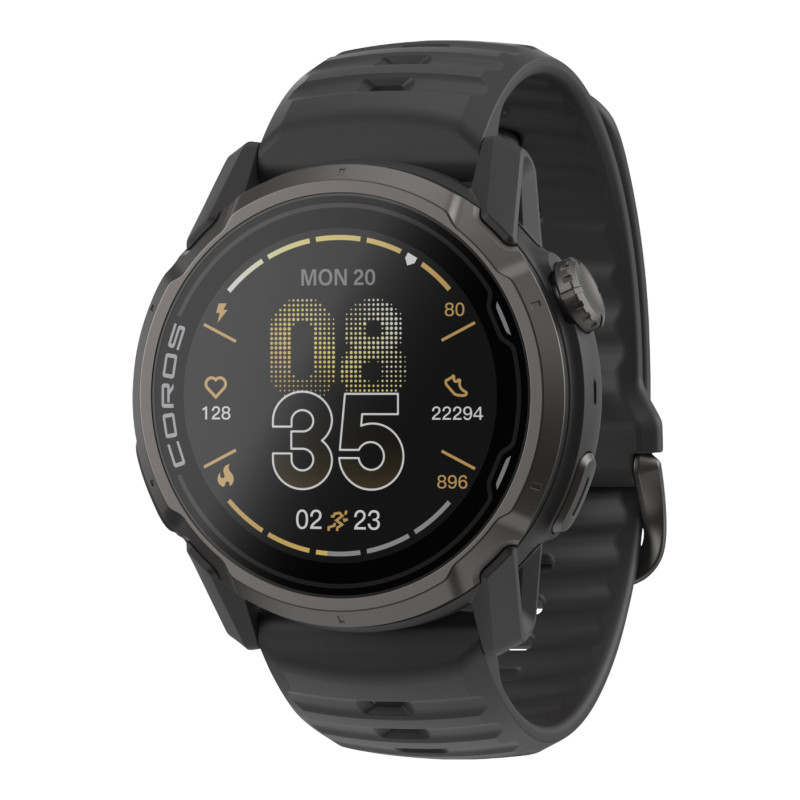
The Apex 4 is a GPS watch for mountain sports, in 42 mm and 46 mm cases. The case is fibre-reinforced polymer with a titanium bezel and a sapphire glass lens, which resists scratches from rock. The screen is a memory-in-pixel display: it is always on, easy to read in direct sun and frugal with power, and it is dimmer and lower in resolution than the screen of a smartwatch.
It stores detailed offline maps, with street and trail names, managed through the Coros phone app. During an activity one button opens the map, and the watch shows your position, your recorded track and any route you have loaded, and can lead you back to the start. Routes are built in the Coros app or imported as GPX files from other mapping apps. The GPS receives on two frequencies for better accuracy under trees and beside rock walls, and there is a barometric altimeter, a compass and a thermometer.
A speaker and microphone give spoken alerts and let you take phone calls on the watch. It is water resistant to 50 metres, charges with a standard USB-C cable, and has no subscription for maps or features.
Sizes and battery life
Coros rates the 46 mm watch at 24 days of daily use and about 65 hours of continuous GPS tracking, less in its most accurate dual-frequency mode. An independent test measured 63 hours. That is a week of full hiking days between charges. The 42 mm watch is rated at 15 days and about 35 hours of GPS. The 46 mm weighs about 2.3 ounces (65 g) with its band; choose the 42 mm for a small wrist and accept the shorter battery life.
What verified buyers say
Across verified-purchase reviews, the same points come up:
- Battery life. Owners who track now and then charge about every week and a half, and several moved from a smartwatch for this reason.
- Accurate tracking. Distance and elevation agree closely with other devices used alongside it.
- Maps and conditions on the wrist. The maps, altitude, barometer and weather screens are the features owners use in the backcountry.
- Simple to use. Fewer features than the largest brands, and easier to learn.
- The screen divides opinion. Easy to read in sun; dull indoors and low in resolution next to a colour smartwatch display. One buyer who needs reading glasses could not read it and returned it.
- Bulky on small wrists. The 46 mm case is deep, and some preferred the earlier all-titanium body.
- Support can be slow. A buyer with a technical fault waited days for a resolution.
Worth knowing
Before you leave, check that the maps for your region are on the watch, and download any that are missing over Wi-Fi. A watch map is small: it is good for checking a junction or your position, and poor for planning a route, so carry a paper map or a phone app with a larger view. The screen is dim indoors and in deep shade, and the backlight uses battery. The scroll wheel is easily turned by a sleeve or a pack strap, so the watch locks its controls and has to be unlocked outside an activity. There is no contactless payment and no app store. It has no way to call for help beyond cell coverage; for that, carry a satellite communicator.
Who it is for
The Apex 4 is for hikers, backpackers and trail runners who want to see a map on their wrist and track for days without a charger, and who care less about payments, apps and a bright colour screen.
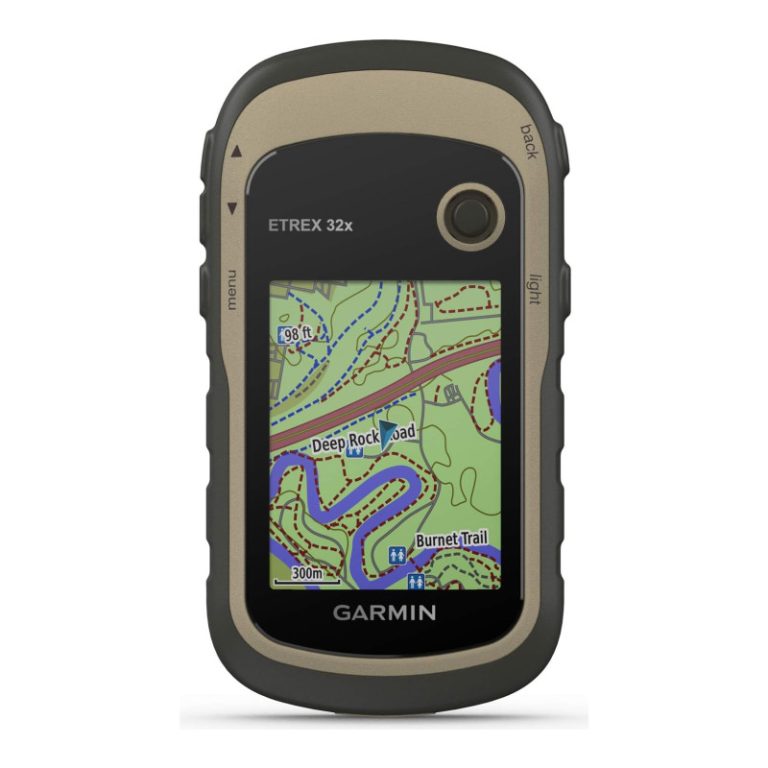
For trips of two weeks or more between charges, the Garmin Enduro 3 has the same kind of maps and tracks for about 120 hours. If you do not need maps on the watch, the Garmin Instinct 3 Solar is tougher, costs less and has a built-in flashlight. For a larger map and replaceable batteries, see the Garmin GPSMAP 65s handheld. To send messages and call for help beyond cell coverage, carry the Garmin inReach Messenger. Our guide to map and compass navigation covers the skills a watch does not replace. Our guide to choosing a hiking watch explains how the three kinds of watch differ.
Specs at a glance
- TypeGPS watch with offline maps
- Sizes42 mm and 46 mm
- Casepolymer, titanium bezel, sapphire glass
- Receptiondual-frequency GPS
- Mapsoffline topo and road
- Battery, 46 mm24 days; about 65 h GPS
- Battery, 42 mm15 days; about 35 h GPS
- Water rating50 m
- Listed weight2.3 oz (65 g) · 46 mm, with band
- Best formap navigation and tracking on multi-day trips
These links go to MEC and REI, which both stock the watch in both sizes. We have no affiliate relationship with either and earn nothing if you buy through them.
The Verdict
The Coros Apex 4 gives hikers offline maps, accurate tracking and about a week of full hiking days on a charge, in a case with a titanium bezel and sapphire glass, and three independent test sites name it among their top picks. The screen is plain, and it is a sports watch more than a smartwatch. For map navigation on the wrist at a moderate price it is a sound choice. If you can do without maps, the Garmin Instinct 3 Solar is tougher and costs less.