
How to signal for rescue in the backcountry
When something goes wrong in the backcountry, staying alive is only half the job. The other half is being found. Search teams can pass within a few hundred yards of a person and never see them, because a still, silent human blends into the landscape. Signaling is how you close that gap: you turn yourself into something the eye and ear can’t miss. This guide covers how to signal for rescue with whatever you have, from a satellite beacon to a polished belt buckle, and how to make your signal work in wind, fog, forest, and darkness.
The underlying principle is contrast and pattern. Nature is random, muted, and quiet; rescue signals are the opposite, bright against dull, loud against silence, and arranged in threes or geometric shapes that don’t occur naturally. Three of anything (three fires, three whistle blasts, three flashes) is the international distress signal precisely because nature rarely repeats things in threes. Get high, get seen, get heard, and always keep a second signal ready. This pairs with knowing someone will come looking in the first place. See our guide to a pre-trip safety plan, because a signal only helps if a search has begun.
First: is anyone looking for you?
Signaling assumes a search is underway or an aircraft is passing. If you left a trip plan with a responsible person and a return time, a search will start when you’re overdue, that’s the whole reason to leave one. If nobody knows where you are, your priority shifts: you may need to self-rescue toward a trailhead, road, or drainage while leaving signals behind you. Either way, prepare your signals early, while you still have daylight and energy, and keep both a visual and an audio signal within reach at all times. If someone in the party is hurt, stabilize them first: our guide to backcountry first aid covers the order of treatment and exactly what information a rescue service needs from you.
Prepare before you need it
Build and stage your signals the moment you’re stable. Gather firewood, polish your mirror, hang bright clothing, don’t wait until you hear a helicopter. Aircraft pass fast, and a signal you have to build from scratch will be too late.
Electronic signals, the surest method
A device that broadcasts your exact position is the fastest, most reliable way to be found, and it works at night, in fog, and under forest canopy where visual signals fail. Three tiers are worth knowing:
- Satellite messengers like the Garmin inReach Mini 2 or SPOT X send an SOS with your coordinates to a monitoring center and, on two-way units, let you text rescuers your condition. Coverage is global; they need a subscription and a view of the sky.
- Personal locator beacons (PLBs) like the ACR ResQLink fire a one-push 406 MHz distress signal to the government Cospas-Sarsat satellite network, no subscription, no messaging, just a powerful SOS. It’s the expedition fail-safe.
- A cell phone can work at surprising range from a high point, and a text often gets through where a call won’t. Many phones now offer emergency satellite SOS. Conserve battery: turn it off or to airplane mode between attempts.
Activate the device, then keep signaling by other means anyway. The beacon summons help, but your fire, mirror, and whistle guide it the last mile.
A beacon is not a guarantee
Pressing SOS starts a response, but weather, terrain, and distance can delay rescue by many hours or days. Keep sheltering, staying warm, not losing water to sweat, and conserving energy. Rest, stay shaded, and keep exertion low, as if no one is coming yet. Do not take greater risks because you have a beacon.
The signal mirror, your best daytime tool
On a sunny day, a mirror is the single most effective signal you can carry. A flash of reflected sunlight has been spotted by pilots up to 96 miles (150 km) away under ideal conditions, it weighs nothing, and it never runs out of power. A purpose-made signal mirror with a sighting hole is best. See our emergency whistle and signal mirror review , but any shiny object works: a polished cup, a phone screen, a belt buckle, a knife blade.
To aim one without a sighting hole, catch the sun’s reflection on your palm, then hold up two fingers in a “V” with your target aircraft in the notch. Move the mirror slowly so the bright spot slides off your palm and onto the aircraft through the “V.” Sweep the flash rhythmically toward any aircraft, vehicle, or distant person, even if you can’t pinpoint them, flash toward the sound of an engine. Get to the highest open ground you can, because haze and ground fog can swallow a low flash.
Fire and smoke
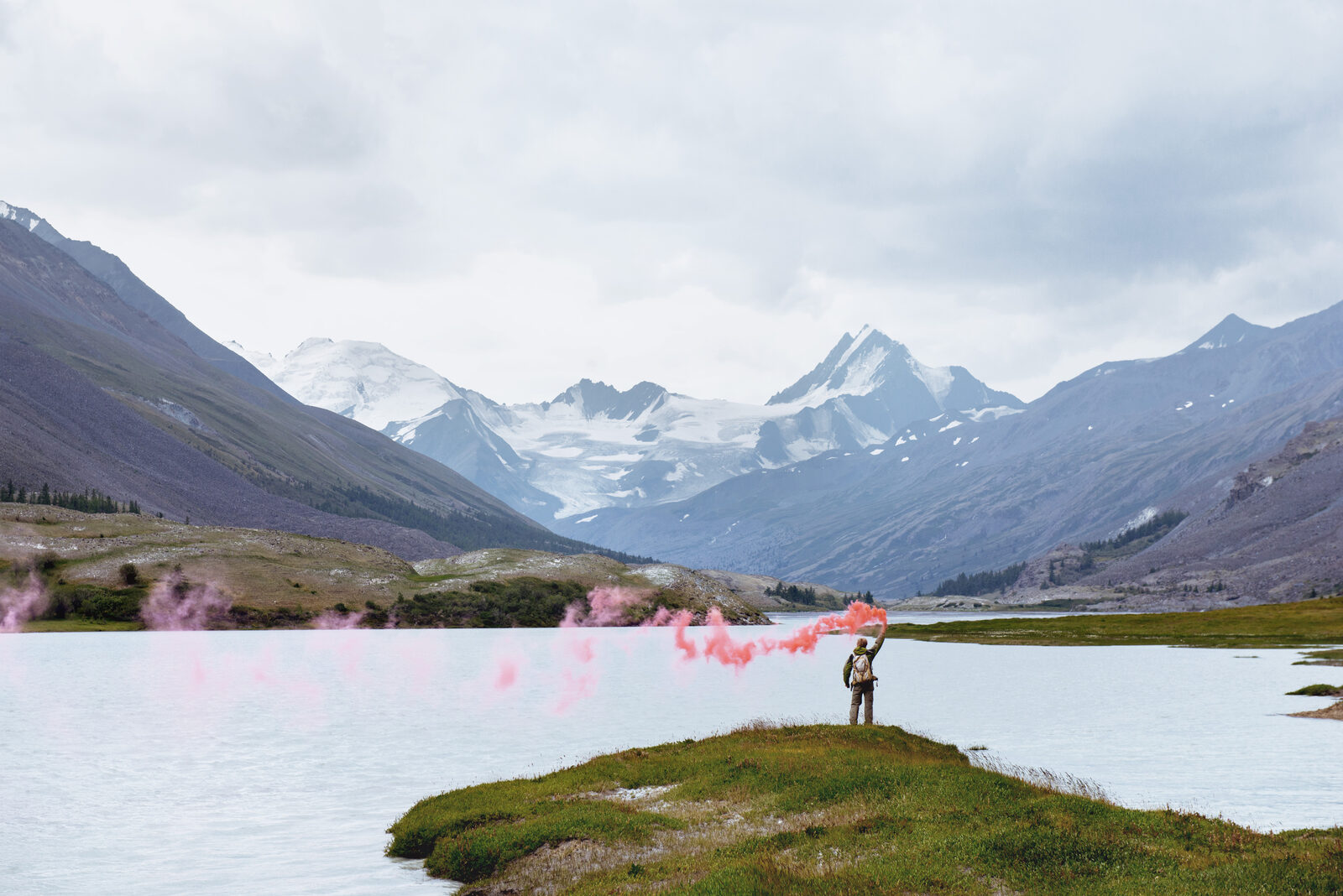
Fire is your round-the-clock signal: flame by night, smoke by day. The international distress pattern is three fires in a triangle or a straight line, spaced about 80 feet (24 m) apart, but if you’re alone and can only tend one, one large signal fire still works. Build them in a natural clearing, a streambank, or a ridgetop where foliage won’t hide them, and stage them ready to light so you can flare them up fast when you hear or see a search.
For daytime smoke, aim for contrast: pile green leaves, moss, or damp grass on a hot fire to make thick white smoke against dark forest, or add rubber, oil, or plastic to throw black smoke against snow or pale sky. Keep green boughs beside the fire to dump on when a plane appears. Our full guide to starting a fire in any conditions covers ignition when your wood is wet or your hands are numb.
Don't start a wildfire signaling for rescue
Clear the ground around signal fires down to dirt, keep them away from dry brush and overhanging branches, and never light a whole tree in dry conditions. A signal fire that escapes endangers you and everyone searching for you.
Whistle and sound signals
Sound reaches through fog, brush, and darkness that stop light. A whistle carries far louder and longer than your voice. Some have been heard three-quarters of a mile away, and costs almost nothing to carry on your pack strap. The distress call is three sharp blasts, repeated: pause, then three more. Three of anything means “help.” Blow in bursts rather than continuously so you don’t exhaust yourself, and listen between rounds for a reply. If you have a firearm, three evenly spaced shots is a recognized distress signal; keep one round in reserve to confirm your location once you hear searchers.
Ground-to-air signals and codes
If you can’t hold a signal continuously. You need to sleep, gather wood, or tend an injury. Leave a large, permanent signal on the ground that an aircraft can read without you. Stamp or lay out symbols in an open area, made from contrasting material: tramped snow filled with branches, rocks on sand, logs on grass, or bright clothing spread out. Make them big, at least 13 feet (4 m) by 20 feet (6 m), with straight lines and square corners the eye reads as man-made.
Two ground-to-air codes are worth memorizing: a large V means “require assistance,” and an X means “require medical assistance.” An SOS , three short, three long, three short, works flashed with a light or laid out on the ground. Spread bright clothing or an emergency blanket in a geometric pattern, and orient signals to catch shadow for contrast.
If you have nothing
Stripped of gear, you still have contrast and pattern. Spread your brightest clothing on open ground or in a treetop. Build mounds or dig trenches that cast shadows in a straight line or a triangle. Tramp a giant X into snow or drag branches into a shape on a beach. Polish a canteen cup, a coin, or a phone screen into a mirror. Break branches to make a green scar against a hillside. Bang two rocks or a stick on a hollow log in threes. None of these is as good as a purpose-made signal, but a person who arranges the landscape into deliberate patterns is telling every passing eye that someone is here.
Signaling in wind, fog, forest, and dark
- Wind. Smoke disperses fast in wind and is nearly useless in a gale, lean on your mirror, whistle, and a bright ground signal instead. Weight down ground panels so they don’t blow away.
- Fog and low cloud. Light and smoke won’t penetrate. Sound and electronics are your tools: whistle in threes, and trust your beacon or satellite messenger, which don’t need line of sight to you.
- Forest canopy. Trees hide fire, smoke, and mirror flashes from above. Move your signals to a natural clearing, a streambank, a burn, or a ridge, and put ground signals where the sky is open.
- Darkness. Flame and light rule the night. A steady fire, a flashlight or headlamp flashing SOS, or a strobe are all visible for miles. Point a headlamp toward any engine noise and flash in threes.
When an aircraft responds
A pilot who has seen you will usually acknowledge by flying low, rocking the wings, or flashing lights. That doesn’t mean you’re safe yet. Keep your signal going until help physically reaches you, because they may lose sight of you and need to re-locate. If you can reach anyone by radio or phone, guide them in plainly: give your position relative to them as a clock direction and distance, describe a landing area, and count them down as they approach (“half a mile out… you’ll pass over me in ten seconds…”). Stay put once you’ve been spotted unless you’re told to move.
Common mistakes
- Signaling too late. Building a fire from scratch after you hear the helicopter means missing it. Stage everything in advance.
- Only one signal ready. Wind kills smoke, cloud kills mirrors, dead batteries kill electronics. Always keep a visual and an audio option both within reach.
- Signaling from low ground or under trees. Get to the highest open spot you can; a signal no one can see is wasted effort.
- Wandering off. Movement makes you harder to find and can pull you away from your own signals. Once help may be coming, generally stay put. See what to do when you’re lost.
- Exhausting yourself. Blow the whistle and tend the fire in bursts. Rescue can take time; pace your energy.
What to carry
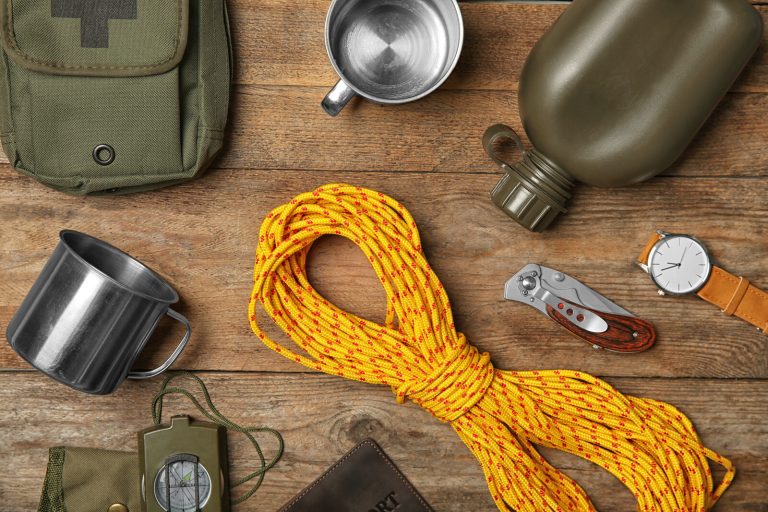
- A whistle and signal mirror , weightless, battery-free audio and visual signals that belong on every trip.
- A satellite messenger or PLB , a Garmin inReach Mini 2 for two-way SOS, or an ACR ResQLink PLB for subscription-free distress.
- A reliable headlamp , for flashing SOS after dark; carry spare batteries.
- Fire-starting tools . A lighter, ferro rod, and tinder to get a signal fire going fast in any weather.
- Bright, high-contrast clothing or an emergency blanket , doubles as a ground panel and a warmth layer.
See our signal whistle & mirror review
Key takeaways
Being found comes down to breaking nature’s pattern: be brighter, louder, and more geometric than your surroundings, and signal in threes. Carry an electronic beacon for the surest call, a mirror for daylight, fire and smoke for around the clock, and a whistle for fog and forest, and stage them before you need them. Leave a trip plan so a search actually begins, get to high open ground, and keep two signals ready at all times. Do that, and a landscape that hides a silent person will light up the moment you want to be seen.
Adapted in part from the U.S. Army Survival Field Manual (FM 3-05.70 / FM 21-76), Chapter 19, “Signaling Techniques” (signals in threes, mirror aiming, fire and smoke patterns, ground-to-air codes, and aircraft vectoring), with modern civilian rescue practice and satellite-beacon guidance.
Wilderness Experts is reader-supported. As an Amazon Associate we earn from qualifying purchases; when you buy through links on our site we may earn a commission at no extra cost to you. It never changes what we recommend.