
How to stay warm through a cold night
A cold night in camp isn’t just miserable, it’s dangerous. Shivering robs you of sleep, sleeplessness robs you of judgment, and a body that can’t stay warm slides toward hypothermia. But being cold at night is almost always a solvable problem, not bad luck. With the right sleep system and a few habits, you can stay warm well below freezing. This guide covers how to stay warm through a cold night in camp, from your pad and bag to the small tricks that make the difference.
The core principle is that your body is the heater and everything else is insulation. Your job is to trap the heat you make and stop it escaping. You lose warmth four ways: into the cold ground, through the air, to wind, and through damp. The two that surprise people most are the ground and moisture. You lose as much as 80 percent of your body heat downward into the ground when you lie on it, and wet insulation barely insulates at all. Get those two right. Insulate underneath and stay dry, and staying warm becomes straightforward. This builds on choosing the site itself in our guide to setting up a safe backcountry campsite.
Insulate from the ground first
This is the step that makes or breaks a cold night, and the one people skimp on. The ground is a heat sink: lie on it and it pulls warmth out of you far faster than the night air, and no sleeping bag can fix cold coming from below because your body weight crushes the insulation flat underneath you. Warmth starts with what’s under you.
Carry a sleeping pad and choose it for its insulation, measured as R-value . Higher is warmer. For cold nights, use a winter pad rated R-4 or more like the Therm-a-Rest NeoAir XTherm (R-7.3), or combine two: a closed-cell foam pad under an inflatable like the NeoAir XLite adds warmth and gives you a backup that can’t puncture. A reliable closed-cell foam pad like the one in our Therm-a-Rest Z Lite Sol review never fails and doubles as a sit pad and a splint. With no pad, build a thick mattress of dry leaves, pine boughs, or grass, compressed, still several inches thick, between you and the ground.
Never sleep directly on cold ground
Most people who are cold at night have plenty of insulation on top and almost none underneath. Never lie directly on bare ground or snow in the cold. Get a thick, uncrushable layer beneath you first. It matters more than how warm your bag is.
Your sleeping bag or quilt
Your bag or quilt traps the warm air around you. A few things make it work:
- Match the rating to the conditions, with margin. A bag’s comfort rating is optimistic for many sleepers. Pick one rated a good bit colder than you expect, especially if you sleep cold.
- Loft is warmth. Insulation works by trapping air, so fluff the bag before you get in and don’t compress it. A down bag like the Kelty Cosmic 20 packs small and is warmest for its weight but is useless when wet; a synthetic bag like the TETON is bulkier but keeps some warmth when damp.
- Don’t overstuff it. Wearing so much that you compress the bag’s insulation from the inside makes you colder, not warmer. Leave the loft room to work.
- Cinch it down. On a cold night, close the hood around your head and snug the neck baffle so you’re not pumping warm air out the top. A large share of heat escapes from an uncovered head and neck.
Layer smart, and keep it dry
What you wear to bed matters as much as the bag. Sleep in clean, dry base layers. A moisture-wicking top and bottom, dry socks, a warm hat, and a neck gaiter. The hat and socks punch above their weight because the head, neck, wrists, and ankles shed heat fast. Add a dry insulating layer if you need it, but stop short of compressing the bag.
The unbreakable rule is dry. Damp clothing loses most of its insulating value, and the sweat from a hard day’s hike will chill you all night. Managing that sweat while you are still moving, which is where most of it happens, is covered in winter hiking. Change out of anything sweat-damp before bed and keep a set of sleep layers you never hike in. If your clothes got wet, dry them by the fire or against your body before you turn in. Never sleep in wet clothing if you have any dry option.
Stay warm by the rules of COLDER
A time-tested checklist for staying warm is the word COLDER:
- C. Keep it Clean. Dirty, matted insulation loses loft and warmth. Keep your layers and bag clean.
- O. Avoid Overheating. Sweat is the enemy; it dampens your insulation and then chills you as it evaporates. Vent and shed layers before you sweat, especially setting up camp.
- L. Wear it Loose and in Layers. Tight clothing cuts circulation and the dead-air space between layers is what insulates. Several light layers beat one thick one and let you fine-tune.
- D. Keep it Dry. From sweat inside and weather outside. Brush off snow before entering the tent; dry damp socks against your body.
- E, Examine your gear for damp, matted, or worn spots.
- R, Repair and re-loft before the cold sets in, not after you’re shivering.
A smaller shelter is a warmer shelter
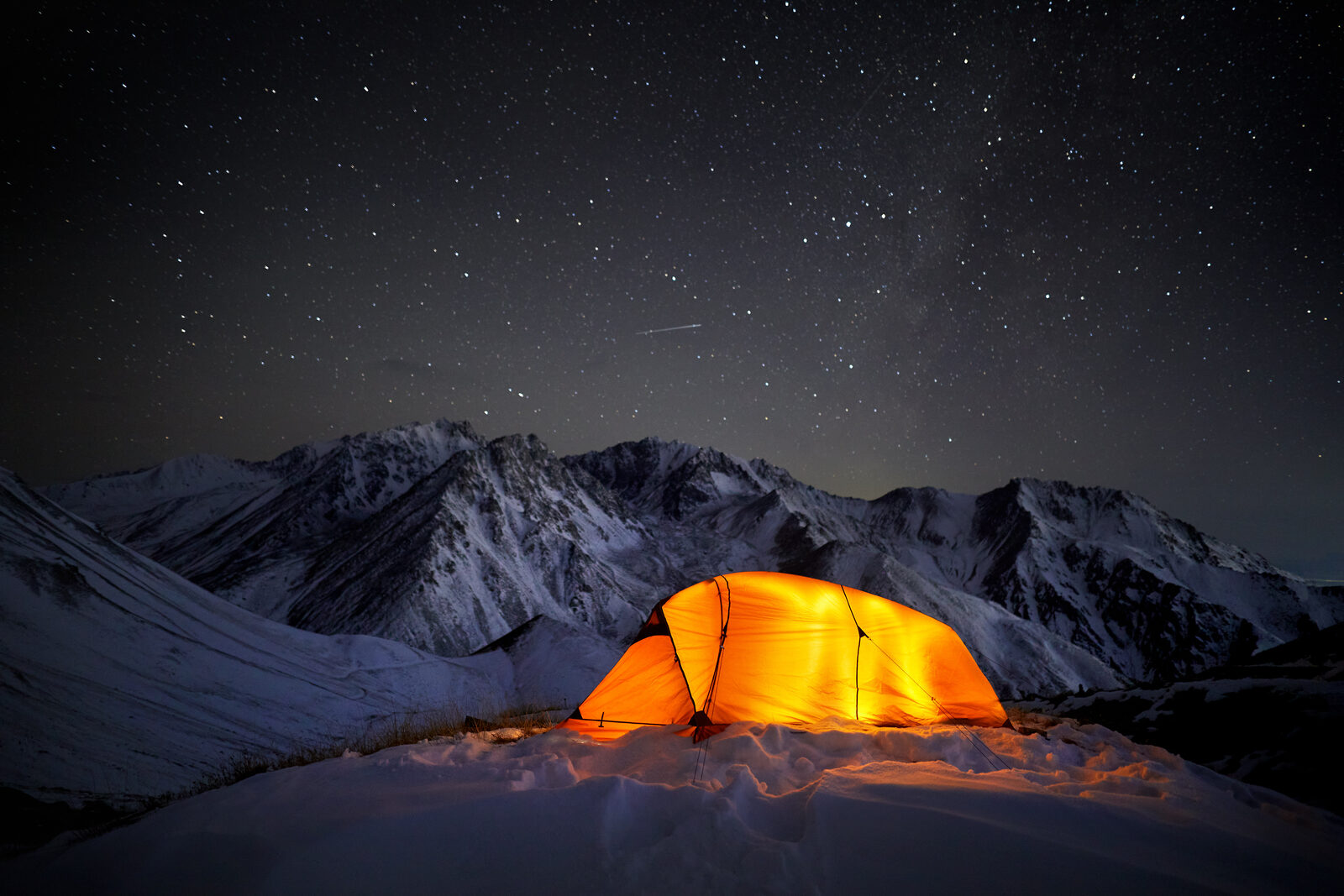
Your shelter’s job at night is to block wind and trap a little warmth. Pitch the tent taut with its low, solid side into the wind, and keep the door and vents managed against drafts. A shelter just big enough for you holds heat far better than a roomy one. Empty space is space your body has to warm. In snow, a well-built snow shelter is remarkably warm because snow insulates, but never sleep directly on the snow floor: lay down a thick bough or pad platform first. Our guide to building an emergency shelter covers improvised options in detail.
Ventilate anything you burn inside
A stove, candle, or heater in a closed tent or snow shelter produces carbon monoxide, odorless, colorless, and deadly, often with no warning. Never run a flame in an unventilated shelter, and never fall asleep with one burning. Keep a vent open, and do your cooking outside or in a vestibule.
Field tricks for a cold night
- Go to bed warm. Do a few jumping jacks or a brisk walk to raise your body heat right before getting in. Your bag traps warmth, it doesn’t create it, so give it warmth to hold.
- A hot water bottle. Fill a leakproof bottle with hot (not boiling) water, cap it tight, and put it in the bag at your core or feet. It radiates heat for hours. A hot meal or drink before bed does the same from the inside. See our MSR PocketRocket 2 review.
- Eat before bed. Digesting food is one of the best ways to generate overnight heat. A fatty or hearty snack before sleep fuels your internal furnace.
- Empty your bladder. Your body spends energy keeping urine warm. A full bladder makes you colder. Get up and go rather than holding it.
- Tomorrow’s clothes in the bag. Stuff the next day’s layers and your boot liners into the foot of your bag so they’re warm and dry to put on, and they fill dead space.
- Vent moisture. Don’t breathe inside the bag, the moisture from your breath dampens the insulation. Keep your mouth outside and the bag’s hood snug around your face.
If you’re caught without a sleep system
Stranded without a bag, your priorities are insulation and blocking wind. Get off the ground onto a thick pile of dry debris, stuff your clothing with dry leaves or grass for insulation, and use an emergency mylar blanket or bivy to reflect your heat back and block the wind. Build a fire and a reflector if you can, and curl up small. Knees to chest. To protect your core. In a group, share body heat by huddling together. It won’t be comfortable, but off the ground, out of the wind, and dry, you can get through a cold night.
Watch for hypothermia
Know when cold has become dangerous. The first sign of hypothermia is shivering; as it worsens, watch for clumsiness, slurred speech, stumbling, and confused or irrational thinking, often the person doesn’t realize it’s happening. If you or a companion show these signs, act now: get into shelter, out of any wet clothing and into dry insulation, off the ground, and add warmth to the core with hot drinks and a hot water bottle. Our guide to backcountry first aid covers treating it. Prevent it before it starts by staying dry, fed, hydrated, and insulated.
Common mistakes, and how to fix them
- No ground insulation. The number-one cause of cold nights. Get a warm pad or a thick debris mattress underneath you.
- Sleeping in damp clothes. Wet insulation doesn’t insulate. Change into dry sleep layers, always.
- Overstuffing the bag. Compressing the loft from inside makes you colder. Leave the insulation room to work.
- Breathing into the bag. Your breath’s moisture soaks the insulation. Keep your face out, hood snug.
- Going to bed cold. The bag only holds heat. Warm up first with movement, food, and a hot bottle.
- A too-big or drafty shelter. Empty space steals heat. Pitch small, block the wind, manage the vents.
What to carry
- An insulating sleeping pad . The foundation of a warm night; pick an R-value to match the cold.
- A sleeping bag or quilt rated below your expected low, with a dry-storage sack.
- Dry sleep layers . Base layers, warm hat, neck gaiter, and dry socks you never hike in.
- A stove and a leakproof bottle , for a hot meal, hot drink, and a hot water bottle, a windproof stove like the MSR WindBurner excels in cold, exposed camps; see our MSR PocketRocket 2 review.
- An emergency bivy or mylar blanket , a lightweight backstop for an unexpectedly cold night.
- A well-pitched shelter , sized and sited to block wind; see our Kelty Discovery Trail 2 review and campsite setup guide.
Key takeaways
Staying warm at night comes down to trapping the heat your body makes. Insulate from the ground first, it’s where most of your warmth escapes. Then use a bag rated for the cold, sleep in dry layers with your head covered, and keep everything dry. Go to bed warm and fed, pitch a small shelter out of the wind, and ventilate anything you burn. Get those right and you’ll sleep soundly well below freezing; get the ground and the damp wrong and no bag will save the night. Dial in your sleep system on an easy trip and cold nights stop being something to dread.
Adapted in part from the U.S. Army Survival Field Manual (FM 3-05.70 / FM 21-76), Chapter 15, “Cold Weather Survival” (the COLDER principles, ground insulation, and shelter warmth), with modern civilian backpacking practice.
Wilderness Experts is reader-supported. As an Amazon Associate we earn from qualifying purchases; when you buy through links on our site we may earn a commission at no extra cost to you. It never changes what we recommend.