
Pelican Marine phone pouch review: dry, floating, and cut that lanyard
A phone in the boat is a map, a camera, and a call for help right up until it gets wet, at which point it is a paperweight you are still carrying. A waterproof pouch is a small, cheap fix for that, and the Pelican Marine is the one that has earned the most trust. It also arrives with a neck lanyard that we think is the wrong thing to wear on moving water, which is a fixable problem and worth understanding before you clip it on.
Relying on your phone outdoors? Read using your phone as a backcountry GPS for what it does well, what it does badly, and what to carry as backup.
Quick take
The waterproof phone pouch we would carry, from a brand that stands behind its cases. It keeps a phone genuinely dry, it floats with the phone inside, and the touchscreen works normally in air. Two things to know before the water: replace the supplied neck lanyard with a breakaway cord or clip it to your life jacket instead, and accept that no capacitive touchscreen works while submerged, so underwater photos are not what this is for.
What it does
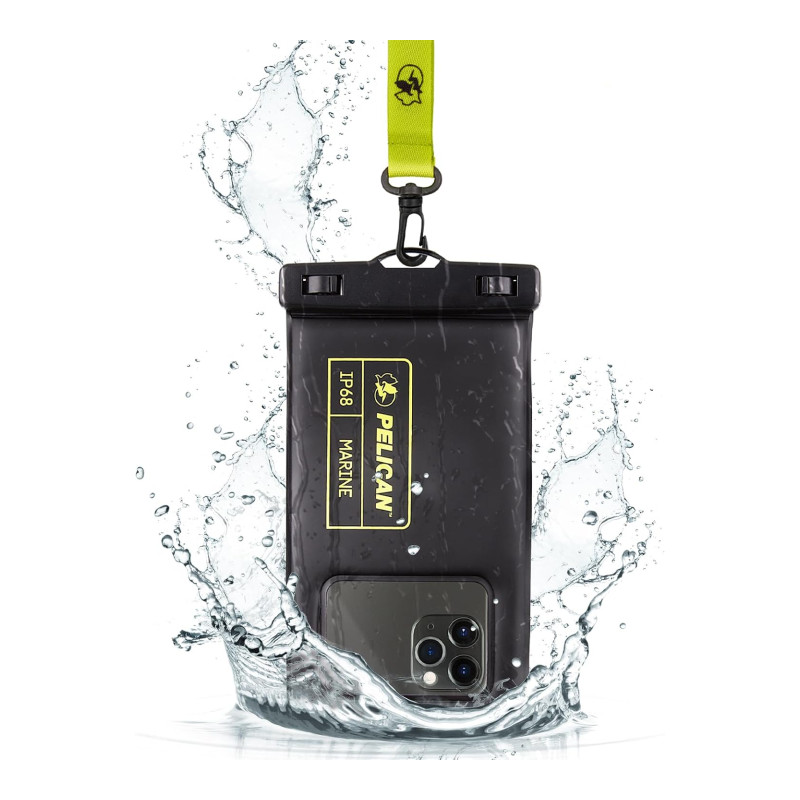
The pouch is a welded, transparent-fronted sleeve with a folding clamp closure along the top: you fold the mouth over, press two levers down, and the seal is mechanical rather than dependent on a zip. Pelican rates the case to IP68, which in practice means it will keep a phone dry through rain, spray, a dunking, and a swim. It floats with a phone inside, which is the property that actually saves phones, because the common failure is not water seeping in over hours but the phone going overboard and straight to the bottom.
The screen works through the front window in air, so you can navigate, take photos, and answer a call without opening the case. The rear window is clear enough for the main camera to shoot through, though the extra layer costs you some sharpness and any shot into the sun picks up flare. Size matters more than it looks: the Regular fits most standard phones, and larger handsets or anything in a thick protective case need the XL. A phone that is too big for the pouch does not merely fit tightly; the bottom row of the screen ends up outside the usable window, which makes the phone awkward to operate without opening the case.
Pelican backs the case with a lifetime warranty, which for a product category dominated by anonymous sellers is a substantial part of what you are buying.
What verified buyers say
Across verified-purchase reviews, the same points come up:
- It keeps phones dry, and owners test it. Buyers report phones staying dry through sea kayaking, river days, snorkelling and white-water rafting, and many describe the sensible habit of sealing a paper towel inside and submerging the empty case before trusting it.
- Floating is the feature that matters. Owners who use it weekly on rivers single out the buoyancy, and one reports a phone surviving a high-speed fall from a personal watercraft inside the case.
- The touchscreen does not work underwater. Several owners bought it expecting submerged photography and were disappointed. This is physics rather than a defect: capacitive screens need skin contact, not water contact.
- Fit is size-dependent and unforgiving. Owners with larger handsets report the bottom of the screen sitting outside the window, or having to strip a protective case off to make the phone fit. Buy the size up if you are close to the line.
- The lanyard draws a specific safety objection. One paddler notes the supplied neck cord has no breakaway or quick-release and calls it hazardous around underwater debris, observing that cutting it would depend on having a knife you can reach. We think that objection is correct.
Worth knowing
Take the lanyard seriously. A cord worn around your neck in moving water is a snag risk, and the paddling rule is that you never attach yourself to anything you cannot shed instantly. Either fit a breakaway lanyard, or do what we would do and clip the pouch to a lash tab on your life jacket, where it is secure, reachable, and not around your throat. Beyond that: no touchscreen works submerged, so plan on shooting above the surface; check your phone against the size chart, because the Regular is genuinely too small for larger handsets in cases; face recognition through the window is unreliable, so set up a passcode you can type; and test the empty case with a paper towel inside before the trip rather than finding out on the water.
Who it is for
This is for anyone who takes a phone near water and would rather not replace it: paddlers, anglers, rafters, and anyone whose day involves a boat or a beach. In the paddling context it belongs on your body rather than in the boat, because the boat leaves without you, and it is the natural companion to the map-and-navigation role a phone plays on easy trips. It is not a substitute for a real communication device where there is no cell coverage. A phone in a dry pouch with no bars is a dry phone with no bars, which is why our paddling guide puts a satellite messenger or an emergency beacon on the packing list rather than treating the phone as the plan.
For everything that should stay dry but is not a phone, use a proper roll-top dry bag, and note that the phone case bundled with most dry bags is not in the same class as this one.
Specs at a glance
Type: sealed floating phone pouch · Rating: IP68 · Closure: folding clamp levers · Floats with a phone inside · Touch-through front window, clear rear window for the camera · Sizes: Regular and XL · Warranty: Pelican lifetime · Supplied lanyard has no breakaway, replace or clip to a lash tab · Best for: paddling, fishing, beach and boat days
Wilderness Experts is reader-supported. As an Amazon Associate we earn from qualifying purchases; when you buy through links on our site we may earn a commission at no extra cost to you. It never changes what we recommend.
The Verdict
The Pelican Marine does the two things a phone pouch has to do: it keeps water out, and it floats when you drop it. The brand backs it with a lifetime warranty, which separates it from the wall of near-identical pouches sold by sellers who will not exist next season. Buy the right size for your phone, expect to shoot photos above the waterline rather than below it, and change how you carry it: a neck lanyard with no breakaway is the one genuinely poor decision in the design, and clipping the pouch to your life jacket instead costs nothing and removes the risk entirely. Do that, and this is the pouch to trust with the phone you would want working at the end of a bad day.