

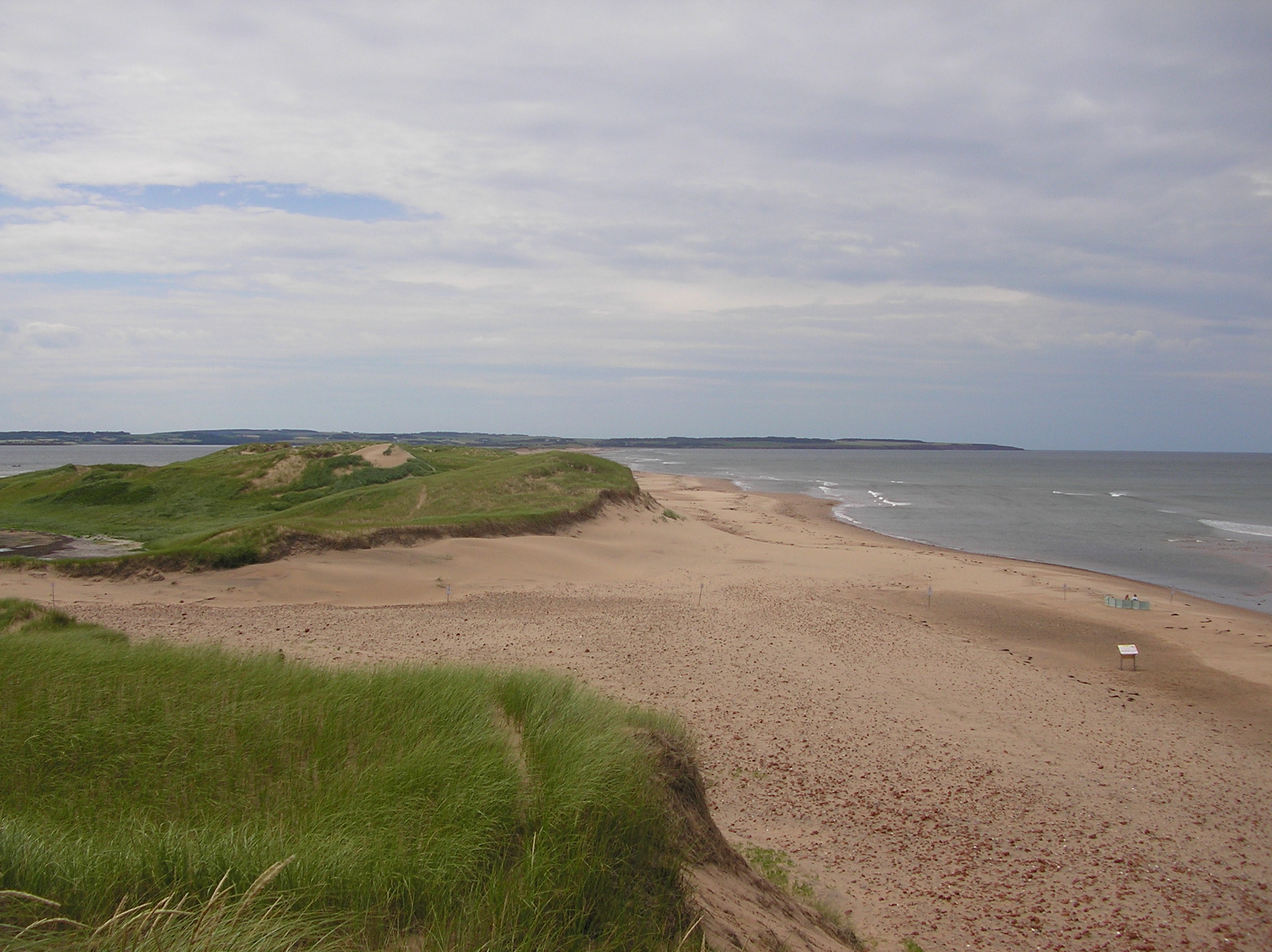
Prince Edward Island National Park
Prince Edward Island National Park strings together some of the most beautiful coastline in Atlantic Canada, red sandstone cliffs, rolling dunes, and long stretches of soft beach along the island’s gentle north shore. Backed by woodland and salt marsh, dotted with iconic lighthouses, and home to the beloved Green Gables of literary fame, it is a classic maritime summer escape.
Fast facts
- Established: 1937
- Size: about 10 square miles (27 km²) along PEI’s north shore
- Coast: red cliffs, dunes and long sand beaches on the Gulf of St. Lawrence
- Culture: includes Green Gables Heritage Place of Anne of Green Gables
- Gateway: Charlottetown / Cavendish, Prince Edward Island
- Managed by: Parks Canada
The landscape
The park protects a narrow ribbon of shore, wind-sculpted sand dunes, warm-water beaches, red sandstone cliffs, salt marshes and pockets of Acadian forest. This dynamic coastal edge is vital habitat for the endangered piping plover and a haven for shorebirds, foxes and great blue herons, with the famous lighthouses and the pastoral island scenery completing the picture.
Best time to go
Summer is the prime season, when the Gulf water warms enough for swimming and all the beaches, trails and services are open. Early fall is quieter and lovely for cycling and walking. Outside the warm months most services close, leaving a windswept, atmospheric coast for off-season strolls.
Getting there and around
The park runs along PEI’s north shore in several sections near Cavendish, Brackley and Greenwich, all a short drive from Charlottetown. A vehicle links the sections and the Green Gables site, but the level Gulf Shore Way is a delight for cycling, and the beaches and boardwalk trails are explored on foot.
Things to do
Swim and relax on the beaches, cycle or walk the scenic Gulf Shore Way, and explore the dunes on the Greenwich boardwalk. Visit Green Gables Heritage Place, watch for piping plovers and shorebirds, tour the lighthouses, and camp within earshot of the surf on a classic maritime holiday.
Staying safe
The Gulf water, though relatively warm, can still be cold with rip currents, so heed beach guidance and supervise swimmers. Coastal storms blow up quickly, sun on the open dunes and beaches is strong, and ticks are present. Use protection, carry water, and stay off the fragile dunes except on the boardwalks.
Know before you go
A Parks Canada pass is required and camping should be reserved, especially in summer. This page is a general overview, not a live conditions report; always confirm current conditions, reservations and closures with Parks Canada before your trip.
- Coordinates
- 46.4574, -63.0635
- Magnetic declination
- 16.6° W (2026)
Set this declination on your compass, then align it to the map's north lines; it is the angle between true north and magnetic north, refreshed each year.
A spread of the park’s main places shows straight away, and the rest appear as you zoom in. You can also search above, or pick any place from the lists below, and the map will go to it.
Getting there 3
Park entrances
Ranger station
On the trail 3
Campgrounds
Hut or shelter
Sights 12
Viewpoints
Beachs
Heritage site
Point of interest
Islands
Map data comes from third-party sources and may be incomplete or out of date, so carry a current official map (terms).
- Best seasons
- Summer, Early fall
- Difficulty
- Easy
- Access / trailheads
- Along the north shore of Prince Edward Island near Cavendish, Brackley and Greenwich, a short drive from Charlottetown via routes 6, 15 and others.
- Water
- Potable water at developed areas; carry water on trails.
- Cell / satellite coverage
- Good cell coverage given the setting.
- Nearest ranger / SAR / emergency
- Parks Canada dispatch: 1-877-852-3100; life-threatening emergencies: 911.
- Permits & regulations
- A Parks Canada pass is required; camping needs a reservation. The park includes the Green Gables Heritage Place (of Anne of Green Gables fame).
- Leave No Trace
- Stay off the fragile dunes except on boardwalks, protect piping plover nesting areas, pack out all waste, and follow Leave No Trace.
January
- Below freezing all day
February
- Below freezing all day
March
- Below-freezing nights
April
- Below-freezing nights
May
June
July
August
September This month
October
November
- Below-freezing nights
December
- Below-freezing nights
What to bring depends on your trip: how long you’re out, where you sleep, and how far you go from the road. The planner builds the list for yours.
Plan a trip here →Averages for 1981–2010 from Environment Canada climate normals, measured at the New Glasgow station, 7 miles (12 km) away at 20 feet (6 m).