

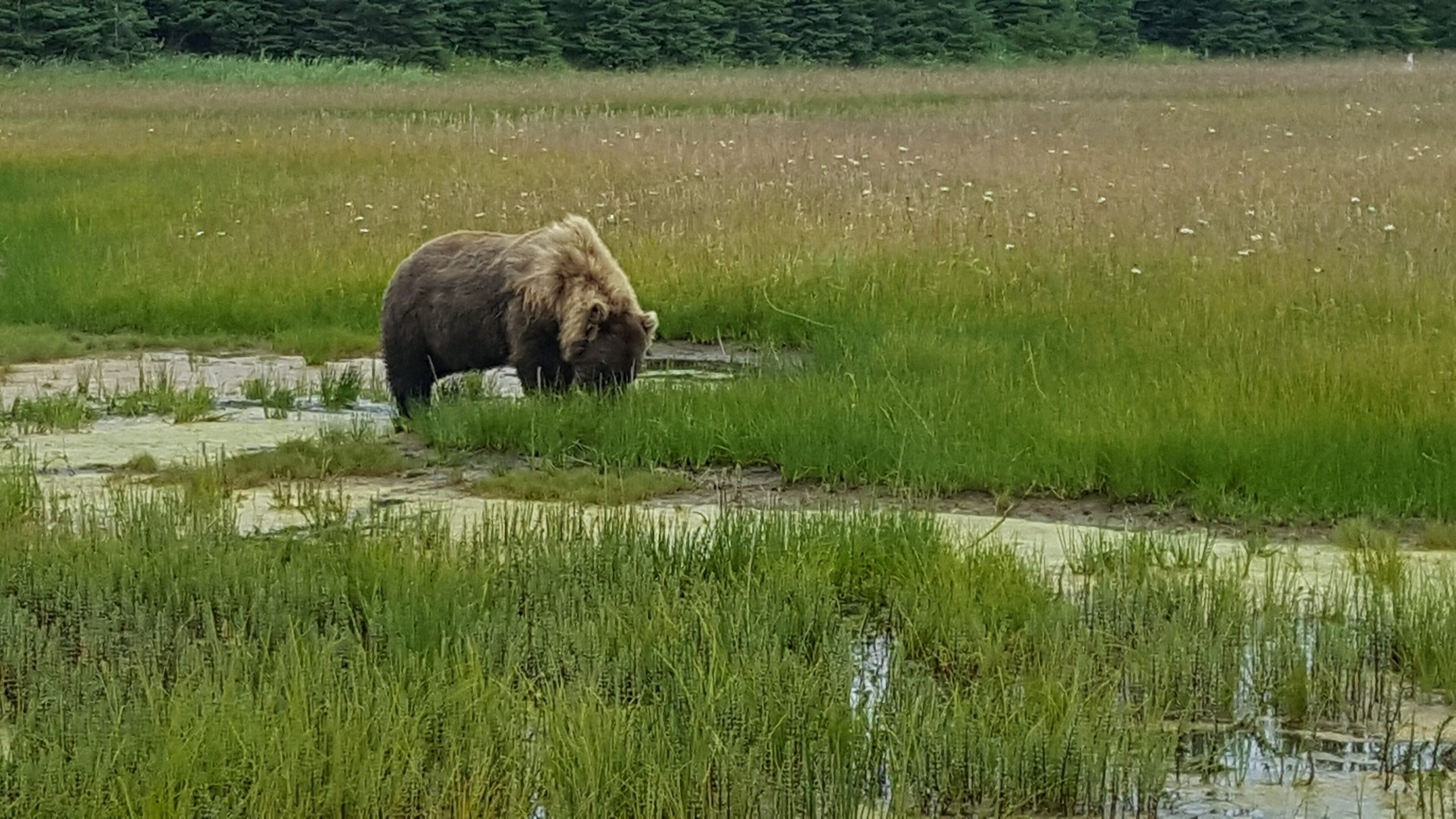
Lake Clark National Park
Roughly 100 miles (160 km) southwest of Anchorage, Lake Clark packs coastal rainforest, jagged peaks, active volcanoes, turquoise glacial lakes and salmon-choked rivers into four million roadless acres, and almost nobody there to share it. Overshadowed by Alaska’s marquee parks, it is a hidden gem where brown bears graze the tide flats and the only way in is by floatplane or boat.
Fast facts
- Established: national monument 1978; national park and preserve in 1980 (ANILCA)
- Size: over 4 million acres (about 6,297 square miles / 16,310 km²)
- Namesake: Lake Clark, more than 40 miles (64 km) long
- Volcanoes: Mount Redoubt and Mount Iliamna, both active
- Location: southwest Alaska, between the Alaska Range and the Pacific
- Managed by: National Park Service
The landscape
Lake Clark is where the Alaska Range meets the sea, and the terrain reflects it: coastal rainforest, jagged mountains, expansive glacial lakes and open alpine tundra, all overseen by the steaming cones of Redoubt and Iliamna. The 40-mile (64 km) lake anchors the park, feeding salmon rivers that drain toward Bristol Bay and drawing the bears the park is famous for.
Best time to go
Mid-June through August is the prime window, the mildest weather, the longest days, and salmon runs in full swing. July and early August are ideal for wildlife viewing, when brown bears gather along the streams to fish. The shoulder months of May and September bring fall color and fewer visitors but more unpredictable weather.
Getting there and around
Lake Clark is genuinely roadless. Access is by small aircraft or boat: most visitors charter a floatplane from Anchorage’s Lake Hood to Port Alsworth, the park headquarters and gateway. From there, additional flights or boats reach remote lodges and trailheads such as Silver Salmon Creek, and in the backcountry you travel on foot, by kayak or by water taxi.
Things to do
Bear viewing at Silver Salmon Creek or Chinitna Bay is the highlight for many. The historic Tanalian Trails near Port Alsworth offer accessible hiking with lake and mountain views, the preserve is renowned for salmon and trout fishing and regulated hunting, and scenic flights reveal the full scale of glaciers and volcanoes. Paddling the calm turquoise water of Lake Clark rounds out the classic trip.
Staying safe
Lake Clark has a high density of brown bears, so carry bear spray, make noise while hiking, never approach wildlife, and follow your lodge’s protocols. Alaskan weather changes rapidly, be ready for rain, wind and cold even in summer, and the rugged, remote terrain demands proper gear and fitness. Because the park lacks infrastructure, you are largely on your own off the beaten path, so share your itinerary and carry emergency supplies.
Know before you go
Charter flights and lodges book up months ahead, and a Lake Clark trip is expensive by park standards, so plan and budget early. Bring all your personal gear, as resupply at Port Alsworth is limited, and carry some cash for tips or souvenirs. This page is a general overview, not a live conditions report; confirm current conditions, flights and permits with the National Park Service and your operators before your trip.
- Coordinates
- 60.6823, -153.2619
- Magnetic declination
- 12.8° E (2026)
Set this declination on your compass, then align it to the map's north lines; it is the angle between true north and magnetic north, refreshed each year.
A spread of the park’s main places shows straight away, and the rest appear as you zoom in. You can also search above, or pick any place from the lists below, and the map will go to it.
Getting there 1
Ranger station
Sights 30
Point of interests
Islands
Peaks 17
Map data comes from third-party sources and may be incomplete or out of date, so carry a current official map (terms).
- Best seasons
- Summer (mid-June to August)
- Difficulty
- Easy to strenuous
- Access / trailheads
- No roads reach the park. Charter a floatplane from Anchorage (Lake Hood) to Port Alsworth, then smaller flights or boats to remote sites such as Silver Salmon Creek. Inside, travel is on foot, by kayak or water taxi.
- Water
- Abundant lakes, streams and salmon rivers; filter or treat all water.
- Cell / satellite coverage
- No cell service in most of the park. Carry a satellite messenger and leave a trip plan.
- Nearest ranger / SAR / emergency
- Contact rangers at Port Alsworth; life-threatening emergencies: 911.
- Permits & regulations
- No entrance fee. Backcountry use is self-registered; the preserve allows regulated hunting and fishing with the proper Alaska licenses.
- Leave No Trace
- Pack out all waste, store food in bear-resistant containers, and follow strict Leave No Trace.
January
- Below freezing all day
February
- Below freezing all day
March
- Below-freezing nights
April
- Below-freezing nights
May
June
July
August
September This month
October
- Below-freezing nights
November
- Below freezing all day
December
- Below freezing all day
What to bring depends on your trip: how long you’re out, where you sleep, and how far you go from the road. The planner builds the list for yours.
Plan a trip here →Averages for 1991–2020 from NOAA U.S. Climate Normals, measured at the Port Alsworth station, 49 miles (79 km) away at 260 feet (79 m). Conditions change with elevation: expect it colder higher up.