
AquaQuest Guide tarp review: an ultralight tarp that still handles a storm
For a backpacker, a tarp can be the whole shelter: a roof over a hammock, or a pitched sheet over a sleeping pad in place of a tent. That only works if it is light enough to carry every day and reliable enough to trust in a storm. The AquaQuest Guide is the lightest tarp in the range, at 1.3 pounds (590 g) for a full 10 x 10.
Quick take
A light, fully seam-taped backpacking tarp: dual-coated 40D ripstop nylon, a 5,000 mm waterproof rating and 17 tie-outs on the 10 x 10, at 1.3 pounds (590 g). It is the right choice when the tarp is your shelter and you are carrying it. The thinner fabric needs more care around branches and sparks than the heavier models, and no cord or stakes are included.
What it does
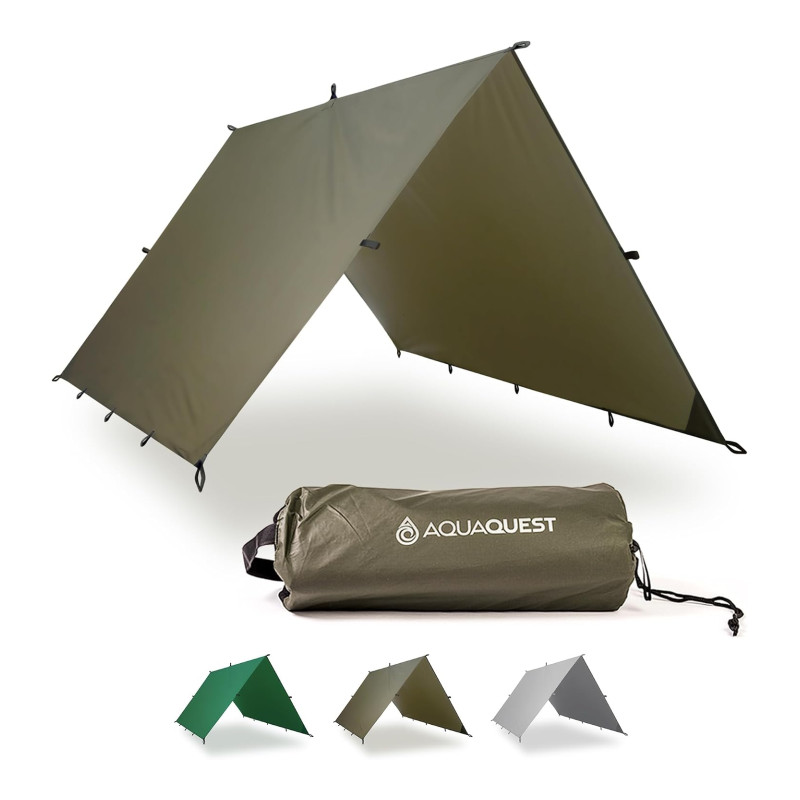
The Guide is a flat tarp made of dual-coated 40-denier ripstop nylon. Denier is a measure of thread weight, so 40D is a lighter, thinner fabric than the 70D of the Safari and Defender, and ripstop means a grid of heavier threads stops a small tear from spreading. Its waterproof rating is 5,000 mm, the same as the Safari and well above a typical tent fly, and the seams are heat-taped at the factory.
The 10 x 10 has 17 tie-out loops with doubled fabric at the corners, bar-tacked stitching and a reinforced strip along the ridgeline. It pitches as an A-frame, a lean-to, a diagonal over a hammock, or a low shelter on trekking poles where there are no trees, which we describe in our trekking pole guide.
AquaQuest backs it with a lifetime warranty.
Sizes, and which one covers a hammock
The line comes in 10 x 7 ft (3 x 2.1 m), 10 x 10 ft (3 x 3 m), 13 x 10 ft (4 x 3 m), 15 x 15 ft (4.6 x 4.6 m) and 20 x 13 ft (6 x 4 m). The finished size of the 10 x 10 is 9 feet 7 inches (2.9 m) a side, or 92 square feet (8.5 m²).
Over a hammock, that finished length matters. An 11-foot (3.4 m) hammock hung with a proper sag spans a little over 9 feet (2.8 m), which leaves less than 3 inches (7 cm) of cover at each end under a 10 x 10 pitched square. Either pitch the 10 x 10 on the diagonal, corner to corner, which gives about 13.5 feet (4.1 m) of ridgeline, or buy the 13 x 10 and run the long side along the hammock. For a ground shelter, a cooking fly or a cover over a small tent, the 10 x 10 is the all-round size.
What verified buyers say
Across verified-purchase reviews, the same points come up:
- Light and small in the pack. The reason most people chose it, and the first thing they mention.
- Strong for its weight. Owners report it holding in strong wind and through a half-hour hailstorm on trail without damage.
- Used as the only shelter. Solo hikers sleep under the 10 x 7 in an A-frame in place of a tent, and long-distance hikers report using these tarps for years.
- Well-placed tie-outs. The reinforced loops along the sides and the centre make several pitches possible.
- Sheds rain well. Buyers describe water running off cleanly through sustained rain.
- No stakes, and not cheap. The two complaints that come up.
Worth knowing
It ships as a tarp and a stuff sack only. You supply the ridgeline cord, guylines and stakes, so budget for about 50 feet (15 m) of cord and six stakes, and learn two or three knots before the trip. A tarp is open at the ends and sides: in wind-driven rain it has to be pitched low, and it is draughtier than a tent. Nylon stretches when wet, so re-tension the guylines after the first hour of rain. The 40D fabric is thinner than the other two models: keep it clear of sharp branch stubs, do not pitch it close to a fire, and check the tie-outs after a windy night.
Who it is for
The Guide is for backpackers, long-distance hikers and hammock campers who carry their shelter and have the skills to pitch a tarp well in bad weather. Sleeping under a tarp without a tent takes practice in site choice and pitching, so try it on an easy trip first.
If the tarp will mostly be used around a vehicle camp, the Safari is tougher for little extra weight, and the Defender is tougher again.
Specs at a glance
- Typeflat tarp
- Fabric40D ripstop nylon, dual coated
- Waterproof rating5,000 mm
- Seamsheat-taped
- Tie-outs17 (10 x 10)
- Listed weight1.3 lb (590 g) · 10 x 10 ft
- Includestarp and stuff sack
- Warrantylifetime
- Best forbackpacking and hammock camping on foot
Wilderness Experts is reader-supported. As an Amazon Associate we earn from qualifying purchases; when you buy through links on our site we may earn a commission at no extra cost to you. It never changes what we recommend.
The Verdict
The AquaQuest Guide gives a backpacker a full-size, seam-taped, storm-worthy tarp at 1.3 pounds (590 g), with a lifetime warranty. It is the model to choose when the tarp is carried every day, over a hammock or as a shelter on its own. Treat the lighter fabric with some care and add cord and stakes. For a tarp that spends more time at a drive-in site, the Safari is the better buy. Our guide to hammocks and tents covers pitching a tarp over a hammock.