
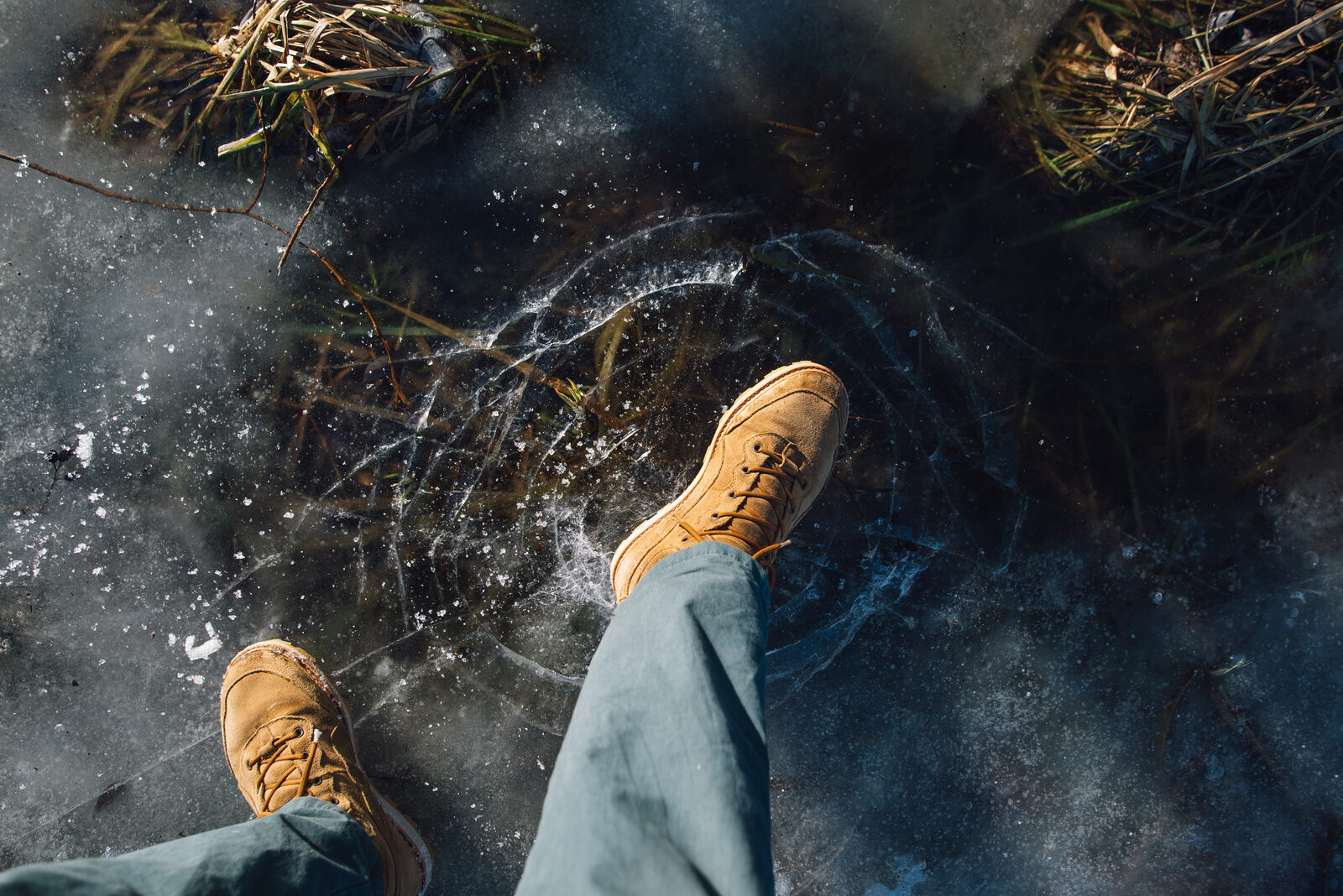
Surviving cold-water immersion and falling through ice
Cold water does not give you the time you think it will. Fall into a near-freezing lake, break through river ice, or get swept into snowmelt, and the danger is not slowly getting cold. It is the violent gasp, the racing heart, and the hands that stop working within minutes. Knowing what cold water does to your body, in what order, is what lets you act in the narrow window you have. This guide covers surviving accidental immersion, self-rescuing onto ice, and treating someone pulled from cold water.
The key idea is that cold-water immersion happens in stages, and each stage has its own killer and its own countermeasure. People assume hypothermia is the threat, so they think they have plenty of time. In fact the first minute, the cold-shock response, drowns more people than hypothermia ever does. Understand the timeline and you will spend your first seconds controlling your breathing instead of panicking, your first minutes getting out or getting stable, and you will treat a rescued person for the danger that is actually killing them.
The cold-water timeline: 1–10–1
Cold-water survival researchers sum up the stages as 1–10–1, and it is worth memorizing because it tells you what to do and when:
- 1 minute to get your breathing under control. The instant cold water hits you, you gasp involuntarily and your breathing goes ragged. If your head is underwater during that gasp, you inhale water and drown. This first minute is about not panicking and not breathing in water.
- 10 minutes of meaningful movement. As the cold reaches your muscles and nerves, your hands, arms, and legs progressively stop working. You have roughly ten minutes of useful strength and coordination. Use them to get out or to get into a position that keeps your airway clear.
- 1 hour before hypothermia makes you unconscious. Contrary to the myth, you do not freeze to death in minutes. Even in icy water it typically takes an hour or more to become unconscious from hypothermia, which means that if you can keep your head above water, you have far more time than the panic tells you.
The reassuring part
The 1–10–1 numbers are a survival tool: they tell you that you probably will not die in the first minutes from the cold itself. Most cold-water deaths are drowning during the gasp reflex or from giving up. Keep your airway clear and your head up, and time is more on your side than it feels.
Minute one: survive the cold-shock gasp
The cold-shock response is the deadliest phase and the shortest. When you hit the water, expect an uncontrollable gasp, a spike in heart rate and blood pressure, and hyperventilation you cannot immediately stop. Do not fight the whole thing at once. Get your head above the surface and keep it there, grab or lean on anything that floats, and focus entirely on slowing your breathing, long, deliberate breaths, for the 30 to 60 seconds it takes for the gasping to ease. Do not try to swim hard or make decisions while your breathing is out of control; you will inhale water. Once the gasp passes, you can think.
A life jacket is what keeps your head up
The single biggest factor in surviving cold-water immersion is a worn flotation device. During the cold-shock gasp you may not be able to swim or even keep yourself up. A life jacket does it for you, keeps your airway clear while you get your breathing back, and holds you up later when your muscles fail. On or near cold water, wear it. It cannot save you in the pack.
Minutes: self-rescue and getting out
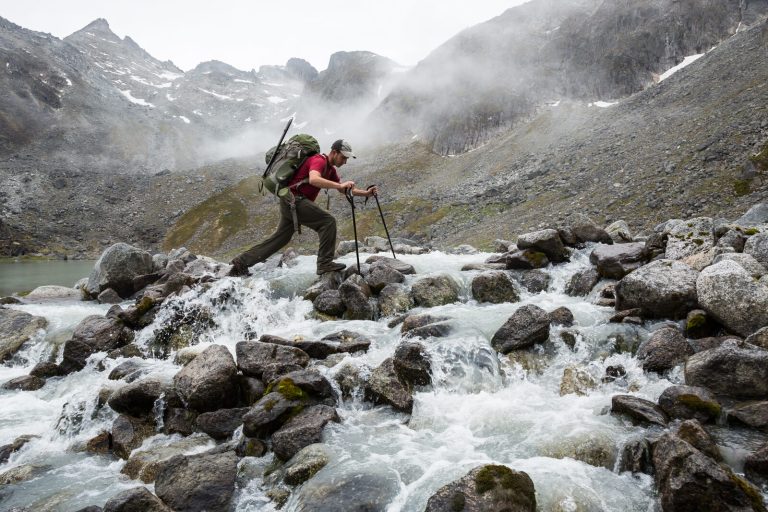
Once your breathing is under control, you are into the ten-minute window of useful movement, and cold water saps strength fast, so use it deliberately, not frantically. If the shore or your boat is close, swim for it while you still have coordination in your arms and legs. Every minute you wait, your hands stiffen and your stroke weakens, so the earlier you commit, the better your odds. If you are being carried by a current, do not try to stand. A foot can wedge under a rock and the current will push you under. Float on your back, feet downstream and up near the surface, and angle toward the nearest bank; our guide to crossing rivers and streams safely covers moving-water hazards in depth.
Falling through ice, getting back onto it
Breaking through ice is a specific, survivable emergency if you act in the right order. The instinct is to thrash and try to climb straight up onto the ice; that usually just breaks more of it. Instead:
- Control the gasp first, as above. Turn back toward the direction you came from. The ice there held your weight, so it is your strongest exit.
- Get horizontal. Reach your arms flat onto the ice, kick your legs up behind you to the surface, and swim yourself up onto the ice like a seal rather than trying to climb up vertically. Kicking brings your body flat so you can slide out.
- Pull and kick together. Dig in with your hands. This is where ice picks or even car keys give you purchase, and kick hard while you drag yourself onto the surface.
- Do not stand up. Once out, stay flat and roll away from the hole to spread your weight, then crawl toward shore along your original path. Standing puts all your weight on one spot and can send you back through.
Ice is never guaranteed
No ice is completely safe. It is weakest near inlets and outlets, over moving water, around vegetation and docks, and where snow insulates it. If you must travel on ice, carry ice picks on a cord through your sleeves, keep pack straps loose so you can shed the pack, and never go alone.
If you cannot get out
Sometimes there is no near exit. You are treading open water waiting on rescue. Your job then is to slow heat loss and stay afloat, buying time against that one-hour window. If you are wearing flotation and alone, draw your knees up to your chest and hold your upper arms tight against your sides, the Heat Escape Lessening Posture (HELP) . To protect the high-heat-loss areas of your groin, chest, and armpits. With others, huddle chest-to-chest to share warmth and stay together for rescuers to find. Keep as still as you reasonably can; swimming and treading burn energy and pump warm blood to your cold limbs, cooling your core faster. Do not remove clothing. Trapped water warms against you and adds buoyancy.
Once you are out: rewarming yourself
Getting out is not the end of the danger. You are now soaked, and evaporative and wind cooling can drop your core temperature even faster than the water did. Move to shelter and out of the wind immediately. Strip wet clothing and get into anything dry; if you have nothing dry, wring out your layers and put them back on rather than staying bare. Build a fire if you can, get insulation between you and the ground, and start moving your large muscles gently to generate heat. If you are conscious and able to swallow, warm sweet drinks help. Watch for the shivering, clumsiness, and muddled thinking of hypothermia setting in.
Treating someone pulled from cold water
For a person recovered from cold water, handle them gently and warm the core:
- Get them out of the wet and wind, remove soaked clothing, and wrap them in dry insulation, including underneath, off the cold ground.
- Warm the trunk first. Concentrate heat on the chest, neck, armpits, and groin. Warm dry layers, another person’s body heat, warm (not hot) water bottles against the torso. Rewarming the core, not the limbs, is the priority.
- If conscious, give warm sweet fluids. Honey, sugar, or cocoa in warm water gives usable energy.
- Handle gently and keep them horizontal. Rough movement of a very cold person can trigger dangerous heart rhythms.
- Get medical help for anyone who was deeply cold, unconscious, or not fully recovering. The effects can develop after rescue.
Do not rewarm too fast, and never rub
Do not plunge a hypothermic person’s limbs into hot water, put them right next to a scorching fire, or rub their arms and legs. Rapid or limb-first rewarming can cause heart failure. Warm the core steadily and let the limbs follow.
After-drop: why rescue is a dangerous moment
There is a hidden trap in rewarming called after-drop: when a cold person warms up, cold, stagnant blood pooled in their arms and legs suddenly returns to the core, and their core temperature can actually fall further, sometimes triggering cardiac arrest, right after they seem safe. This is why you rewarm the trunk first, keep the person still, and treat a rescued victim as fragile even when they look like they are recovering. The moment of getting someone out of the water is not the moment to relax.
Preventing immersion in the first place
The best cold-water plan is not going in. Wear a life jacket whenever you are on or beside cold water. Most drowning victims never expected to be in it. Dress for the water temperature, not the air: a warm sunny day over a cold lake still kills if you go in. Stay off early- and late-season ice, and off ice over moving water entirely. Ice thickness guidance and how to judge a frozen lake on a route are in winter hiking. Keep well back from undercut riverbanks and slick rocks at the water’s edge, and scout crossings before committing; see how to cross a river safely. Never boat or travel on ice alone, and tell someone your plan, the foundation of any pre-trip safety plan.
What to carry near cold water
- A worn flotation device , the one item most correlated with surviving immersion. Wear it, do not stow it.
- Ice picks on a cord , if you travel on ice, they give the grip to pull yourself out.
- Dry layers in a waterproof bag . Dry clothing after immersion is what stops hypothermia taking over.
- A reliable fire kit , a ferro rod works when soaked; pair it with wet-weather tinder and read how to start a fire in any conditions.
- An insulating pad , a closed-cell foam pad gets a chilled person off the heat-stealing ground.
- A way to call for help , a whistle, and on remote trips a satellite messenger or PLB.
See the ferro rod we recommend
Key takeaways
Cold water kills in a predictable order: the gasp in the first minute, failing muscles over the next ten, hypothermia over the following hour. Beat the gasp by keeping your head up and your breathing slow, then use your good minutes to get out. Back the way you came if you broke through ice, staying flat and rolling clear. If you cannot get out, conserve heat and stay afloat; you have more time than it feels. Once out, get dry and warm the core, gently, watching for after-drop. And wear the life jacket. Nothing else you do matters as much.
Cold water that is also moving is a different problem again, because the current, not the temperature, decides where you end up. For rivers and rapids, see our guide to surviving being swept downstream.
Adapted in part from the U.S. Army Survival Field Manual (FM 3-05.70 / FM 21-76), Chapter 15, “Cold Weather Survival,” and Chapter 16, “Sea Survival,” with modern cold-water-immersion research (the 1–10–1 principle) and civilian ice-safety practice.
Wilderness Experts is reader-supported. As an Amazon Associate we earn from qualifying purchases; when you buy through links on our site we may earn a commission at no extra cost to you. It never changes what we recommend.