
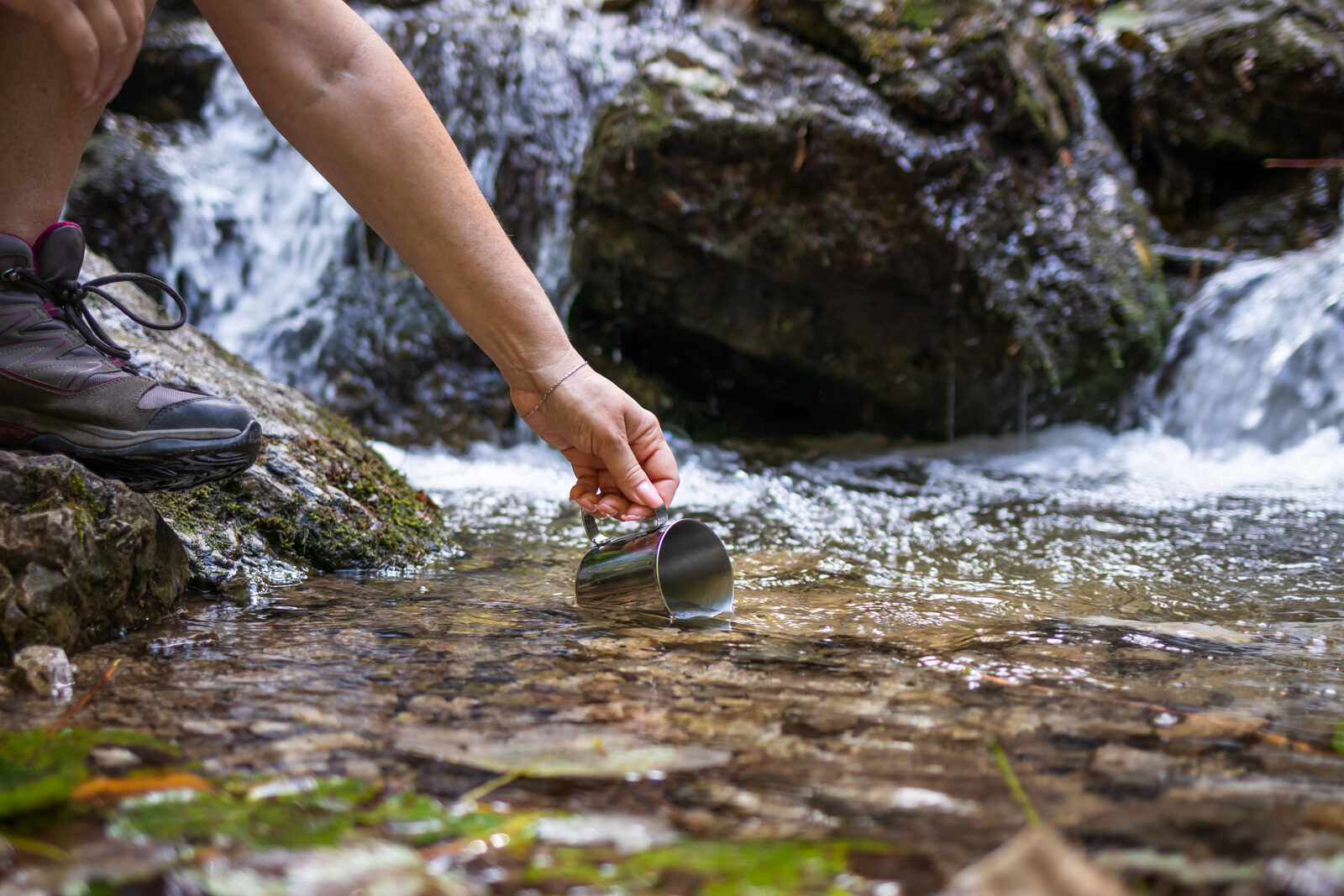
How to find water in the wilderness (in any climate)
You can survive weeks without food, but only about three days without water, and far less in desert heat or hard exertion. Finding water is often the first real problem a lost or stranded traveler has to solve, and the good news is that almost every landscape holds water somewhere if you know how to read it. This guide shows you how to find water in the wilderness across the environments you’re most likely to be in, forest, mountain, desert, coast, tropics, and snow country, from the obvious sources to the improvised ones, plus how to spot the signs that water is near and how to make what you find safe to drink.
The underlying principle is simple: water obeys gravity, and life clusters around it. It flows downhill and collects in the lowest ground it can reach, so you follow terrain down , into valleys, gullies, and the base of slopes. And because every living thing needs it, dense green vegetation, converging animal trails, and certain birds and insects all point toward it. Read the land and read the life, and the landscape starts telling you where its water is. One rule never changes, though: nearly all water you find in the wild must be purified before you drink it. See our guide to purifying water in the backcountry , so treat “finding” and “making it safe” as two halves of the same job.
First: move or stay, and how much you need
Even resting in a cold climate, your body needs at least 2 liters of water a day to function; in heat, at altitude, or under exertion that climbs to 6 liters or more. You lose water constantly through sweat, breath, and stress, and the early stages of dehydration, headache, dark urine, sluggish thinking. Dull exactly the judgment you need to find more. So the moment water becomes a concern, act while you’re still clear-headed and have energy to spend, not after.
Your first decision is whether to move or stay. If you have a known water source within reach, or your map shows a drainage nearby, go to it before your reserves run low. If you’re lost and rescue may be coming, staying put is usually right, but a waterless camp is a fast-ticking clock, so weigh a short, deliberate move to the nearest low ground or drainage. Whatever you decide, don’t ration water by sipping tiny amounts while it sits in your bottle: drink when you’re thirsty and put your energy into finding more. Water does nothing for you inside the container.
Dehydration kills judgment before it kills you
Confusion, apathy, and poor decisions are dehydration symptoms, not just discomfort. If you notice your thinking slipping, treat it as an emergency and prioritize water above almost everything except immediate injury or shelter in extreme cold. See our guide to heat illness for the warning signs.
Read the land: universal signs of water
Before you try any clever collection trick, spend your first effort looking, because finding an existing source beats manufacturing water every time. These signs work in almost any environment:
- Follow terrain downhill. Water collects in the lowest ground. Head for valleys, gullies, the base of cliffs, and the outside bends of dry riverbeds. Where two drainages meet, water is more likely to persist. Reading contour lines on a map or the shape of the land does half the work for you. See map and compass navigation.
- Look for green. A ribbon or patch of lush, vivid vegetation in an otherwise dry landscape marks water at or near the surface. Cottonwoods, willows, cattails, and reeds are especially reliable. They grow where their roots reach water.
- Watch the animals. Grazing animals water at dawn and dusk; converging game trails, especially ones heading downhill, often lead to a source. Trampled ground, droppings, and old camps mark the way, follow trails in the direction they merge.
- Watch the birds. Grain-eating birds like finches and pigeons stay near water and fly low and fast toward it at dawn and dusk. Flocks circling low, or birdsong concentrated in one direction at first light, can point the way. (Meat-eaters and water birds are less reliable. They get moisture from prey.)
- Follow the insects. Bees rarely range more than a few miles from water and often nest near it. A column of ants marching up a tree may lead to a water-filled hollow. Swarming insects, though a nuisance, cluster where there’s moisture.
Dig where it's damp
In a dry streambed, don’t give up because the surface is dry. Dig down at the outside of a bend or the lowest point. The last place water flowed, and water often seeps into the hole. Let it settle and clear, then treat it.
Collect what falls: rain and dew
The cleanest water in the wild is the water you catch before it touches the ground. Rainwater collected in a clean container or off a clean surface is usually safe to drink with little or no treatment, so make catching it a habit whenever the sky cooperates.
Rig every surface you have. Spread a tarp, poncho, or rain jacket into a shallow bowl, or angle one to funnel runoff into a container. In a downpour, even sagging a plastic sheet between four points fills a bottle fast. In forest, tie a cloth around a sloping tree trunk and let rain run down it and drip into a vessel. Line a pit with plastic if you have nothing else to hold it.
Dew is free water most people walk past. Before sunrise, tie rags or handfuls of fine grass around your ankles and walk through dew-soaked grass, then wring the moisture into a container, repeat until the dew burns off. It’s slow, but people have collected up to a liter an hour this way. You can also mop dew off smooth rocks, tarps, and metal surfaces, which sweat with condensation as temperatures swing between night and day.
Forest and temperate country
Temperate forest is the friendliest environment for finding water, and your job is mostly to walk downhill and listen. Sound carries: stop, stay quiet, and you can often hear a stream before you see it.
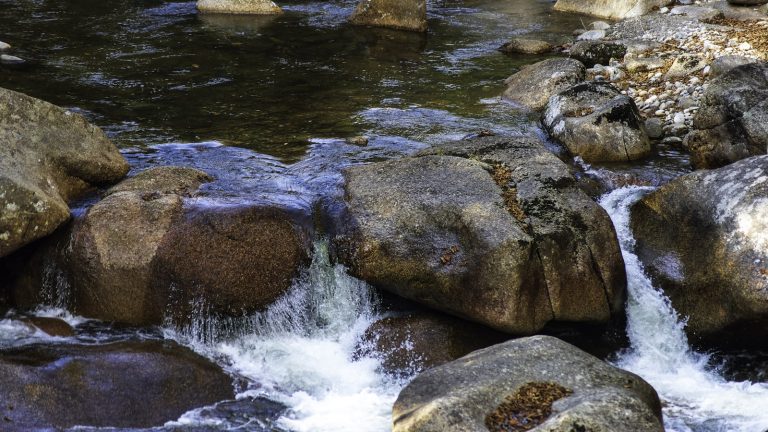
Streams and rivers are the obvious targets, but prefer springs and seeps where you can find them, water emerging directly from the ground or the base of a hillside has been naturally filtered and is cleaner than surface water that’s run across open ground. Look for a wet patch of unusually green moss or vegetation on a slope, or water trickling from a rock face. Collect from the source, above any sign of animals or human use.
Between streams, look in tree crotches and rock crevices, which hold rainwater for days after a storm, and in the leaf-lined hollows of large trees. If you’re stationary and it’s leafy and sunny, a transpiration bag on a healthy branch will trickle out clean water for the cost of a plastic bag. Given a choice, running water beats still, still beats stagnant, and clear beats cloudy, but treat all of it. Beavers and grazing animals upstream mean giardia downstream even in the most pristine-looking creek.
Springs beat streams
Water straight from a spring or seep has been filtered through soil and rock and carries far less contamination than water that’s flowed across the surface. When you have the choice, fill up at the source, but still purify it, because groundwater can pick up contaminants too.
Mountains and alpine country
High country is usually rich in water. The problem is more often cold than scarcity. Follow the same downhill logic: snowfields feed trickles that feed streams, so trace a drainage down from a snowpatch and you’ll usually find flowing water.
Snowmelt and glacial melt are abundant in the mountains but come with catches. Meltwater runs strongest in the afternoon after a day of sun and slows overnight, so time your collection accordingly. Glacial melt is often milky-gray with suspended “rock flour”. Fine sediment that’s harmless but clogs filters fast; let it settle in a container for an hour or two and draw the clear water off the top before filtering. High alpine streams look pristine but can still carry microbes, so treat them.
Two altitude realities matter. You dehydrate faster at elevation. Thin, dry air pulls moisture from every breath, and thirst is genuinely blunted at altitude, so prompt yourself to drink regularly rather than waiting for it. Steadily, not to a fixed quota: see our heat illness guide on why forcing large volumes of plain water causes its own emergency. And melting snow for water burns fuel and time; if liquid water is running anywhere nearby, use it rather than spending a stove canister on snow. See snow and ice below for how to melt safely.
Desert and arid country
The desert hides its water rather than hoarding none. Travel and search in the cool of early morning, evening, and night to slash your sweat loss, and rest in shade during the heat of the day. See hiking safely in the heat. Where to look:
- Dry washes and riverbeds. Dig at the outside of a bend or the lowest point, where water last flowed and lingers underground. Damp sand near the surface is your cue, dig a hole a foot or two down and let water seep in.
- The base of cliffs and rock outcrops. Rainwater runs off rock and pools or seeps at the bottom. Check shaded fissures, cracks, and depressions in the rock (“tinajas” or rock tanks) that hold rainwater for weeks, siphon it out with tubing or soak it up with cloth.
- Behind the first dune of a dry lakebed, and any damp surface sand or green vegetation. A lone patch of green in the desert means roots have reached water; dig there.
- Condensation. The big day-to-night temperature swing sweats water onto metal, rock, and plastic overnight, wipe it up with a cloth before dawn.
Use the animal and bird signs above; in the desert, all trails lead to water, and birds circling low or flying fast at dawn and dusk are guiding you. Watch the horizon for the green line of cottonwoods that marks a spring or a wash with water.
The cactus is a myth, don't drink it
Despite every cowboy movie, most cacti do not hold drinkable water. The pulp of a barrel cactus is laced with oxalic acid and alkaloids that cause vomiting and diarrhea, which will dehydrate you faster than the moisture helps. It also takes real effort to hack through the spines and rind. Skip it and put your energy into digging where it’s damp.
Coastlines and beaches
A coast is a cruel place to be thirsty. Surrounded by water you must never drink. Seawater is about four percent salt, and your body spends more fluid flushing that salt than the water provides, so drinking it drives dehydration and, eventually, kills. The rules on the coast are the same as anywhere: catch rain, and find the fresh water hiding just inland.
Dig a beach well behind the first line of dunes. Rain that falls on the land forms a lens of fresh water that floats on top of the denser saltwater below. Walk inland past the first dune, find a low spot, and dig a hole a couple of feet deep until water seeps in. The first water may be brackish; let it refill and it often improves. Dig only as deep as you need. Go too far and you’ll hit the salty layer. Taste-test cautiously and treat what you collect.
Catch every drop of rain with tarps and containers, and check rock pools above the tide line for rainwater. If your only collecting surface has dried salt spray on it, rinse it in the sea first, counterintuitive, but almost all the salt washes off and won’t taint the fresh rain you catch.
Never drink seawater, and never on the assumption you'll ration it down
Seawater cannot be diluted safe by drinking “just a little.” The salt load costs you more body water than you take in. The same goes for water from salt marshes and tidal creeks. Distill it (boil and condense the steam) or dig a dune well instead.
Jungle and tropical country
The tropics are wet, but surface water is often stagnant and heavily contaminated, so lean on rain and plants for cleaner sources. Rain falls often and hard. Always have a catchment rigged.
- Green bamboo is one of the best jungle sources: clear, odorless water sits inside the hollow segments of green stalks. Bend a stalk over, tie it down, cut the top, and it will drip water overnight. Shake old, cracked stalks. A sloshing sound means water inside.
- Water vines. Some thick tropical vines hold drinkable sap. Cut a notch high up first, then sever the vine near the ground and catch what drips. Test it: the liquid should be clear and watery, if it’s milky, cloudy, colored, sticky, or bitter, or if it stings your lips, discard it, as many vines are toxic.
- Banana and plantain stumps. Cut the tree to a foot-high stump and hollow the top into a bowl; water wells up from the roots. The first few fillings are bitter. Bail them out, and later ones are drinkable. One stump can produce for days; cover it to keep insects out.
- Fresh coconuts. The water of young, green coconuts is a great thirst-quencher. Avoid the milk of mature brown coconuts. Its oil acts as a laxative and works against you.
- Leaf tanks. Air plants (bromeliads) wedged in tree branches and plants like the traveler’s tree hold rainwater in their leaf bases. Strain it through cloth to remove insects and debris, then treat it.
When in doubt, don't drink the plant
Plant fluids are a gift when you know the plant and a poison when you don’t. Trust clear, watery, odorless liquid from bamboo, known water vines, and green coconuts. Treat anything milky, colored, soapy, or foul-smelling as toxic and leave it alone.
Snow and ice
In snow country you’re surrounded by water in solid form, and the two mistakes that follow are eating it cold and forgetting that frozen doesn’t mean clean.
Never eat snow or ice straight. Melting it in your mouth and body steals precious core heat, drops your temperature, and can actually deepen dehydration, a dangerous trade when cold is already the threat. Melt it first. The efficient way is to melt snow in a pot over a fire or stove; add a little liquid water to the pot first if you can, or start with a small amount and pack snow in gradually, so the bottom doesn’t scorch and give a burnt taste. In a pinch, fill a bottle or bag with snow and carry it inside your jacket, letting body heat melt it slowly, but that costs you warmth, so it’s a supplement, not a plan.
Ice yields more water than snow for the same fuel (it’s denser), so melt clear ice if you have the choice. And remember snow and ice are no purer than the water they froze from. Melt from a dirty source still needs treatment. Budget fuel realistically: melting snow eats through stove canisters, so if any liquid water is flowing nearby, use it instead. Pair this with staying warm on a cold night, since water and warmth compete for the same fire and the same energy.
Sea ice: read the color
On the coast or at sea, old sea ice that’s bluish, crystalline, and rounded has lost most of its salt and is usually safe to melt. Fresh sea ice that’s gray or opaque is salty, don’t melt it for drinking without desalting. When unsure, taste a sliver before committing fuel to a whole pot.
Last resort: stills and transpiration bags
When you can find no source, you can try to manufacture water, but be honest about the payoff, because these methods are slow and easy to over-rely on.
The transpiration bag is the one worth your time. Tie a clear plastic bag over a leafy, living branch that gets full sun, seal the mouth around the limb, and weight a low corner so condensed water pools there. A tree pulls moisture up from deep roots and “sweats” it into the bag as clean, drinkable water. No digging required. A vegetation bag works the same way with a bag half-filled with green leaves laid on a sunny slope. You’ll get roughly half a liter to a liter per bag per day, so set several, and swap the vegetation once it’s spent.
The belowground solar still is mostly a myth of survival shows. You dig a wide, deep pit in damp ground, set a container in the center, cover it with a plastic sheet weighted into an inverted cone, and let condensation drip into the container. In practice it typically yields only a cup or two a day, often less water than you sweat out digging the hole. Build one only if you have a suitable pit already, plastic to spare, and no better option, and never count on it as your primary supply. Its one genuinely useful trick: it can distill drinkable water from polluted or salt water or moist plants placed in the pit, because only pure vapor condenses on the plastic.
Effort in versus water out
The survival math on any water method is simple: you must gain more water than the sweat and calories you spend getting it. That’s why reading the land to find an existing source almost always beats building a still, and why you search in the cool hours, not the heat of the day.
Never drink these
Some liquids look like a solution and are actually a faster route to dehydration or illness. No matter how desperate, don’t drink:
- Seawater . Too salty; flushing the salt costs more body water than you gain.
- Urine , salt and concentrated body wastes; recycling it only makes the next round more toxic.
- Blood . Salty, counts as food your body must spend water to digest, and can transmit disease.
- Alcohol . Dehydrates you and clouds the judgment you need to survive.
- Milky or colored plant sap , frequently toxic; stick to clear, watery, odorless plant fluids only.
Purify everything you find
Rainwater and dew you catch clean are usually safe as-is, and water from green bamboo, vines, and a transpiration bag is generally clean. Almost everything else, streams, springs, lakes, ponds, dug seeps, snowmelt, dune wells, should be purified before it touches your lips. The clearest mountain creek can carry giardia, cryptosporidium, or bacteria that will leave you vomiting and dehydrated, which in a survival situation is far worse than the thirst you were trying to fix.
Your options, fastest to most thorough: boiling (a rolling boil for one minute, three at high altitude) kills everything and needs only a pot and fire; filters like the Sawyer Squeeze or a LifeStraw strain out bacteria and protozoa on the spot; chemical tablets like Potable Aqua weigh nothing and live permanently in a kit as backup; and press purifiers like the Grayl GeoPress also remove viruses for dirtier or foreign water. Cloudy water, glacial melt, a muddy seep, should be pre-settled or pre-filtered through cloth first so it doesn’t clog your filter. Our full guide covers which method to use when: how to purify water in the backcountry.
Read our water purification guide
Common mistakes
- Waiting too long to look. People search for water once they’re already dehydrated and foggy. Start while you’re clear-headed and have energy to spend.
- Rationing water in the bottle. Sipping tiny amounts to “make it last” leaves you impaired while the water does nothing. Drink to satisfy thirst and focus on finding more.
- Drinking untreated water out of desperation. A waterborne illness in the field can dehydrate you far worse than waiting to treat it. Purify unless it’s rain, dew, or bamboo.
- Trusting the cactus (or seawater, or urine). These backfire. Learn the real sources and skip the myths.
- Building a solar still as plan A. It usually costs more water than it makes. Read the land and catch rain first; save the still for genuine last resort.
- Eating snow cold. It chills you and worsens dehydration. Melt it first, every time.
- Overlooking the easy source. A rigged tarp in a rainstorm, dew before dawn, or a spring on a green hillside beats any clever trick. Look before you improvise.
What to carry
- A reliable filter , a Sawyer Squeeze or Platypus QuickDraw makes most found water drinkable in seconds and threads onto standard bottles.
- Purification tablets , Potable Aqua weigh nothing and belong in every kit as a no-fail backup when a filter clogs or freezes.
- A press purifier for dirty or foreign water , the Grayl GeoPress also removes viruses, useful for stagnant tropical water or dune wells.
- A way to carry more than you’re drinking , a collapsible reservoir or a couple of wide-mouth bottles lets you camel up at a source and carry a reserve to a dry camp.
- A stove or the means to make fire , for boiling and for melting snow; see the MSR PocketRocket 2. Pack a lighter and a backup ignition source.
- A lightweight tarp or emergency blanket , doubles as a rain catch, a dew mop, and a still cover.
Key takeaways
Water is out there in almost every landscape. The skill is knowing where each environment hides it. Follow terrain downhill and read the green vegetation, animal trails, and birds that cluster around water. Catch rain and dew whenever you can, because it’s the cleanest and the easiest. In forest, seek springs and streams; in mountains, meltwater and drainages; in desert, dig the outside of dry washes and check shaded rock pools while you travel in the cool hours; on the coast, dig a well behind the first dune and never drink the sea; in the tropics, lean on rain, bamboo, and known plants; and in snow, always melt before you drink. Manufacture water only as a last resort, skip the myths that backfire, and purify nearly everything you find. Do that, and thirst becomes a problem you can solve almost anywhere.
Adapted in part from the U.S. Army Survival Field Manual (FM 3-05.70 / FM 21-76), Chapter 6, “Water Procurement” (environmental water sources, signs of water, dew and rain collection, plant and bamboo sources, still construction, and substitute-fluid warnings), with modern field practice on source selection, still efficiency, and water treatment.
Wilderness Experts is reader-supported. As an Amazon Associate we earn from qualifying purchases; when you buy through links on our site we may earn a commission at no extra cost to you. It never changes what we recommend.