

Top 7 things to do in White Sands National Park
White Sands National Park lies in the Tularosa Basin of southern New Mexico, ringed by mountains, and protects the southern part of the largest gypsum dunefield on Earth: about 275 square miles (710 km²) of brilliant white dunes up to 60 feet (18 m) tall, slowly marching northeast with the wind. Gypsum dissolves in water, and dunes like these can form only in a closed basin where no river carries it away. The sand is so white that it looks like snow, and it stays cool to the touch even in summer, because it reflects the sun. These are the seven outings we would put first. The order starts with what the park is known for, then goes by what an outing gives back for the time and effort it takes. Distances are approximate; times are our estimates and do not include stops.
The heat and the glare are the dangers here. In summer the air passes 100°F (38°C), the white sand reflects the sun back up at you, and there is no shade and no water beyond the visitor center: carry plenty of water, and do not hike in the heat of the day. Every dune looks alike, and the wind can erase your tracks in minutes, so keep a marked trail or the road in sight and carry a phone or GPS. The park is surrounded by the White Sands Missile Range, and Dunes Drive closes for a few hours at a time during missile tests.
1. Drive Dunes Drive into the heart of the dunefield
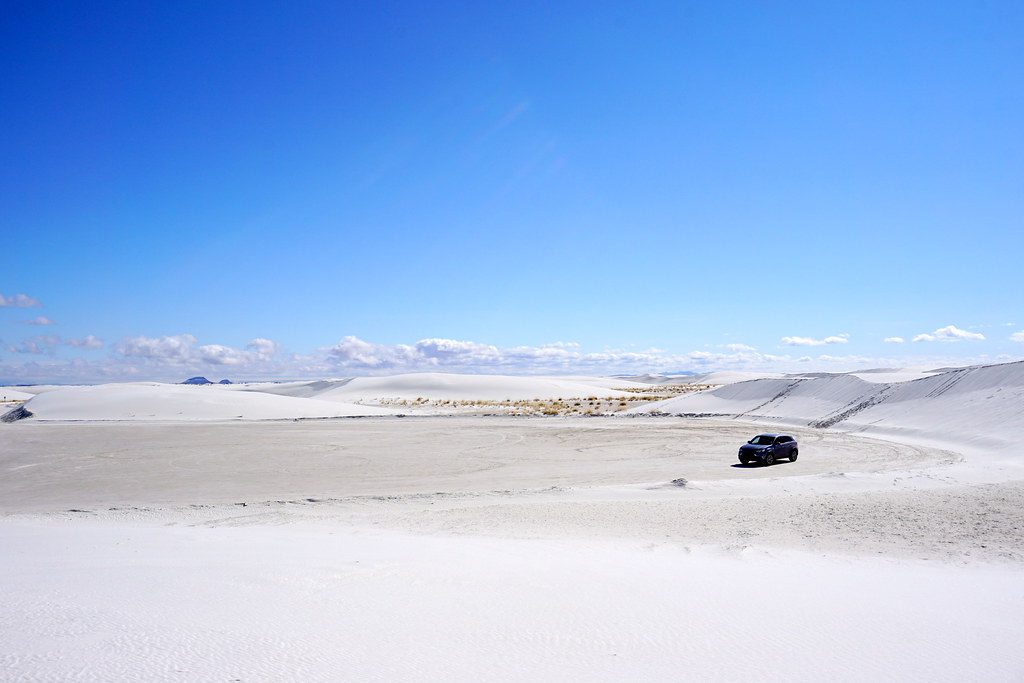
From the historic adobe visitor center, built in the Pueblo Revival style in the 1930s, Dunes Drive heads into the dunes. At first the dunes are low and dotted with yucca and saltbush, then the plants thin out and the road runs between bare white dunes, finally becoming hard-packed gypsum itself, plowed like snow, ending in a loop among the largest dunes. Pull over anywhere and walk out: you are free to wander the open dunes. The picnic areas have shelters that look like flying saucers.
- Distance: 8 miles (13 km) each way
- Allow: 1 hour with stops; half a day with walks
- Start: White Sands Visitor Center, on US 70 southwest of Alamogordo
- When: all year; the low sun of early morning and evening brings out the shapes of the dunes
- Suits: everyone
2. Sled down the dunes
Sliding down a white dune on a plastic saucer is the classic White Sands outing, for children and adults alike. The visitor center shop sells sleds and the wax that makes them run faster on the gypsum. The best slopes are the steep, bare faces of the big dunes in the loop at the end of Dunes Drive. Pick a slope that does not run out onto the road or a parking area.
- Allow: 1 to 2 hours
- Start: the dunes around the loop at the end of Dunes Drive
- When: all year; mornings and evenings in summer
- Suits: everyone
3. Hike the Alkali Flat Trail
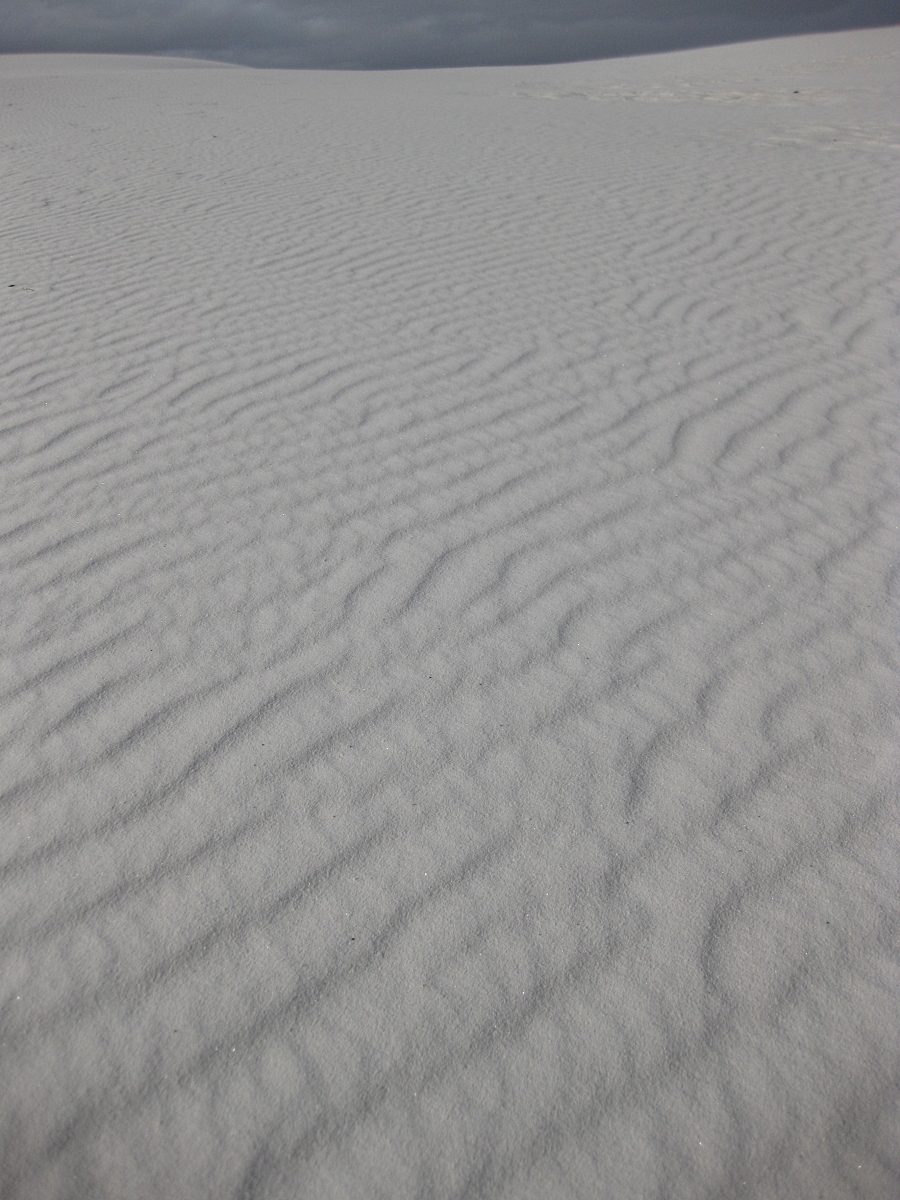
This is the one trail that leads deep into the bare heart of the dunefield. It climbs up and down over dune after dune of soft sand, following a line of posts, to the edge of Alkali Flat, the dry bed of the ancient lake whose gypsum built these dunes. Out in the middle, with nothing in sight but white sand and blue sky, the scale of the place becomes real. It is harder than it looks: walking in the sand is slow, and the heat and glare are fierce. People have died on it. Start early and turn back if you lose sight of the next post.
- Distance: 5 miles (8 km) loop
- Allow: 3 to 4 hours
- Start: Alkali Flat trailhead, at the end of Dunes Drive
- When: October to April; in summer, only at first light
- Suits: fit hikers carrying plenty of water
4. Walk the Interdune Boardwalk
This short, accessible boardwalk crosses the flats between the dunes near the start of Dunes Drive, where plants and animals have found ways to live in the moving sand. Signs along it explain how the yucca outgrows the dunes that bury it, how the pale lizards and mice here have evolved to match the white sand, and where the water lies just under the surface. It is the best short introduction to the park.
- Distance: about 0.4 miles (650 m) round trip
- Allow: 30 minutes
- Start: Interdune Boardwalk parking area, on Dunes Drive
- When: all year
- Suits: everyone; the boardwalk is accessible
5. Follow the Dune Life Nature Trail
This loop climbs over a few steep dune ridges on the edge of the dunefield, where the plants are holding on and the dunes are still moving, with signs about the animals that live here: kit foxes, badgers, darkling beetles and the birds that hunt them. Look for their tracks in the sand in the early morning, before the wind smooths them away. It is a good first taste of walking on the dunes.
- Distance: 1 mile (1.6 km) loop
- Allow: 1 hour
- Start: Dune Life Nature Trail parking area, on Dunes Drive
- When: all year; early morning for tracks
- Suits: most walkers
6. Stay for the sunset
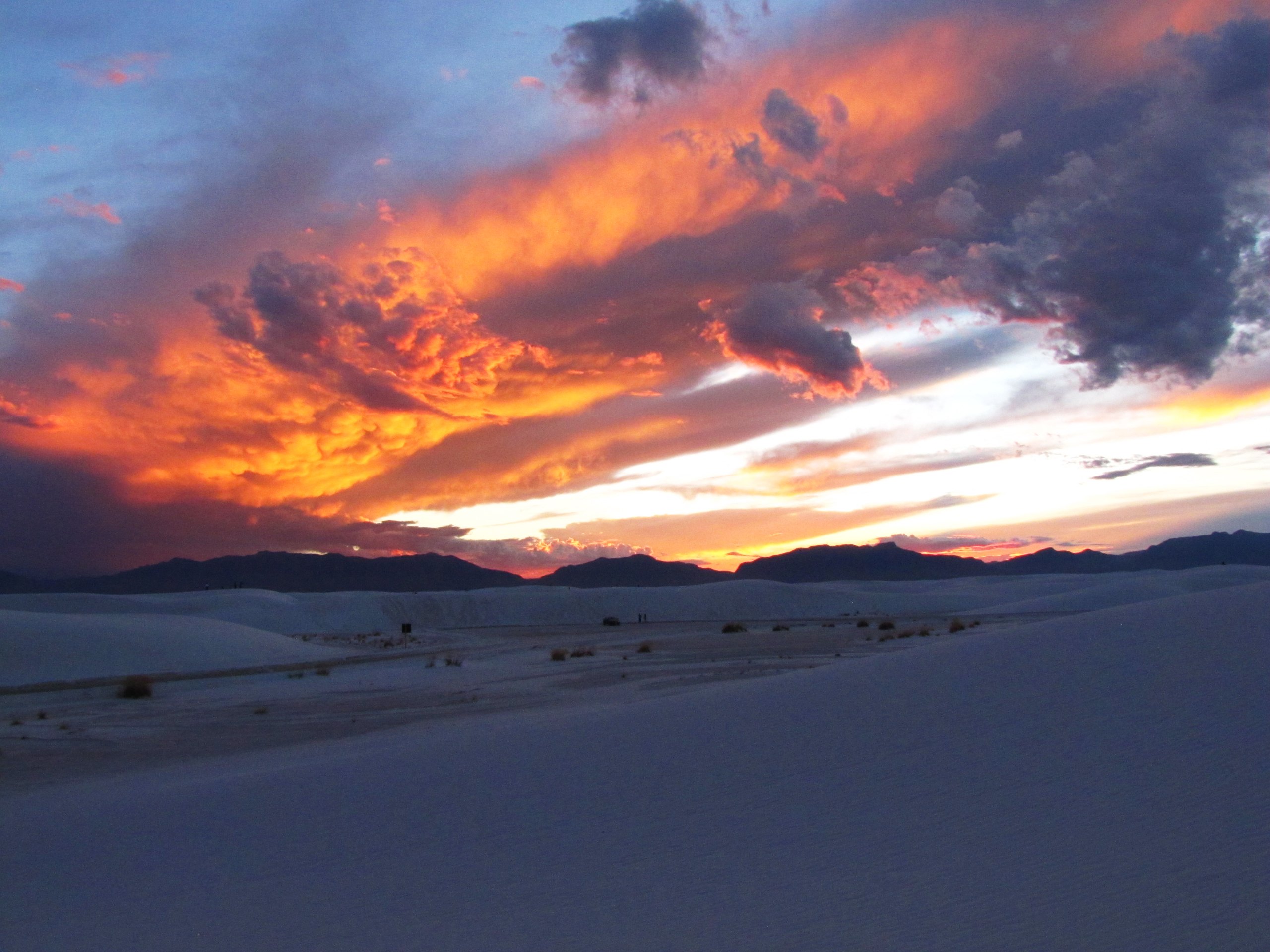
As the sun drops behind the San Andres Mountains, the white dunes turn pink, lavender and then blue, and the ripples in the sand stand out in long shadows. It is the park’s best hour. Walk out onto a high dune at the end of Dunes Drive, away from the cars, and watch the light fade. Rangers lead sunset strolls through the dunes on many evenings, and on clear nights after dark the stars are bright over the pale sand.
- Allow: 1 to 2 hours
- Start: the dunes at the end of Dunes Drive
- When: all year
- Suits: everyone
7. Join a ranger tour to Lake Lucero
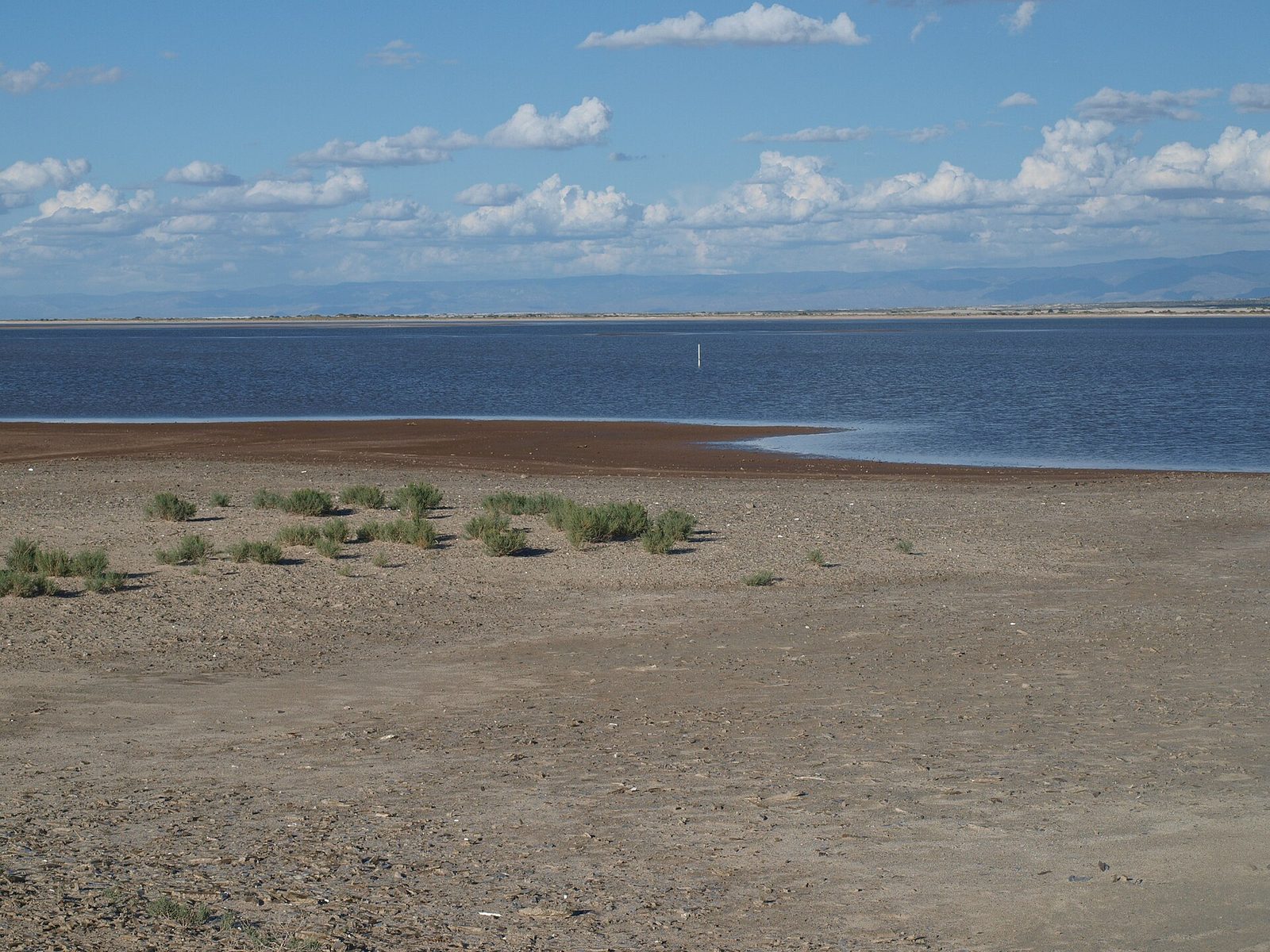
Lake Lucero is where the dunes begin. It is a dry lakebed in the far southwest of the park, at the lowest point of the basin, where rainwater gathers, evaporates and leaves gypsum behind as crystals of selenite, some a few feet (a metre) long. Wind breaks them into grains and carries them off to build the dunes. The lakebed lies inside the missile range, so it can be visited only on ranger-led tours, which run on set dates, mostly in the cooler months.
- Distance: about 1.5 miles (2.4 km) round trip on foot, after a drive in convoy
- Allow: 3 hours
- Start: White Sands Visitor Center, as arranged when you book
- When: on set dates, mostly from fall to spring
- Suits: most walkers
Before you go
This list covers what stays the same from year to year. Closures, missile-test road closures, heat warnings and tour dates change, and the National Park Service posts them on its own site. The link is on our White Sands National Park guide, with the map and how to get there.