

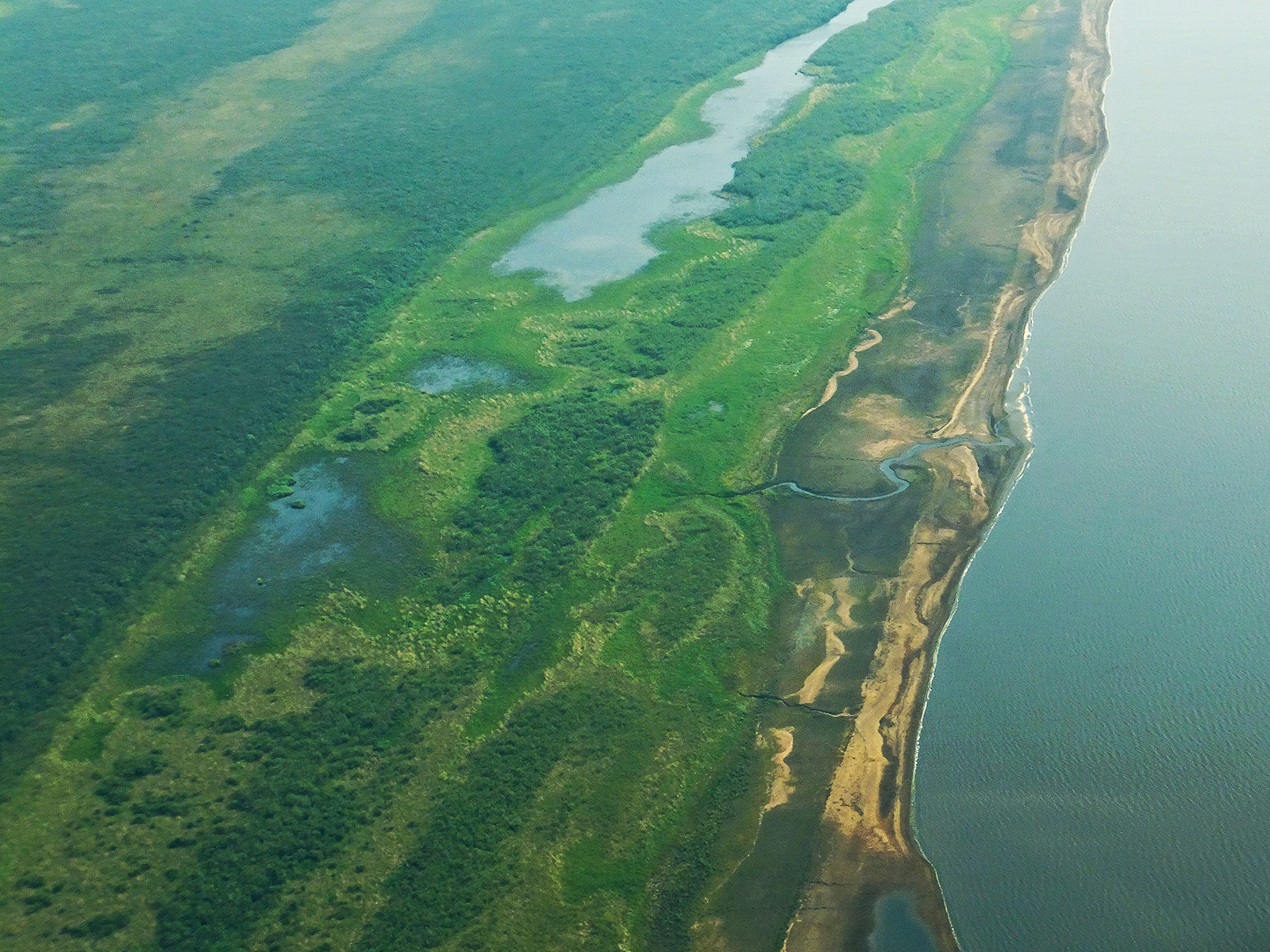
Vuntut National Park
Vuntut, “among the lakes” in Gwich’in, protects a vast, roadless expanse of the far northern Yukon, including part of the extraordinary Old Crow Flats, a wetland of thousands of lakes teeming with life. Unglaciated and ancient, rich in fossils and central to the Vuntut Gwitchin way of life and the Porcupine caribou herd, it is one of Canada’s wildest and least-visited parks.
Fast facts
- Established: 1995, through the Vuntut Gwitchin land claim
- Size: about 1,678 square miles (4,345 km²) in the far northern Yukon
- Wetland: part of the Old Crow Flats, a globally important wetland (Ramsar site)
- Wildlife: the Porcupine caribou herd, muskoxen, bears and vast waterfowl numbers
- Gateway: Old Crow, Yukon (fly-in only)
- Managed by: Parks Canada, with the Vuntut Gwitchin
The landscape
The park spans rolling tundra hills and the edge of the Old Crow Flats, a maze of thousands of shallow lakes and wetlands that draws staggering numbers of migratory birds and supports muskrat, moose and caribou. Unglaciated during the last ice age, the region is rich in Ice Age fossils and ancient human history, and remains the living heartland of the Vuntut Gwitchin.
Best time to go
The short northern summer is the only practical window, when the wetlands teem with birdlife and the land is (briefly) accessible under long daylight, though cold, storms and clouds of insects are all part of it. Outside summer the region is locked in deep cold and darkness.
Getting there and around
Access is by chartered aircraft, staging through the fly-in Gwich’in community of Old Crow; there are no roads anywhere near the park. Travel within is on foot and by small boat or canoe through the wetlands, and every visit is a self-supported or outfitter-guided expedition, ideally with Vuntut Gwitchin guides.
Things to do
This is a park for remote wilderness travel and wildlife, witnessing the caribou migration, the extraordinary birdlife of the Flats, and the sweep of untouched tundra. Learning from the Vuntut Gwitchin about the land, its fossils and its enduring cultural importance is central to the rare experience of visiting.
Staying safe
The far North is unforgiving: extreme cold, sudden weather, grizzly bears, and total remoteness with no services or quick rescue. Wetland and river travel demand care, insects can be overwhelming, and self-sufficiency is essential. Carry a satellite communicator and travel with proper equipment or a licensed outfitter.
Know before you go
A Parks Canada pass and registration are required, and access is by charter air via Old Crow with full self-sufficiency or an outfitter. This page is a general overview, not a live conditions report; always confirm current access, conditions and options with Parks Canada before your trip.
- Coordinates
- 68.3766, -139.6897
- Magnetic declination
- 17.3° E (2026)
Set this declination on your compass, then align it to the map's north lines; it is the angle between true north and magnetic north, refreshed each year.
- Best seasons
- Summer (fly-in, guided)
- Difficulty
- Strenuous (remote Arctic, fly-in)
- Access / trailheads
- In the far northern Yukon, north of the community of Old Crow. Access is by chartered aircraft; there are no roads, and Old Crow itself is fly-in only.
- Water
- Rivers, lakes and wetlands; filter or treat all water.
- Cell / satellite coverage
- No cell service. Carry a satellite communicator and file a plan.
- Nearest ranger / SAR / emergency
- Coordinate through Parks Canada and Old Crow; response is very limited.
- Permits & regulations
- A Parks Canada pass and registration are required; access is by charter aircraft, and visits are self-sufficient or outfitter-supported from Old Crow.
- Leave No Trace
- Pack out everything, protect wetlands and caribou habitat, respect Vuntut Gwitchin heritage, and follow strict Leave No Trace.
January
- Below freezing all day
February
- Below freezing all day
March
- Below freezing all day
April
- Below freezing all day
May
- Below-freezing nights
June
July
August
September This month
- Below-freezing nights
October
- Below freezing all day
November
- Below freezing all day
December
- Below freezing all day
What to bring depends on your trip: how long you’re out, where you sleep, and how far you go from the road. The planner builds the list for yours.
Plan a trip here →Averages for 1981–2010 from Environment Canada climate normals, measured at the Old Crow Airport station, 56 miles (90 km) away at 821 feet (250 m).