

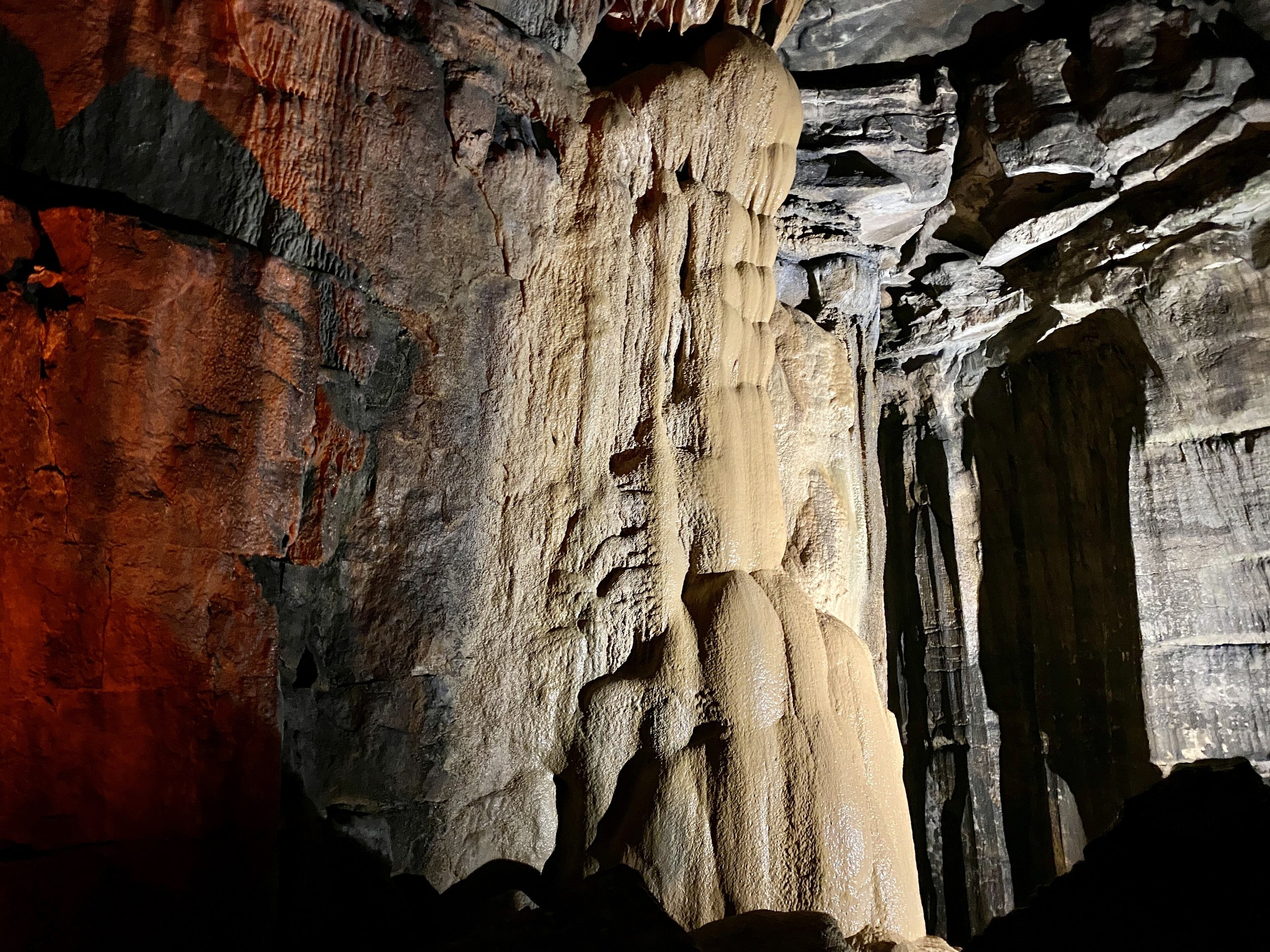
Top 9 things to do in Mammoth Cave National Park
Mammoth Cave National Park, in the wooded hills of south-central Kentucky, protects the longest known cave system in the world: more than 420 miles (675 km) of mapped passages, stacked in layers under a ridge of limestone capped with sandstone, and new miles are still being found. Above ground, the park is a forest of oak and hickory cut by the Green River, full of sinkholes and springs where the cave’s underground rivers come to light. These are the nine outings we would put first. The order starts with what the park is known for, then goes by what an outing gives back for the time and effort it takes. Distances are approximate; times are our estimates and do not include stops.
Visitors enter the cave only on the park’s ticketed tours, and they fill up: book ahead, especially in summer and on holiday weekends. The cave stays at about 54°F (12°C) all year, so bring a light jacket, and wear shoes with good grip, as the trails are damp and many tours climb hundreds of steps. To protect the bats from white-nose syndrome, do not wear clothes, shoes or gear that have been in another cave, and walk over the bat-friendly mats after your tour.
1. Take the Historic Tour
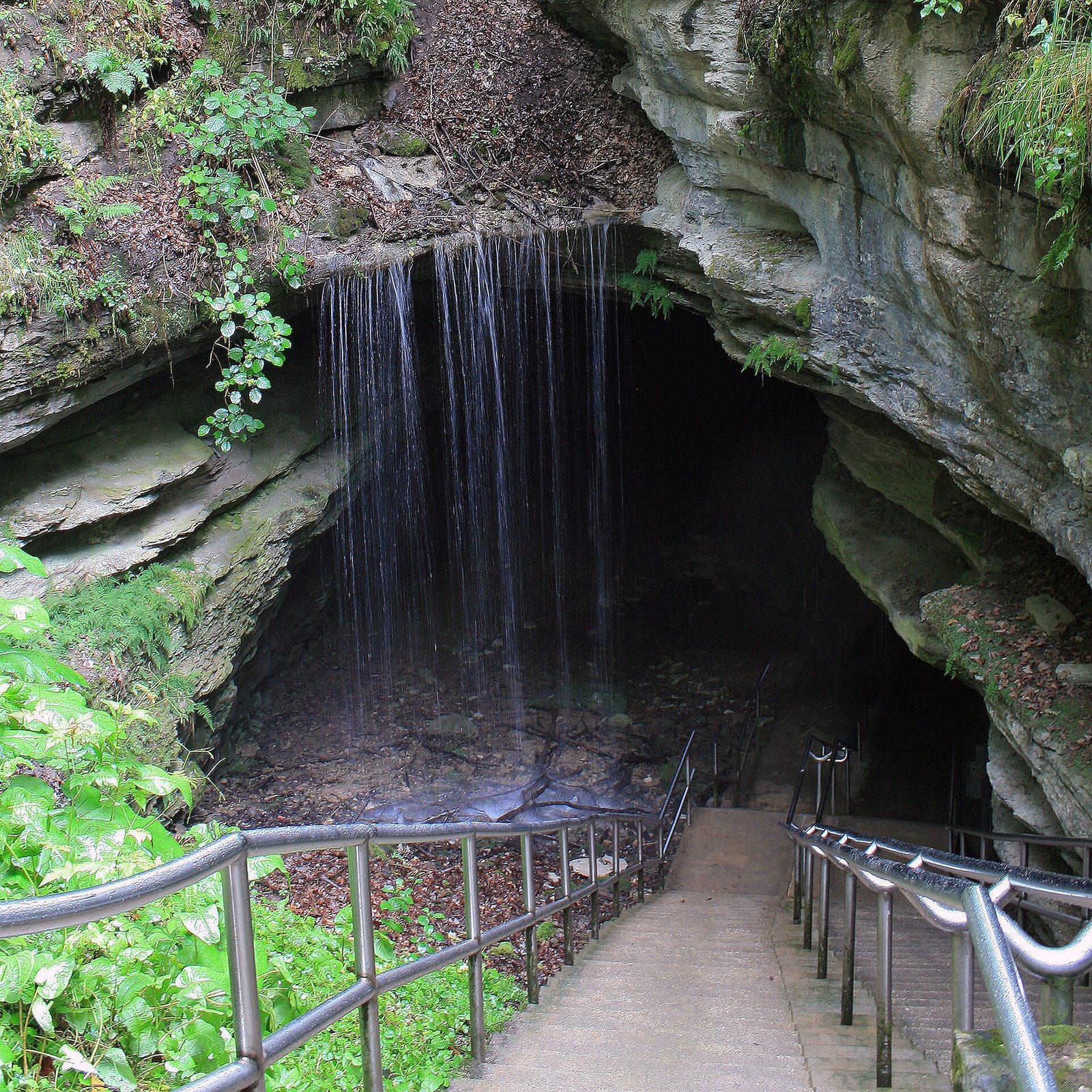
This tour enters the cave as people have for thousands of years, down the stairs into the Historic Entrance, where cool air flows out of the hillside. It follows huge, dry passages past the wooden pipes and vats of the saltpeter works that supplied gunpowder in the War of 1812, the names and dates that early visitors smoked onto the ceiling, and the tight squeeze of Fat Man’s Misery, then climbs up a steel tower through Mammoth Dome, a tall shaft where water pours from the darkness above. It is the classic tour, and the one that tells the cave’s human story best.
- Distance: about 2 miles (3.2 km) underground, with several hundred steps
- Allow: 2 hours
- Start: Mammoth Cave Visitor Center
- When: all year
- Suits: most walkers who can manage stairs and some stooping
2. See the formations at Frozen Niagara
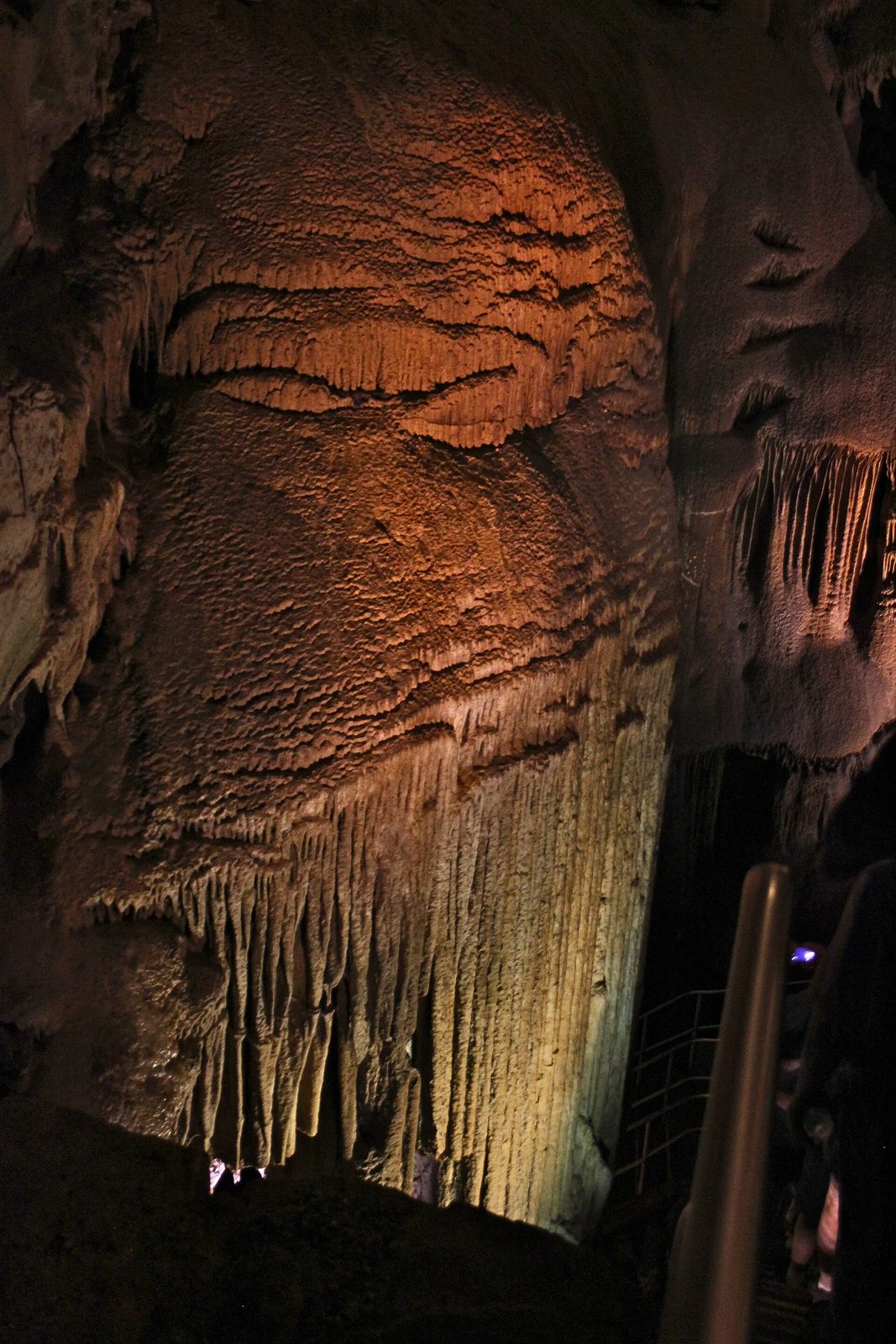
Most of Mammoth Cave is dry, its passages carved by old rivers with few of the stalactites people expect in a cave. The exception is the area around Frozen Niagara, a great cascade of flowstone, with stalactites and stalagmites around it. The short Frozen Niagara tour is one of the easiest in the park. The longer Domes and Dripstones tour comes to it after climbing down through tall vertical shafts on a long series of steps.
- Distance: about a quarter mile (400 m) for the Frozen Niagara tour; about three quarters of a mile (1.2 km) and some 500 steps for Domes and Dripstones
- Allow: 1.25 hours for Frozen Niagara; 2 hours for Domes and Dripstones
- Start: Mammoth Cave Visitor Center, by bus to the entrance
- When: all year
- Suits: everyone for Frozen Niagara; good walkers for Domes and Dripstones
3. Spend most of a day underground
For a deeper look, the park runs longer tours. The Grand Avenue tour walks for several miles through some of the cave’s largest passages, past gypsum formations, ending at Frozen Niagara, and is the longest walking tour. The Wild Cave tour leaves the trails behind: in helmets, headlamps and knee pads, small groups climb, crawl on their bellies and squeeze through tight crevices for hours, the closest most people come to real caving. Both have age and fitness requirements, and the Wild Cave tour has size limits too.
- Distance: about 4 miles (6.4 km) for Grand Avenue; about 5 miles (8 km) for the Wild Cave tour
- Allow: 4 hours for Grand Avenue; about 6 hours for the Wild Cave tour
- Start: Mammoth Cave Visitor Center
- When: Grand Avenue mostly in summer; the Wild Cave tour on set days much of the year
- Suits: fit adults and older teenagers
4. Walk the Heritage Trail to Sunset Point
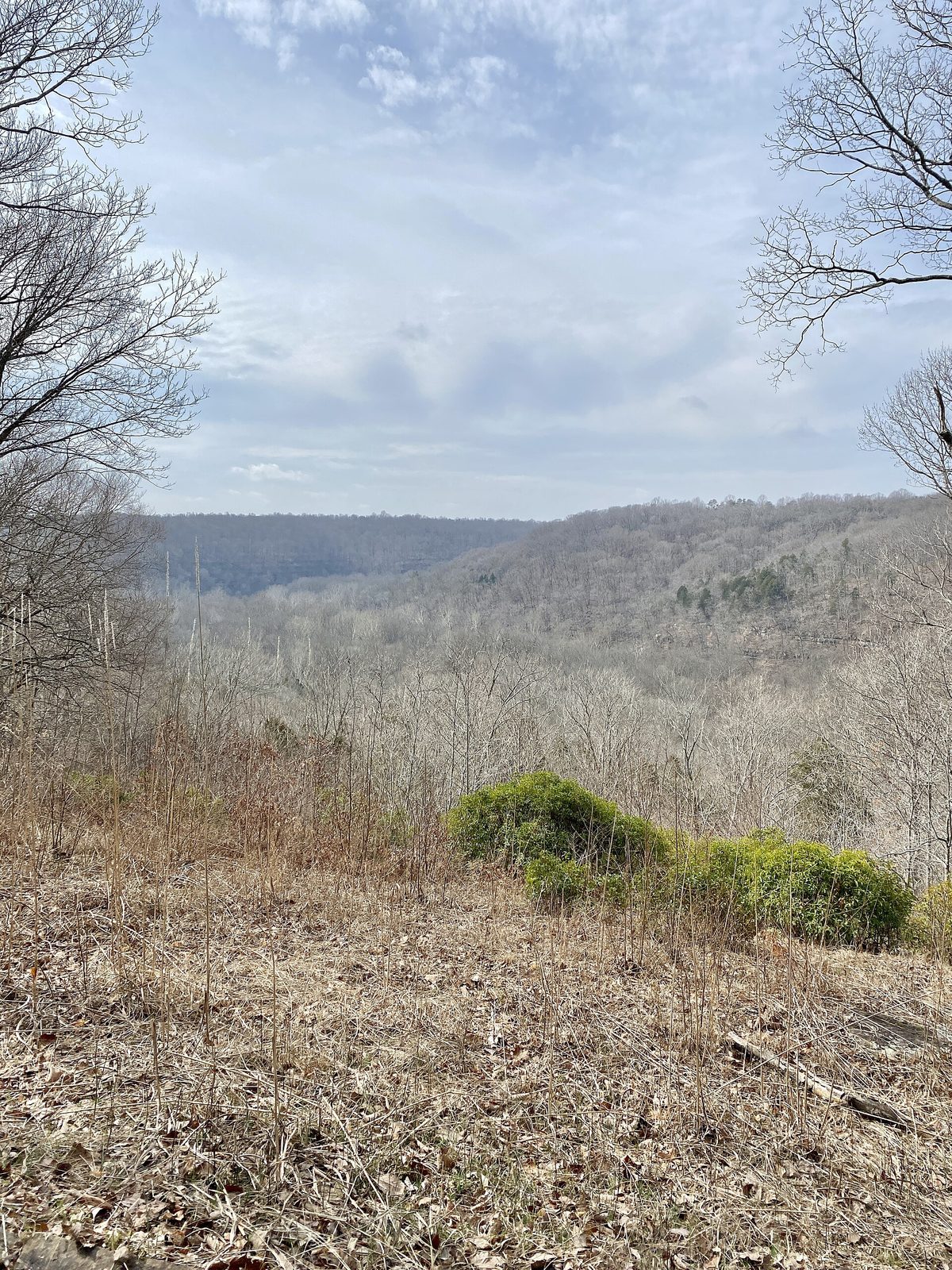
This short, accessible trail leaves the visitor center through the woods above the cave to Sunset Point, a view over the Green River valley, and past the Old Guides Cemetery, where Stephen Bishop is buried. Bishop, an enslaved man, began guiding visitors here in 1838 and explored and mapped miles of the cave, crossing its underground rivers and finding passages no one had seen. A side trail from the Heritage Trail drops down a hollow to the River Styx Spring, where one of those underground rivers flows out of the hill.
- Distance: about half a mile (800 m) loop for the Heritage Trail; about 1.5 miles (2.4 km) round trip with the River Styx Spring
- Allow: 30 minutes; 1 hour with the spring
- Start: Mammoth Cave Visitor Center
- When: all year; the evening for Sunset Point
- Suits: everyone for the Heritage Trail; the path to the spring is steep
5. Paddle the Green River
The Green River winds through the park for about 30 miles (48 km) between forested bluffs, a slow, quiet river where you may see herons, kingfishers, turtles, beavers and deer, and pass springs where water from the cave spills into it. Outfitters near the park rent canoes and kayaks and run shuttles, and paddlers can camp on the river’s sandbars and islands with a free permit. It is the park’s best way to spend a long summer day outside the cave.
- Distance: 7 to 20 miles (11 to 32 km) for a day trip, depending on the put-in
- Allow: half a day to a full day; longer with a night on a sandbar
- Start: Dennison Ferry, the Green River Ferry or Houchin Ferry, with an outfitter’s shuttle
- When: April to October, at moderate river levels
- Suits: beginners with an outfitter; check the river level before you go
6. Ride the Green River Ferry and see where the Echo River surfaces
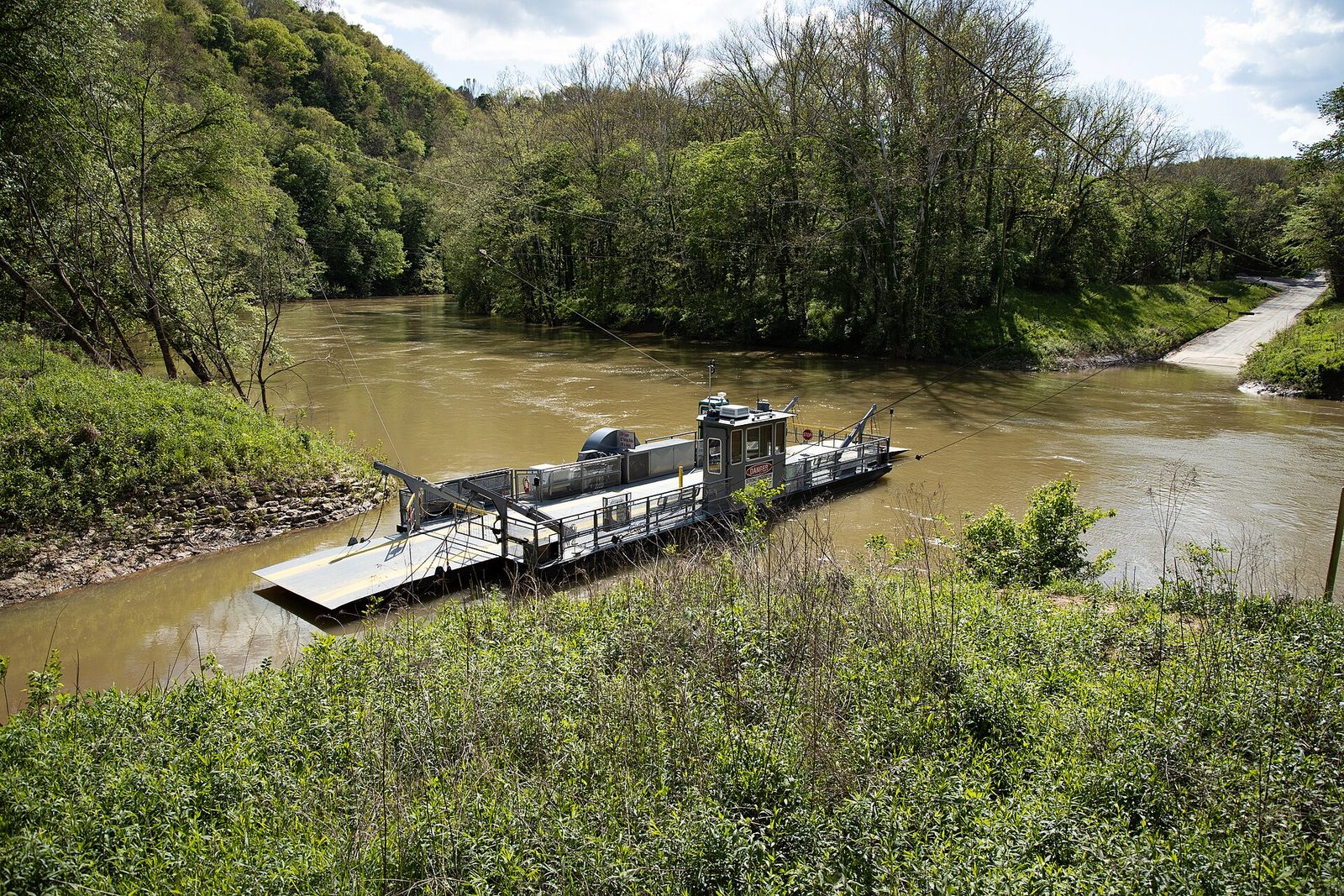
A small car ferry, guided across the river by a cable, has carried vehicles over the Green River here since 1934, two or three at a time. It is a short, old-fashioned crossing. Beside the ferry landing on the south bank, a paved, accessible trail follows the river to the spring where the Echo River, which flows through the lowest levels of the cave, comes out of the ground in a deep blue-green pool.
- Distance: 1 mile (1.6 km) loop for the Echo River Spring Trail
- Allow: 45 minutes
- Start: Green River Ferry, a short drive north of the visitor center
- When: all year; the ferry runs only when the river level allows
- Suits: everyone; the spring trail is paved
7. Look into Cedar Sink
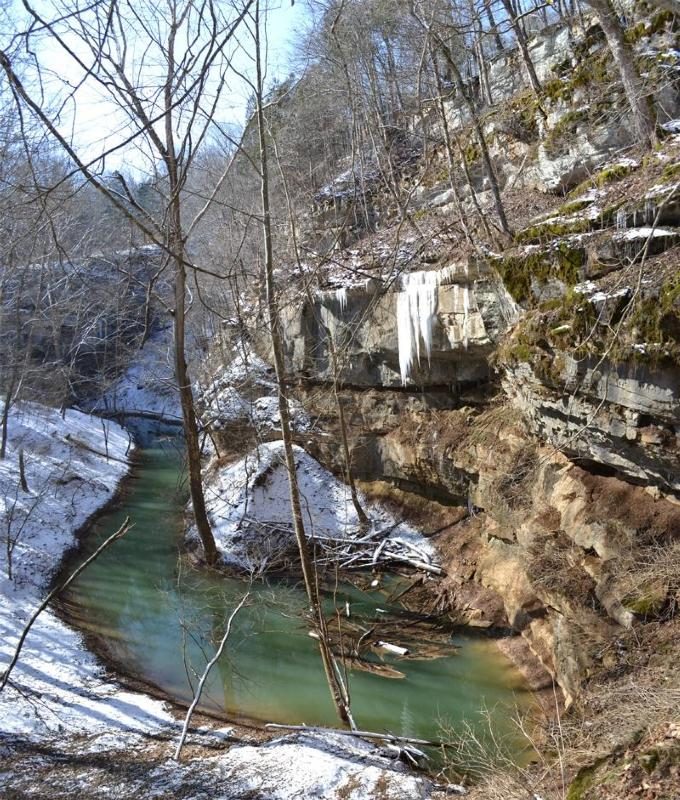
The ground above Mammoth Cave is pocked with sinkholes, where the roof of a cave passage has fallen in, and Cedar Sink is the largest the public can reach. It is a forested bowl 300 feet (91 m) deep, and at its bottom a stream flows out of a cave mouth, crosses the floor and disappears into another. A trail with stairs leads down to overlooks inside it. Spring brings wildflowers to its slopes.
- Distance: about 1 mile (1.6 km) round trip, with stairs
- Allow: 1 hour
- Start: Cedar Sink trailhead, on Cedar Sink Road in the south of the park
- When: all year; April and May for wildflowers
- Suits: most walkers who can manage stairs
8. Remember Floyd Collins at Sand Cave
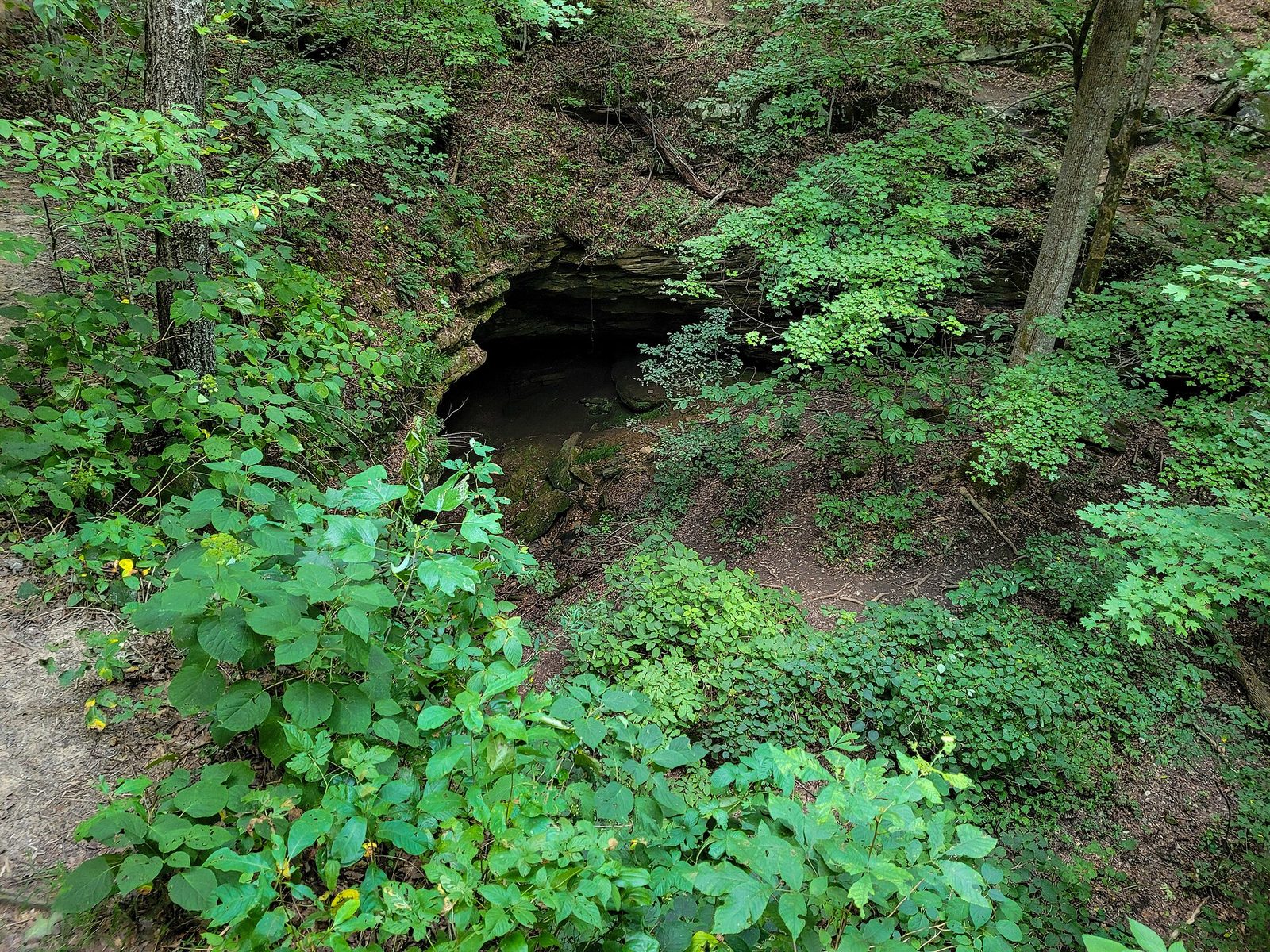
In January 1925, the caver Floyd Collins was exploring a narrow crawl in Sand Cave, hoping to find a new entrance to the cave system that would bring tourists his way, when a rock fell and pinned his foot. For more than two weeks, as rescuers tried to reach him and newspapers and radio followed every hour, he lay trapped; he died before they broke through. A short boardwalk leads to a deck overlooking the entrance, with signs telling the story.
- Distance: a short boardwalk
- Allow: 20 minutes
- Start: Sand Cave parking area, on the park road near the south entrance
- When: all year
- Suits: everyone; the boardwalk is accessible
9. Take the lantern tour of Great Onyx Cave
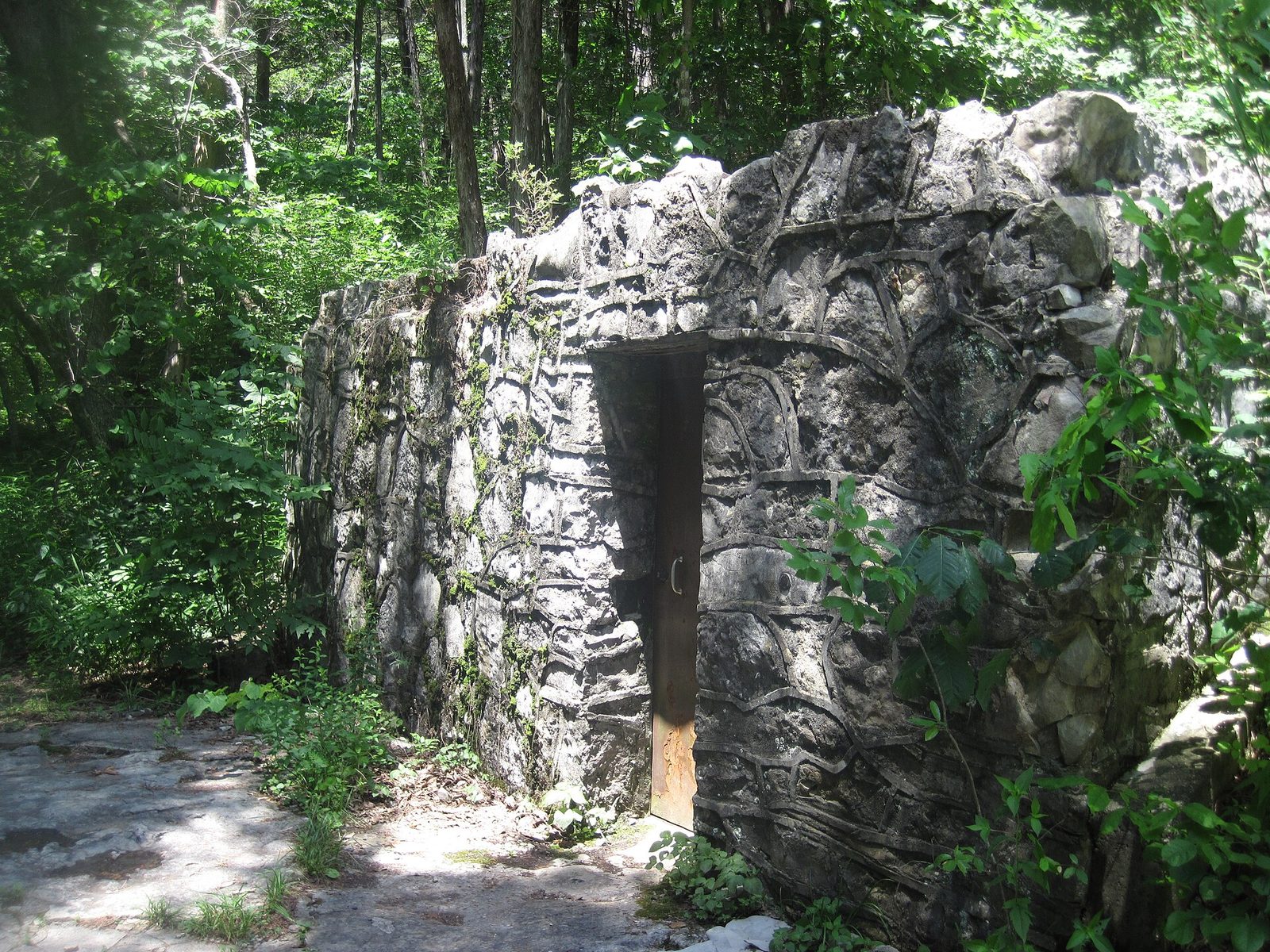
Great Onyx Cave is a separate cave on the far side of Flint Ridge, discovered in 1915, and unlike most of Mammoth Cave it is richly decorated with stalactites, stalagmites, flowstone and gypsum flowers. Tours go in by the light of hand-held lanterns, as the first visitors did, which makes the formations flicker and the shadows move. It runs in summer and fills up quickly.
- Distance: about 1 mile (1.6 km)
- Allow: 2.5 hours, including the bus ride
- Start: Mammoth Cave Visitor Center
- When: summer
- Suits: most walkers
Before you go
This list covers what stays the same from year to year. Closures, tour schedules, river levels and the ferry’s operation change, and the National Park Service posts them on its own site. The link is on our Mammoth Cave National Park guide, with the map and how to get there.