

Top 8 things to do in Kenai Fjords National Park
Kenai Fjords National Park lies on the southern coast of Alaska’s Kenai Peninsula, near the town of Seward, about two and a half hours’ drive south of Anchorage. Most of it is the Harding Icefield, a sheet of ice more than 700 square miles (1,800 km²) across, and the glaciers that flow from it down the mountains, some of them all the way to the sea in deep, rugged fjords full of whales, sea otters, sea lions and seabirds. Only one corner of the park, at Exit Glacier, is reached by road; the coast is seen by boat. These are the eight outings we would put first. The order starts with what the park is known for, then goes by what an outing gives back for the time and effort it takes. Distances are approximate; times are our estimates and do not include stops.
The weather on this coast changes fast, and the water is cold enough to kill quickly: bring warm, waterproof layers on any boat trip, even in July, and wear a life jacket in small boats and kayaks. Seas outside Resurrection Bay can be rough, so take seasickness remedies if you need them. Black and brown bears live around Exit Glacier: carry bear spray and make noise. Stay back from the face of any glacier, where ice can fall or calve without warning.
1. Take a boat tour to the tidewater glaciers
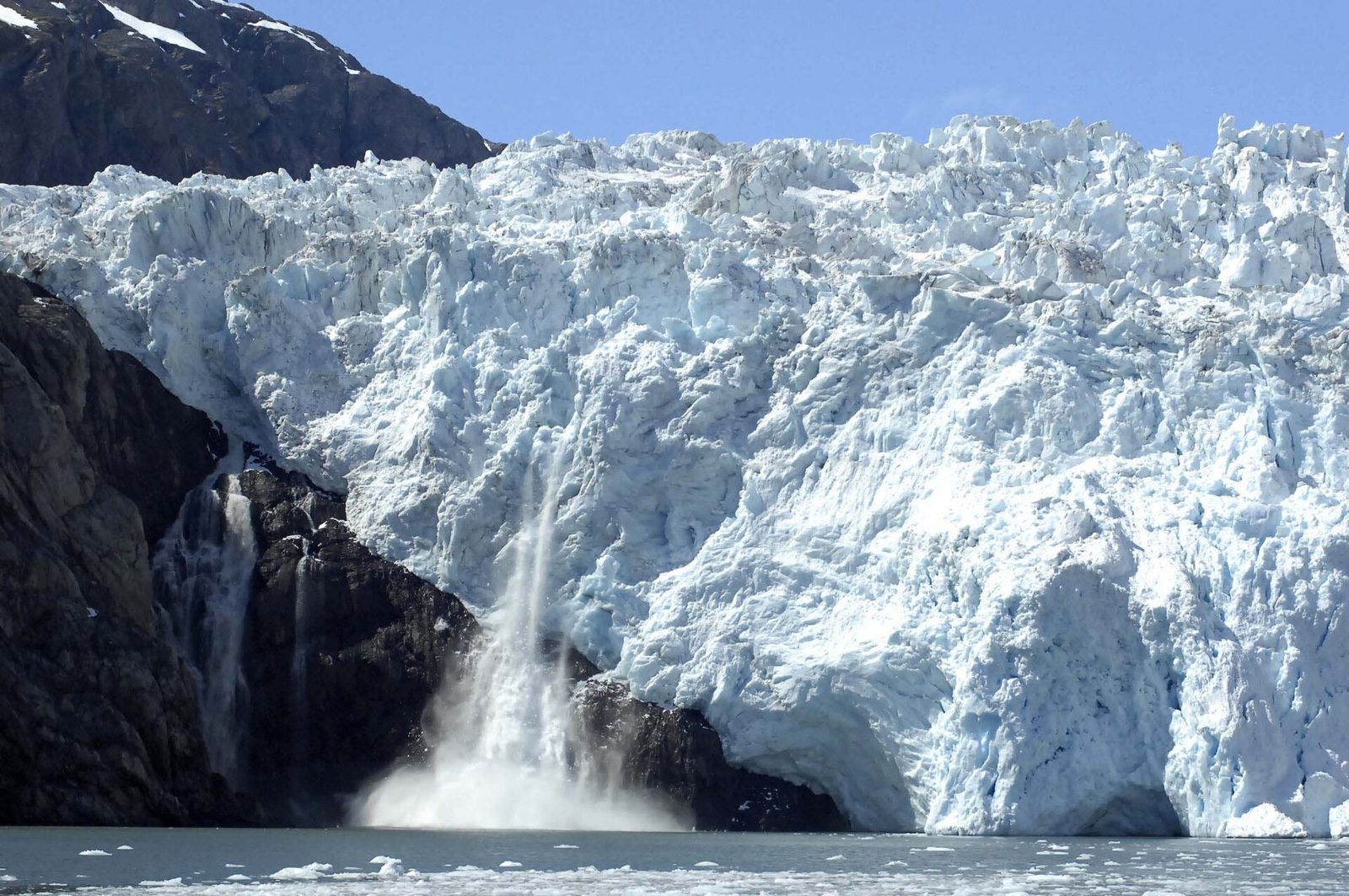
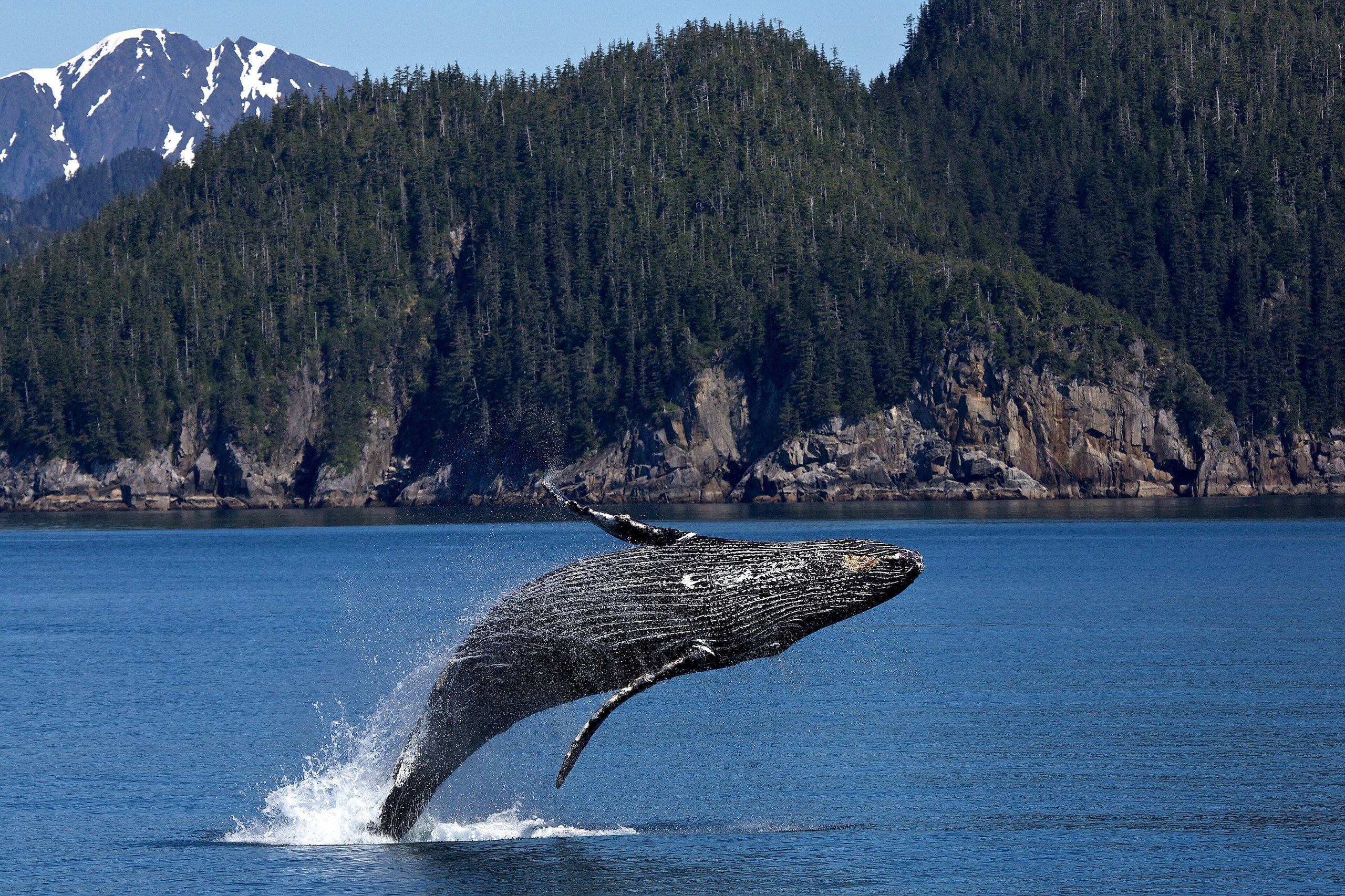
Most of the park is seen from a tour boat out of Seward, heading down Resurrection Bay past sea stacks and cliffs, and out along the open coast to glaciers that end in the sea, such as Holgate or Aialik. On the way you are likely to see humpback whales, sea otters, Steller sea lions, Dall’s porpoises, puffins and murres, and often orcas and mountain goats. At the glacier, the boat stops and drifts while ice crashes into the water. Choose a full-day tour to reach the park’s glaciers; shorter trips stay in the bay.
- Allow: 6 to 9 hours
- Start: the small boat harbor in Seward
- When: May to September
- Suits: everyone; dress warmly
2. Watch the ice fall at Aialik Glacier
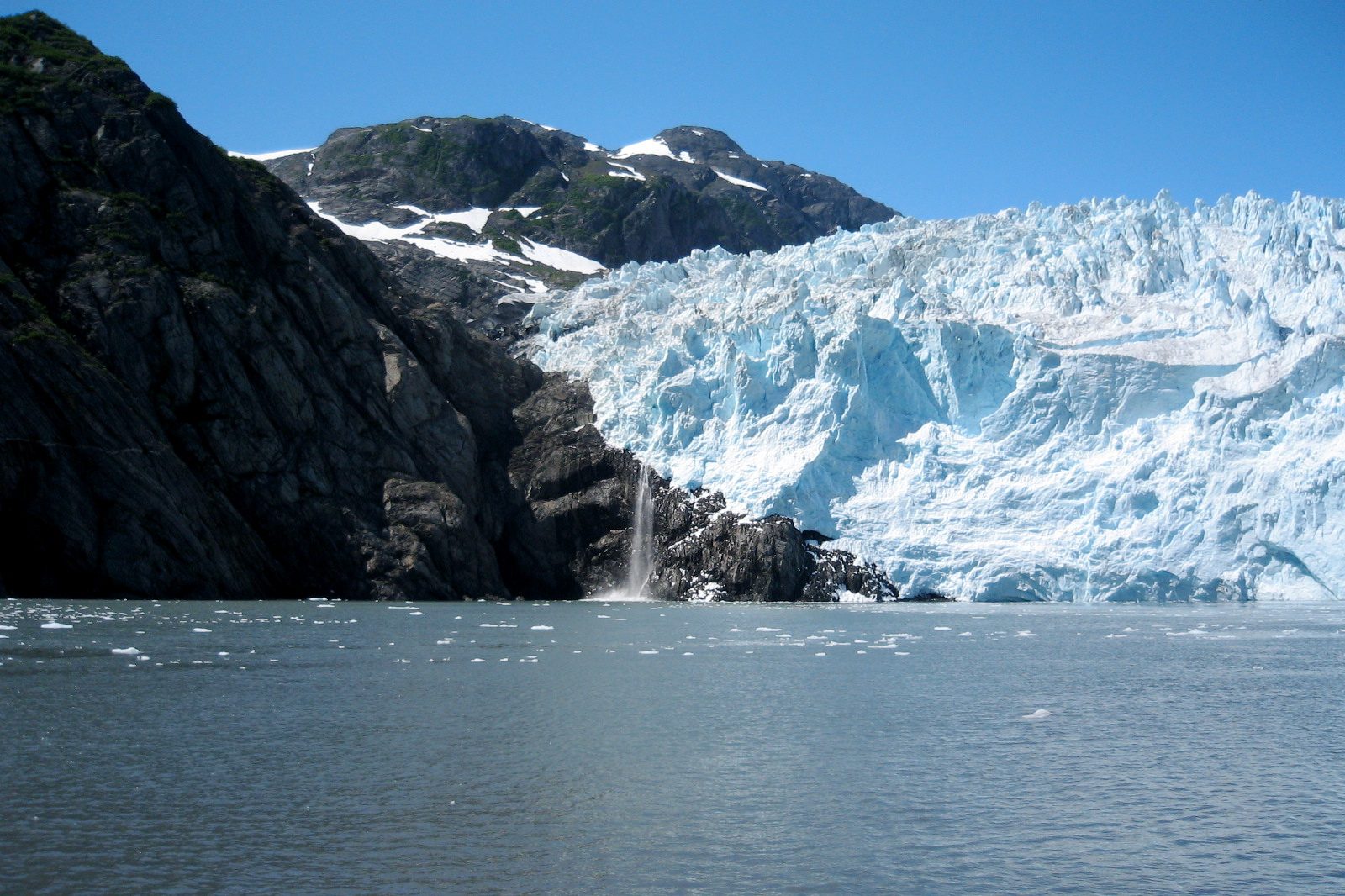
Aialik Glacier, at the head of Aialik Bay, is the largest glacier in the bay and one of the most active on the coast, its face a wall of blue and white ice that calves into the sea, especially in May and June. Harbor seals haul out on the floating ice in front of it. Some full-day tours come here, and it is also a goal for sea kayakers dropped off in the bay by water taxi, who can camp nearby and watch the glacier from the beach.
- Allow: a full-day boat tour, or several days by kayak
- Start: Seward, by tour boat or water taxi
- When: May to September; May and June for the most calving
- Suits: everyone by tour boat; experienced paddlers by kayak
3. Walk to Exit Glacier
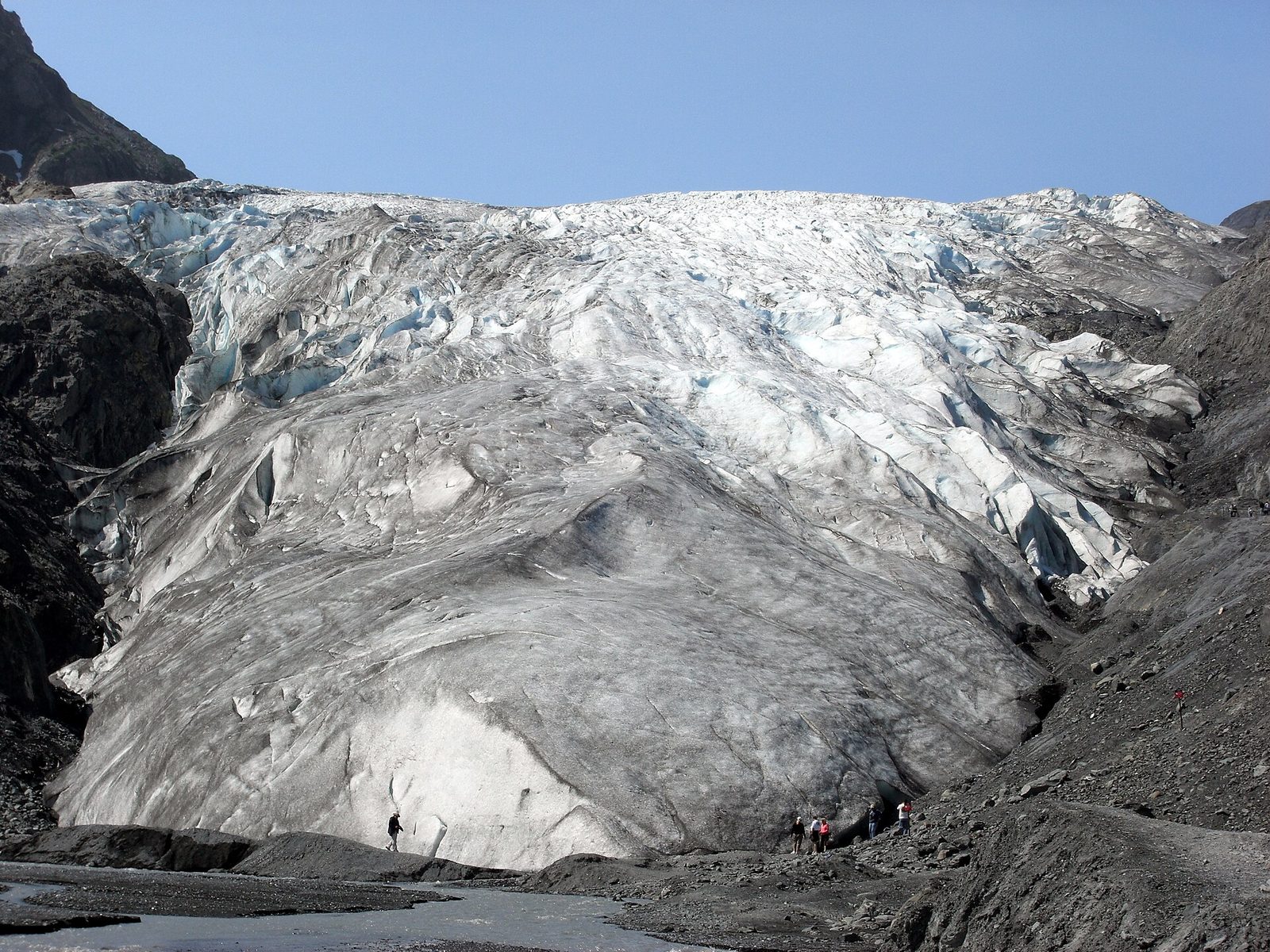
Exit Glacier, which flows down from the icefield beside the road near Seward, is the only part of the park you can drive to. A short trail from the nature center leads through cottonwood and alder forest to viewpoints over the glacier’s toe and its broken blue ice. Along the road and trail, signs mark where the ice stood in past years, starting from the 1800s, a clear and sobering record of how fast it has pulled back.
- Distance: about 2 miles (3.2 km) round trip to the glacier viewpoints
- Allow: 1 to 2 hours
- Start: Exit Glacier Nature Center, at the end of Exit Glacier Road off the Seward Highway
- When: May to October by car; by ski, snowshoe or snowmachine in winter
- Suits: everyone
4. Hike the Harding Icefield Trail
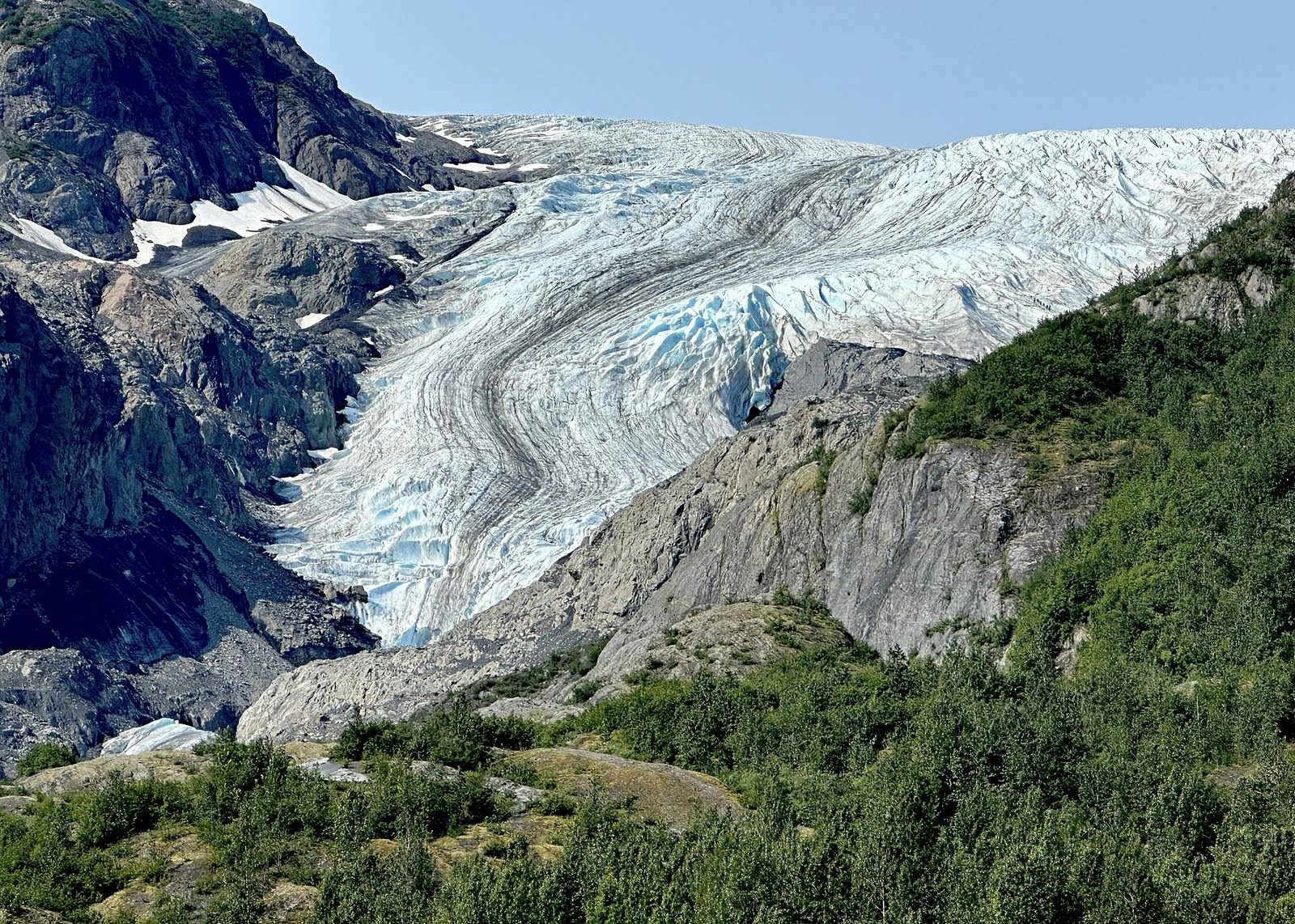
This trail climbs relentlessly beside Exit Glacier, from forest through alpine meadows where black bears and marmots feed, onto bare rock and snow, to a viewpoint at the edge of the Harding Icefield, a white plain of ice stretching to the horizon with only the tips of mountains poking through. It is one of the great day hikes in Alaska and the only way to see the icefield on foot. Snow lingers on the upper trail into midsummer.
- Distance: about 8 miles (13 km) round trip
- Climb: about 3,000 feet (900 m)
- Allow: 6 to 8 hours
- Start: Exit Glacier Nature Center
- When: July to September
- Suits: fit hikers
5. Fly over the Harding Icefield
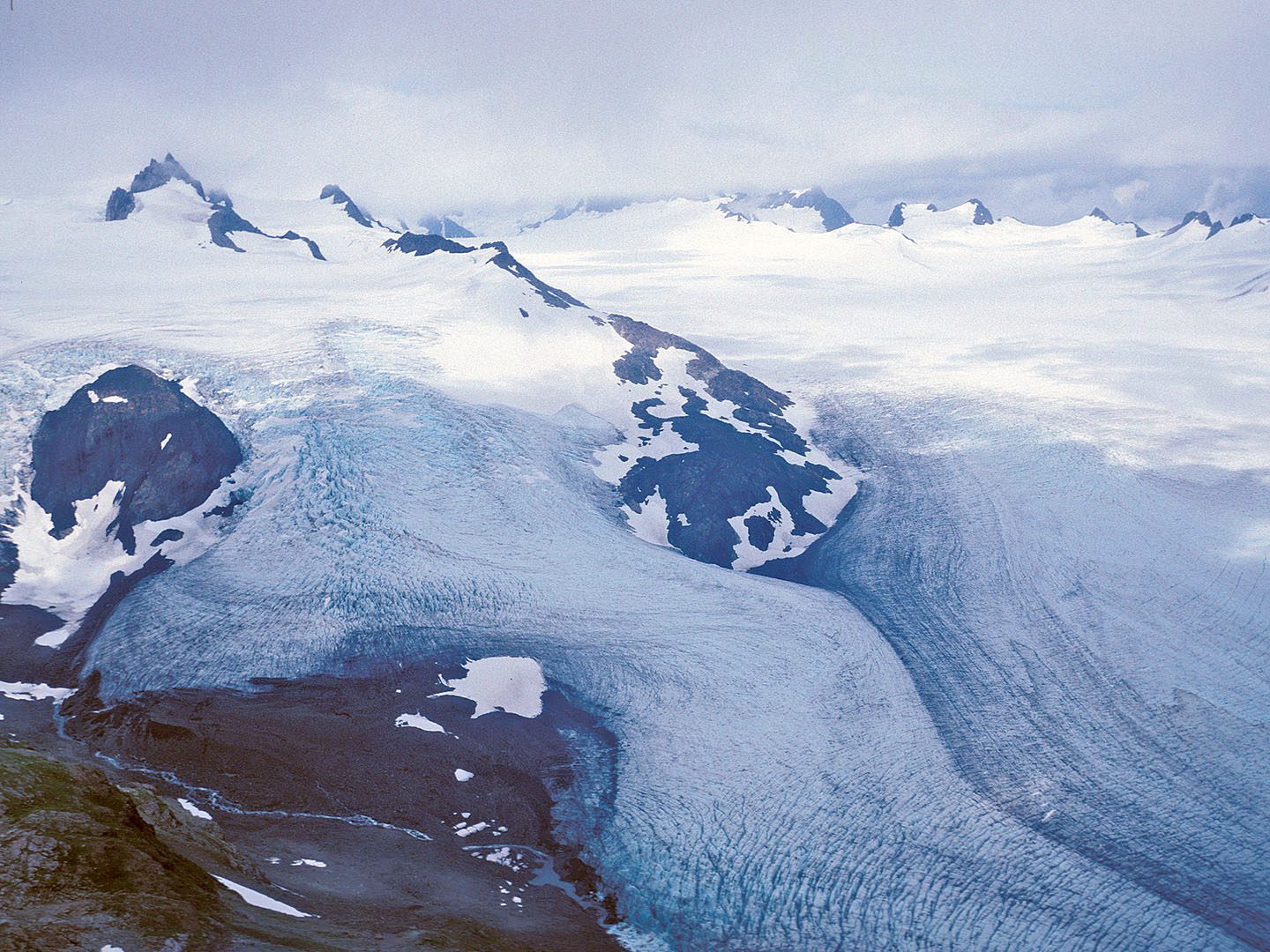
The Harding Icefield is one of the largest icefields in the United States, and from a small plane you see the scale of it: a sea of ice and snow hundreds of square miles across, broken by black peaks called nunataks, with nearly 40 glaciers spilling from its edges toward the sea and the valleys. Flightseeing trips leave from Seward and other towns on the peninsula on clear days.
- Allow: 1 to 2 hours
- Start: an air-tour operator in Seward or elsewhere on the Kenai Peninsula
- When: May to September, on clear days
- Suits: everyone
6. Paddle among the icebergs of Bear Glacier Lagoon
Bear Glacier, the largest glacier in the park, ends in a lagoon at the mouth of Resurrection Bay that is filled with icebergs of every size and shape, sculpted blue and white by the water. Guided kayak trips reach it by water taxi from Seward and paddle among the floating ice, under the glacier’s long face. It is a remarkable place, but icebergs can roll or split without warning, so go with a guide and keep your distance.
- Allow: a full day
- Start: Seward, with a guided kayak trip
- When: June to August
- Suits: beginners with a guide
7. Spend a night in a coastal cabin
The park has public-use cabins on the coast, reached only by boat or floatplane, in sheltered coves of the fjords. Staying in one, you have the bay to yourself after the tour boats leave: sea otters in the cove, bald eagles overhead, the sound of glaciers calving across the water, and long northern evenings. Book well ahead, and arrange a water taxi from Seward.
- Allow: a night or more
- Start: Seward, by water taxi
- When: summer
- Suits: anyone comfortable with simple, remote cabins
8. Ski or snowshoe to Exit Glacier in winter
In winter Exit Glacier Road is not plowed, and it becomes a quiet route for skiers, snowshoers, dog mushers and snowmachine riders to the glacier, with a public-use cabin near the nature center for those who want to stay the night. The glacier is frozen and blue, the forest is deep in snow, and you may have it almost to yourself.
- Distance: up to about 7 miles (11 km) each way along the snow-covered road
- Allow: a day, or an overnight in the cabin
- Start: the winter gate on Exit Glacier Road
- When: about December to April, with snow
- Suits: skiers and snowshoers comfortable in cold weather
Before you go
This list covers what stays the same from year to year. Closures, trail and road conditions, and bear warnings change, and the National Park Service posts them on its own site. The link is on our Kenai Fjords National Park guide, with the map and how to get there.