
Poison ivy, oak, sumac, and giant hogweed: identify, avoid, and treat them
No wilderness hazard catches more people than a plant they walked right past. Poison ivy, poison oak, and poison sumac grow across nearly all of North America, and a brush against any of them can leave you with a maddening, blistering rash that lasts for weeks. The good news is that this is one of the most preventable injuries in the outdoors: learn to recognize the three plants, keep your skin covered, and know what to do in the first few minutes after contact, and you can usually avoid the rash entirely, or blunt it before it takes hold. This guide covers how to identify each plant, how to avoid them, how to decontaminate fast if you’re exposed, how to treat the rash, and when it’s serious enough to see a doctor, plus a fourth plant, giant hogweed, that injures in a completely different and more dangerous way.
The underlying principle is a single chemical: urushiol, the oily resin all three plants carry in their leaves, stems, roots, and berries. Urushiol is what triggers the allergic rash, and understanding how it behaves explains almost everything about prevention and treatment. It’s extraordinarily potent, an amount smaller than a grain of salt can affect most people. It clings to skin, clothing, tools, and pet fur, and it stays active for months or even years on any surface it touches. Beat urushiol and you beat the rash: keep it off your skin, and get it off fast when it lands.
The real culprit: urushiol
Every reaction to these plants comes from urushiol, a colorless-to-pale-yellow oil present in every part of them, in every season. A bare winter stem is as potent as a summer leaf. It’s fat-soluble, so it penetrates skin within minutes of contact, binding to skin cells and triggering the immune system’s allergic response. That’s why speed matters so much after exposure.
A few facts shape everything that follows. Urushiol is remarkably persistent: it stays active on clothing, boots, tools, backpack straps, and a dog’s coat for months to years, so a “clean” jacket from last season’s hike can still give you a rash. Most people aren’t allergic on their very first exposure. The immune system has to be sensitized first, but sensitivity usually builds with repeat contact, and reactions often get worse over a lifetime, not better. And burning the plants is genuinely dangerous, because urushiol travels in the smoke and can blister your airways and lungs if inhaled.
A tiny amount does it
Roughly a quarter of a nanogram of urushiol, far less than you can see, is enough to give a sensitized person a rash, and about 85 percent of people are allergic. Treat any suspected contact as real contact and decontaminate, even if you saw nothing on your skin.
Identify poison ivy
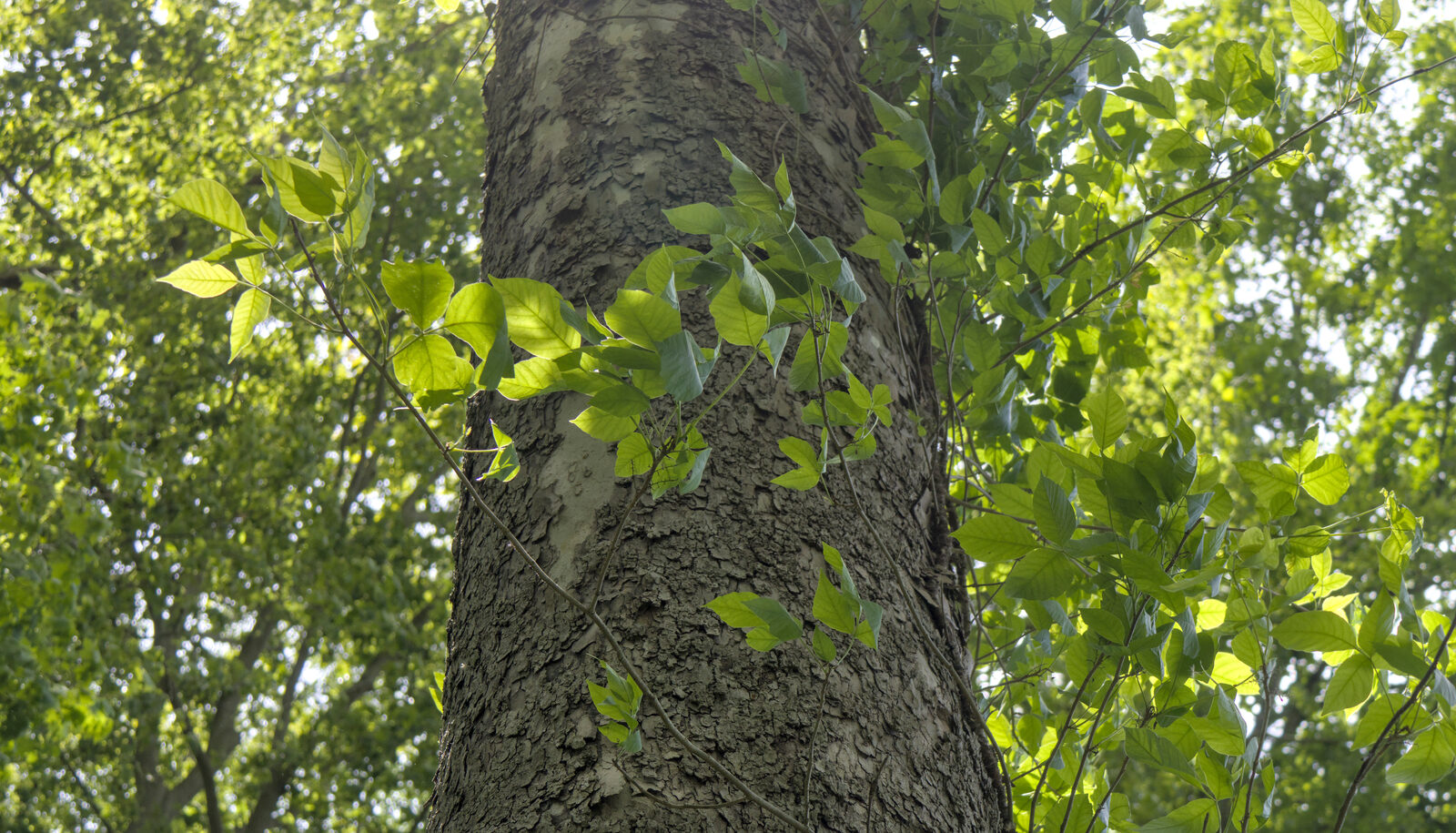
Poison ivy is the most widespread of the three, found across most of the United States and southern Canada, in woods, fields, roadsides, riverbanks, and backyards. Its signature is three leaflets on each stem, the origin of the old saying “leaves of three, let it be.” The middle leaflet sits on a longer stalk than the two side leaflets, which attach almost directly to the stem. Leaf edges may be smooth, toothed, or lobed, and the surface can be glossy or dull. Foliage is reddish in spring, green in summer, and turns orange or red in fall; clusters of small, waxy, greenish-white berries may appear.
Poison ivy grows as a low ground plant, a shrub, or a climbing vine. On tree trunks, the vine is famously “hairy”. Covered in reddish aerial rootlets that look like a fuzzy rope. If you see a hairy vine, don’t grab it. Because its shape varies so much, always fall back on the leaflet pattern rather than overall size.
Identify poison oak
Poison oak also carries the three-leaflet pattern, but its leaves are lobed with rounded edges, resembling the leaves of a true oak tree, hence the name. There are two ranges: Pacific poison oak dominates the West Coast, growing as a shrub or vine, while Atlantic poison oak grows as a low shrub in the sandy soils of the Southeast. Leaves are often fuzzy or velvety, green in summer and turning yellow-orange to red in fall, and the plant may bear greenish-white or tan berries.
The “leaves of three” rule covers poison oak as reliably as poison ivy. When you’re in oak’s territory and see clusters of three lobed, slightly fuzzy leaflets, keep your distance.
Identify poison sumac
Poison sumac breaks the leaves-of-three rule and is easy to misjudge, so learn it separately. Each stem carries 7 to 13 leaflets arranged in pairs along a central stalk, with a single leaflet at the tip. The leaflets are smooth-edged and oval, often with a reddish central stem, and the plant grows as a tall shrub or small tree, up to 20 feet (6 m) or more. It’s less common than ivy or oak and restricted to wet, swampy ground in the eastern United States: bogs, marshes, and flooded low woods.
Poison sumac is often confused with harmless staghorn sumac, which has toothed leaflet edges and upright, fuzzy red berry clusters. Poison sumac’s berries are the tell: small, whitish or gray, and hanging in loose clusters. If you’re wading through eastern wetland and see a shrub with paired smooth leaflets and drooping pale berries, avoid it.
How to avoid it
Prevention is far easier than treatment. The habits that keep you rash-free:
- Know the plants and scan ahead. “Leaves of three, let it be” covers ivy and oak; add the wet-ground, many-leaflet look of sumac. When in doubt, give any unfamiliar plant a wide berth. This is also good practice around genuinely toxic foraging look-alikes (see finding food in the wilderness).
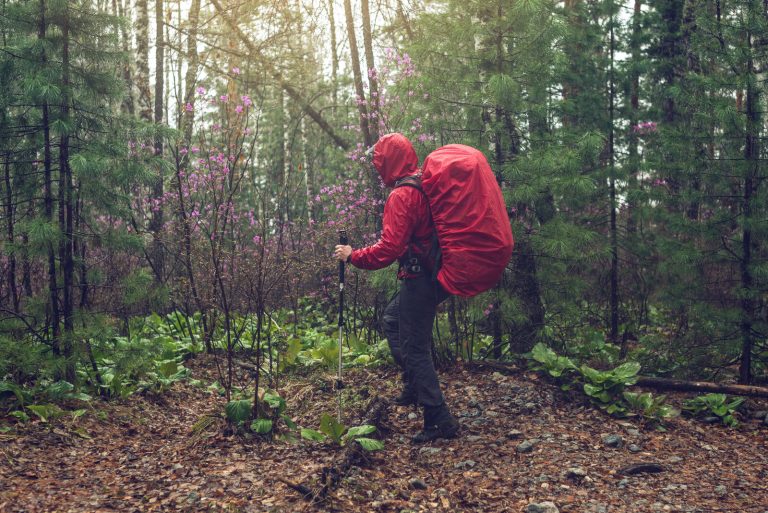
- Cover skin in risky terrain. Long sleeves, long pants, socks, and gloves put a barrier between you and the oil. Bushwhacking off-trail, clearing brush, or gathering firewood is where most contact happens.
- Mind your gear and your dog. Urushiol transfers from contaminated clothing, boots, trekking poles, and pet fur to your skin hours or days later. Wash suspect gear, and rinse a dog that may have run through it before you pet it.
- Never burn it. Do not toss unknown brush or vines on a campfire. Burning poison ivy, oak, or sumac sends urushiol into the smoke, which can cause a severe, even life-threatening reaction if it reaches your lungs. Know what you’re feeding a fire. See starting a fire in any conditions.
Leaves of three, let it be
It’s an old rhyme because it works. Poison ivy and poison oak almost always show three leaflets with the middle one on a longer stalk. Poison sumac is the exception. Many paired leaflets in wet ground, so learn that one on its own.
If you touch it: decontaminate fast
The single most useful thing you can do is wash the oil off quickly. Urushiol binds to skin within roughly 10 to 30 minutes, so the sooner you act, the more rash you prevent, and even later washing helps by removing oil that could still spread.
- Wash within 10 to 15 minutes if you can. Use soap and cool water, and scrub gently but thoroughly. Cool water is better than hot. Heat opens pores and can help the oil penetrate. A dedicated urushiol-removal cleanser, rubbing alcohol, or even grease-cutting dish soap all work by breaking down the oil; plain water is better than nothing.
- Get under your fingernails. Trapped oil there spreads to everything you touch, including your face. Scrub nails specifically.
- Decontaminate your gear too. Wash or wipe down clothing, boots, poles, and pack straps that brushed the plant, and keep them away from bare skin until you do. Handle contaminated clothing with gloves.
- No water? Wipe repeatedly with dirt or sand to blot the oil off, but not over blisters, which can break and invite infection.
Treating the rash
If a rash develops anyway, it typically appears 12 to 72 hours after contact, peaks around days 4 to 7, and clears in one to three weeks. It shows up as red, intensely itchy streaks or patches, often in lines where the plant dragged across skin, followed by bumps and blisters. Treatment is about controlling the itch and protecting the skin while it heals. There’s no cure that makes it vanish overnight.
- Cool it and soothe it. Cool compresses, cool oatmeal baths, and calamine lotion all calm the itch and dry weeping blisters.
- Over-the-counter help. Hydrocortisone cream reduces itch and inflammation on smaller areas; oral antihistamines can take the edge off, especially at night.
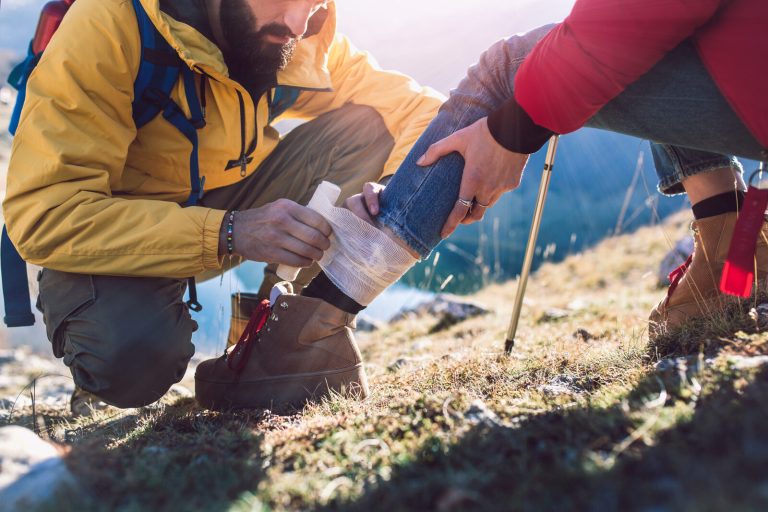
- Don’t scratch, and don’t pop blisters. Scratching won’t spread the rash, but it breaks the skin and invites infection, and open blisters are a wound to protect. See wound care in the backcountry for keeping it clean.
- Leave the oil behind first. Wash skin, nails, and gear before you treat, or you’ll keep re-exposing yourself to residual urushiol.
When to see a doctor
Most poison-plant rashes resolve on their own, but some need medical care. Seek help, often for a course of oral steroids or treatment of a complication, if:
Get medical help for these
Trouble breathing or swallowing, or any rash after being near burning poison ivy, oak, or sumac. Inhaled urushiol is a medical emergency. Also seek care for a rash on the face, eyes, mouth, or genitals; a rash covering a large portion of your body; severe swelling or widespread blistering; signs of infection (increasing pain, warmth, pus, red streaks, fever); or a rash that isn’t improving after 7 to 10 days.
A reaction near the eyes or airway, or a very widespread rash, is beyond home care. Get to a clinic. If you’re deep in the backcountry when a severe reaction or infection sets in, treat it as a reason to head out, and review our guide to backcountry first aid for managing it on the way.
Myths worth unlearning
- “The blister fluid spreads it.” False. The fluid in poison-ivy blisters does not contain urushiol and cannot spread the rash to you or anyone else. New patches appearing over days come from oil that was on the skin longer, from areas that got more oil, or from re-contact with contaminated gear, not from scratching open blisters.
- “It’s only a problem in summer.” False. Urushiol is present year-round, including in bare winter stems and roots. Cool-weather hikers and firewood gatherers still get it.
- “Dead plants are safe.” False. Urushiol stays active on dead vines and leaves for months to years. That “dead” hairy vine on a log is still dangerous.
- “If I’ve never reacted, I’m immune.” Risky. Many people tolerate early exposures, then become sensitized and react, often more strongly each time. Don’t count on past luck.
- “Watch what the animals touch.” Useless here. Deer, birds, and other animals contact and even eat these plants with no trouble; that tells you nothing about your own skin.
A different danger: giant hogweed
Giant hogweed injures in an entirely different way from the poison plants above, and a worse one. It isn’t an allergy, it’s a chemical burn triggered by sunlight. The plant’s watery sap contains compounds called furanocoumarins that strip your skin of its natural protection against ultraviolet light. Get the sap on your skin, expose it to sun, and within about 15 minutes to a couple of days you develop painful, blistering burns that can leave dark scars and leave the skin sensitive to sunlight for months or years. Because it’s a phototoxic reaction rather than an allergic one, it can affect anyone . No prior sensitization required. Worst of all, sap in the eyes can burn the cornea and cause temporary or, in rare cases, permanent blindness.
Giant hogweed is an invasive plant spreading through parts of the northeastern and northwestern United States and Canada, favoring moist ground along riverbanks, ditches, roadsides, and forest edges. It’s hard to miss once you know it: it towers 8 to 18 feet (2.4 to 5.5 m) tall, on a thick hollow green stem blotched with reddish-purple and covered in coarse white hairs. The deeply cut, jagged leaves can span up to 5 feet (1.5 m), and it’s crowned by huge umbrella-shaped clusters of tiny white flowers, up to 2.5 feet (76 cm) across. It resembles an oversized version of harmless cow parsnip or Queen Anne’s lace, when a “wildflower” is taller than you with a purple-spotted, bristly stem, keep well clear.
If sap contacts your skin, the response differs from urushiol in one crucial way, get out of the sun. Wash the area immediately with soap and cool water, then keep it covered and out of sunlight for at least 48 hours. Wash any clothing and gear that touched the plant. If sap gets in your eyes, rinse them with water at once, put on sunglasses, and seek medical care. See a doctor for significant burns, any eye exposure, or blistering; for weeks to months afterward, keep the healed skin covered and use sunscreen, because it can flare again with sun exposure. And as with the poison plants, never cut, mow, or burn hogweed. That flings sap into the air and your eyes.
Hogweed sap plus sunlight equals burns. Protect your eyes
Treat giant hogweed as a burn hazard, not an itch. If its sap reaches your eyes, flush with water immediately, shield them from light, and get medical help. It can damage your sight. Never strim or burn the plant; airborne sap is how the worst eye injuries happen.
What to carry
- A way to wash up , a small bottle of a urushiol-removal cleanser or grease-cutting soap, and enough water to rinse. The faster you can wash after contact, the less rash you’ll get.
- Barrier clothing , long sleeves, long pants, and gloves for off-trail travel and brush work are the cheapest prevention there is.
- Itch and inflammation relief in your first aid kit , hydrocortisone cream, calamine, and an oral antihistamine. A well-stocked kit like the Adventure Medical .7 covers these and the wound care an infected, scratched-open rash may need.
- Nitrile gloves , for handling contaminated clothing and gear without spreading oil to your hands.
- Sunscreen and cover-up , after a giant hogweed exposure, keeping the skin shaded and protected for weeks is part of the treatment, not an afterthought.
See our backcountry first aid guide
Key takeaways
Poison ivy, oak, and sumac are the most avoidable rash in the outdoors once you can recognize them. Remember “leaves of three, let it be” for ivy and oak, and the many-leaflet, wet-ground look of sumac. Every reaction comes from urushiol, so keep it off your skin with clothing and awareness, wash it off fast when you’re exposed, and clean your gear and dog too. If a rash comes anyway, cool it, soothe the itch, protect the skin, and don’t scratch, and get medical help for a rash on the face or eyes, one that’s widespread, any exposure to the plant’s smoke, or signs of infection. Give giant hogweed an even wider berth: its sunlight-activated sap burns anyone it touches and can harm your eyes, so learn its towering, purple-blotched profile and stay clear. Above all, never burn any of these plants. Learn the four, and you can walk right past the most common hazards in the woods without a second thought.
Adapted in part from the U.S. Army Survival Field Manual (FM 3-05.70 / FM 21-76), Chapter 10, “Poisonous Plants” (contact dermatitis, the oil-based toxin, washing to remove it, and the warning never to burn contact-poisonous plants), combined with current dermatology guidance from the American Academy of Dermatology and other medical sources on urushiol, rash treatment, and when to seek care, plus public-health and invasive-species guidance on giant hogweed and phytophotodermatitis.
Wilderness Experts is reader-supported. As an Amazon Associate we earn from qualifying purchases; when you buy through links on our site we may earn a commission at no extra cost to you. It never changes what we recommend.