
Wound care in the backcountry: cleaning, closing, and stopping infection
A cut that would be trivial at home becomes a real problem days from a trailhead, because the danger in the backcountry isn’t usually the wound itself, it’s the infection that follows. Dirt, bacteria, and delay turn a minor gash into a swollen, pus-filled, trip-ending injury, and occasionally into something far worse. The good news is that clean, simple wound care handles the great majority of backcountry cuts and scrapes. This guide covers how to clean, close, and dress a wound in the field, how to spot and treat infection, and when a wound means it’s time to head out.
The underlying principle runs counter to instinct: in the wild, keeping a wound clean and open to drain beats sealing it shut. At home a doctor can suture a wound because they can sterilize it first; in the field you can’t, and a wound sealed over trapped bacteria becomes an abscess. So your job is to stop serious bleeding, flush the wound thoroughly, cover it with a clean dressing, and watch it closely. Letting it drain rather than forcing it closed. This builds on the life-threats covered in our guide to backcountry first aid; here we go deep on the wounds that aren’t immediately fatal but can still end a trip or turn dangerous.
First, stop serious bleeding
Before anything else, control bleeding that won’t stop on its own. Press firmly on the wound with a clean cloth or dressing and hold, most bleeding stops within a few minutes of steady direct pressure. Raise the injured part above the heart if you can. If blood soaks through, add more dressing on top rather than peeling off the first, and keep pressing. For catastrophic, spurting bleeding from a limb that direct pressure won’t control, a tourniquet above the wound can save a life. Our first aid basics guide covers severe bleeding and shock in detail. Once the bleeding is controlled, move on to cleaning.
Clean the wound. The step that matters most
Cleaning is where infections are won or lost, so do it thoroughly as soon as the wound occurs. Work in order:
- Expose it. Move or cut clothing away from the wound so you can see all of it. If a sharp object or projectile caused it, look for an exit wound too.
- Clean around it. Wash the skin surrounding the wound so you’re not pushing grime inward.
- Flush it out, hard. Rinse the wound itself with lots of clean water under pressure, a squeeze from a water bottle, a bag with a pinhole, or an irrigation syringe. Pressure is what lifts bacteria and debris out. Irrigate, don’t scrub; scrubbing drives contamination deeper and damages tissue.
- Use the cleanest water you have. Disinfected drinking water is ideal. In a true bind with nothing else, even fresh urine is cleaner than dirty water for flushing.
Pick out any obvious embedded grit or debris with clean tweezers. The single biggest favor you can do a backcountry wound is to flush it well and early.
Pressure irrigation beats everything
The most effective field cleaning is a large volume of clean water forced through the wound under pressure. A squeeze bottle or a filled bag with a pinhole works. More water and more pressure lower the infection risk more than any ointment.
To close or leave open
Resist the urge to seal a wound shut. In a survival setting the “open treatment” method is safest: leave the wound open so any pus and fluid can drain, cover it with a clean dressing, and let it heal from the inside. A wound that can drain generally won’t become life-threatening, however ugly it looks. Do not suture or tightly close a field wound. Trapping bacteria inside is how you create a dangerous abscess.
The one exception is a clean, gaping cut that won’t stay together: you can draw the edges toward each other with butterfly strips or thin tape “bridges,” but leave gaps so it can still drain, and only do this if the wound is clean. Deep, dirty, or animal-bite wounds should always be left open and watched. Steri-strips and skin closures from your first aid kit are the right tools here.
Dressing and bandaging
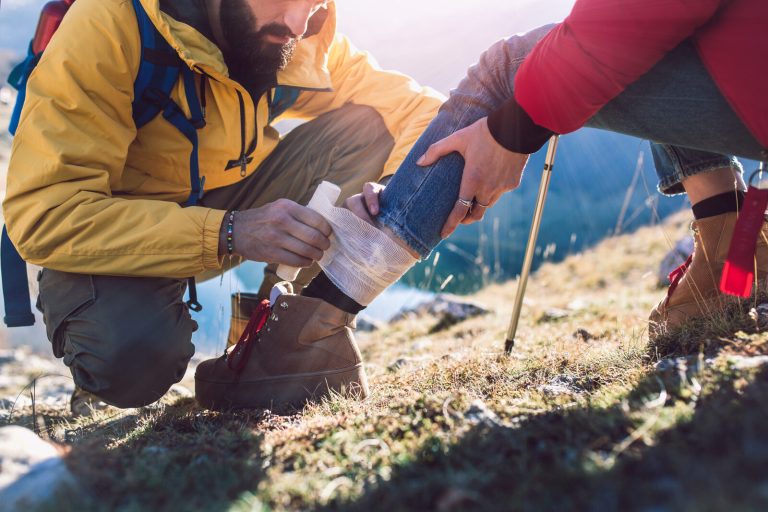
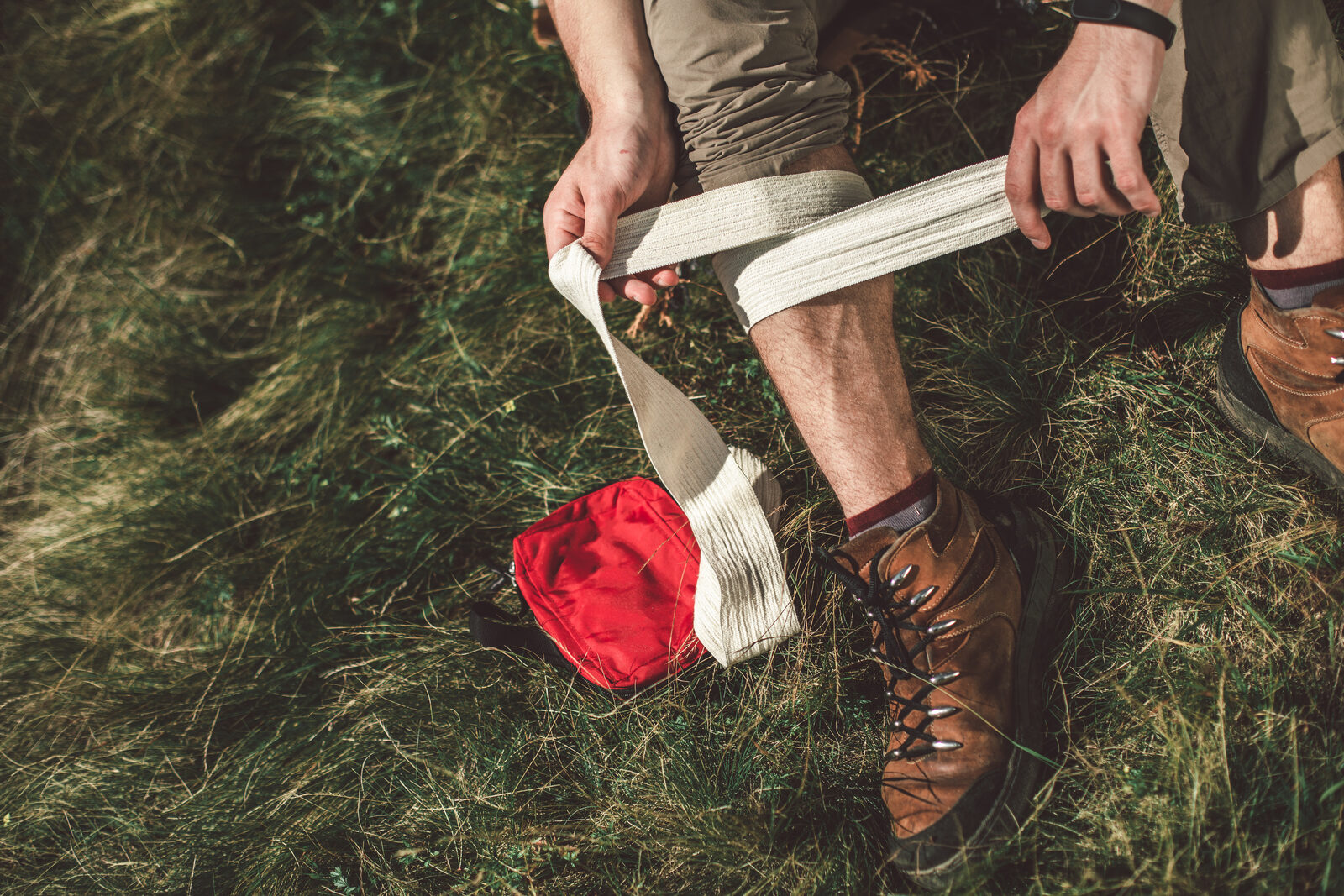
Cover the cleaned wound with a clean, dry dressing and hold it in place with a bandage or tape. Change the dressing daily, both to keep it clean and to inspect for infection. Each time, check the wound, re-flush if it’s dirty or draining, and re-dress it. Keep the dressing snug enough to stay put but not so tight it cuts off circulation. Check that the skin beyond the bandage stays warm and pink. A wound on a joint or the sole of a foot needs extra padding and, often, rest to heal.
Spotting and treating infection
In the field, some degree of wound infection is almost inevitable, so check every wound daily and know the signs: increasing pain, swelling, redness, and warmth around the wound, pus in the wound or on the dressing, and a rising body temperature. Red streaks spreading from the wound toward the body, or fever and feeling generally ill, mean the infection is spreading and you need to get out and to a doctor.
To treat an infected wound in the field:
- Warm compress. Hold a warm, moist compress on the wound for about 30 minutes, three or four times a day, re-warming it as it cools. This draws the infection to a head.
- Drain it. Open and gently probe the infected wound with a sterilized instrument so trapped pus can escape, then dress it again.
- Flush daily. For deeper or serious wounds, rinse forcefully every day with the cleanest water available until it heals over. The scar may be bigger, but the infection risk drops sharply.
- Hydrate. Drink plenty of water. Your body needs it to fight infection.
- Keep going daily until all signs of infection are gone.
Spreading infection is an evacuation
Red streaks running from the wound, spreading redness, swelling up a limb, fever, or feeling systemically sick mean the infection is getting ahead of you. This is beyond field care. Start evacuating toward medical help and antibiotics without delay.
Burns and blisters
Burns: Stop the burning first. Remove hot clothing and cool the skin with clean water. Then treat a burn much like an open wound: cover it with a clean, cool dressing, keep it clean, and watch for infection. Don’t break blisters that form over a burn, and don’t apply greasy substances. Burns leak a lot of fluid, so push fluids to keep the person hydrated, and treat a large burn as a serious injury that warrants evacuation.
Blisters: The friction blisters that plague hikers are best prevented and, once formed, left intact when possible. An unbroken blister is sealed against infection. Pad around it with moleskin or tape to take off the pressure. If a blister is large and sure to burst under load, drain it cleanly: clean it, pierce the edge with a sterilized needle, press the fluid out, leave the roof of skin in place, and dress it. Once a blister has torn open, treat it as an open wound, clean, dress, and pad it daily. Our guide to hiking all day covers preventing blisters before they start.
If you’re out of supplies
If your kit runs dry, clean water and cloth still do most of the work. Flushing and a clean covering matter more than any product. Improvised antiseptics used in the field include a rinse of iodine tablets dissolved in water, salt water (a couple of tablespoons per liter), or honey applied straight to the wound, which resists bacteria and helps new skin grow. Sphagnum moss from a bog is naturally absorbent and mildly antiseptic and can serve as a dressing. Boil any cloth you use as a dressing if you can. Treat all of these as backups to thorough cleaning, not replacements for it, and use unproven remedies with caution.
When to evacuate
Head for help when a wound is beyond field care: infection that’s spreading (red streaks, fever, swelling up a limb), a deep or gaping wound you can’t keep clean, a wound over a joint that won’t stop reopening, a large or deep burn, a wound from an animal bite (high infection and rabies risk), a puncture you can’t flush out, or bleeding you can’t control. When in doubt with a wound that’s getting worse rather than better each day, get out. A satellite messenger lets you call for advice or evacuation.
Common mistakes
- Bandaging over a dirty wound. Sealing in grime guarantees infection. Flush thoroughly first, every time.
- Scrubbing instead of irrigating. Scrubbing drives bacteria deeper and damages tissue. Use pressure and volume of clean water.
- Closing a wound tight. A sealed field wound traps bacteria. Leave it open to drain, or bridge it loosely so it still can.
- Not checking daily. Infection is caught by looking. Change the dressing and inspect the wound every day.
- Popping intact blisters. An unbroken blister is a sterile bandage. Pad around it; only drain if it’s sure to burst.
- Waiting out spreading infection. Red streaks and fever won’t resolve in camp. They mean evacuate now.
What to carry
- A well-stocked first aid kit , dressings, gauze, tape, antiseptic, tweezers, and blister care; a larger kit for groups or long trips.
- A way to irrigate , an irrigation syringe or a bottle with a squeeze cap for pressure flushing.
- Butterfly closures / steri-strips . To draw clean, gaping cuts together while still allowing drainage.
- Plenty of clean water and a filter , for flushing wounds and staying hydrated.
- A satellite messenger . To get medical advice or call an evacuation if a wound turns serious.
Key takeaways
In the backcountry, the wound is rarely the emergency. The infection is. Control serious bleeding, then flush the wound hard with lots of clean water, and keep it clean and open to drain rather than sealing it shut. Dress it, check it daily, and know the signs of infection so you catch it early. Treat burns like open wounds and leave intact blisters alone. And when a wound is spreading redness, running a fever, or simply getting worse each day, stop treating and start walking out. Clean, patient, honest wound care handles the vast majority of what the trail throws at you.
Adapted in part from the U.S. Army Survival Field Manual (FM 3-05.70 / FM 21-76), Chapter 4, “Basic Survival Medicine” (open-wound cleaning and treatment, infection, burns, and field antiseptics) and the personal-hygiene section on blisters, with modern wilderness-medicine practice. This is general education, not a substitute for medical training or professional care.
Wilderness Experts is reader-supported. As an Amazon Associate we earn from qualifying purchases; when you buy through links on our site we may earn a commission at no extra cost to you. It never changes what we recommend.