

Top 9 things to do in Great Sand Dunes National Park
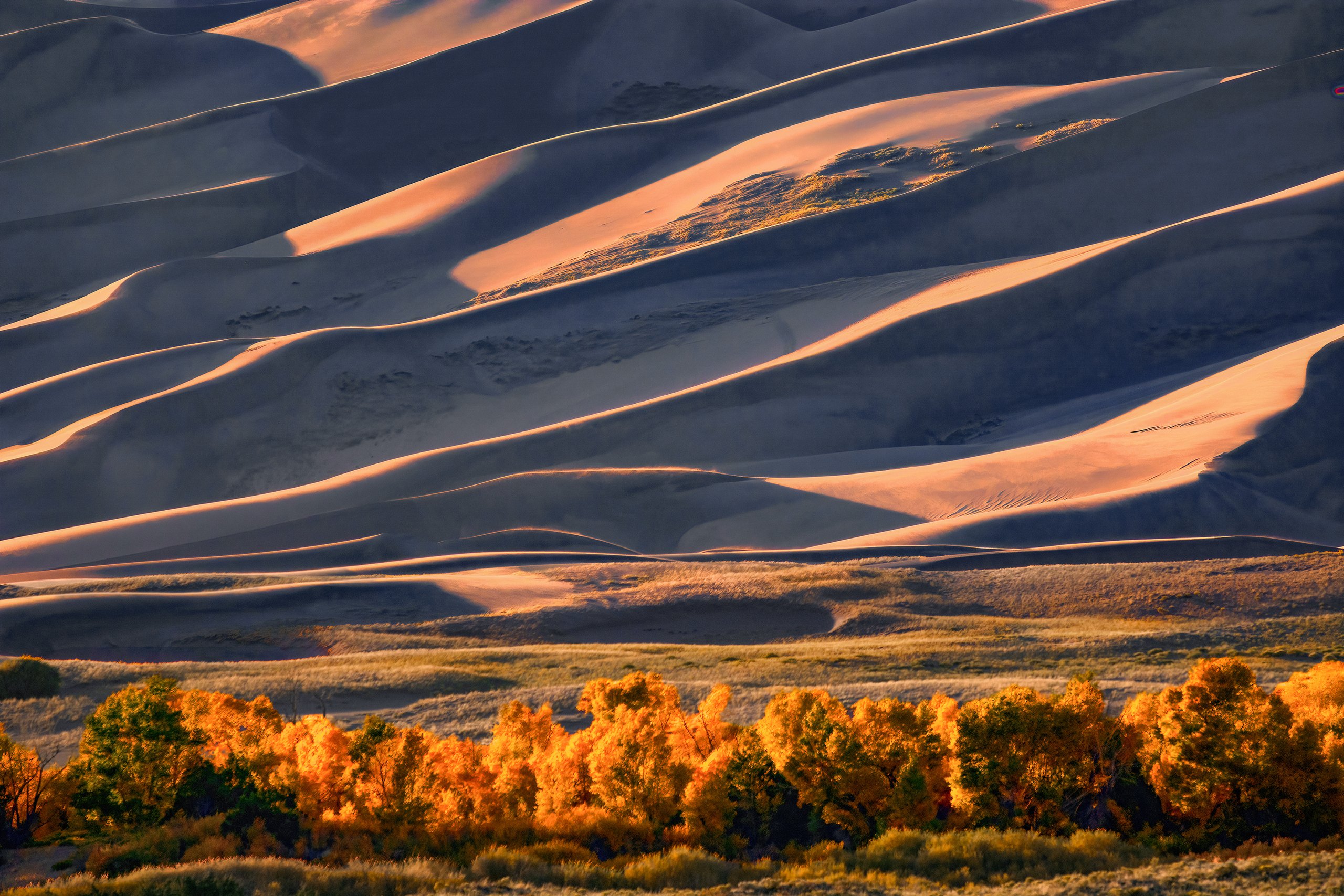
Great Sand Dunes National Park and Preserve, in Colorado’s San Luis Valley, holds the tallest dunes in North America, piled against the foot of the Sangre de Cristo Mountains by winds blowing across the valley for thousands of years. Behind the dunes, the park climbs through grassland, forest and alpine tundra to peaks above 13,000 feet (4,000 m), so in one place you can wade a creek at the edge of the sand, climb a dune and hike to a mountain lake. These are the nine outings we would put first. The order starts with what the park is known for, then goes by what an outing gives back for the time and effort it takes. Distances are approximate; times are our estimates and do not include stops.
On summer afternoons the sand surface can reach 150°F (65°C), hot enough to burn bare feet and paws: go on the dunes early in the morning or in the evening, wear shoes and carry water. Thunderstorms build over the mountains most summer afternoons, and on the open dunes you are the tallest thing around, so get off the sand at the first thunder. The park sits above 8,000 feet (2,400 m), so take climbs slowly, and walking uphill in soft sand is much harder than it looks.
1. Climb High Dune
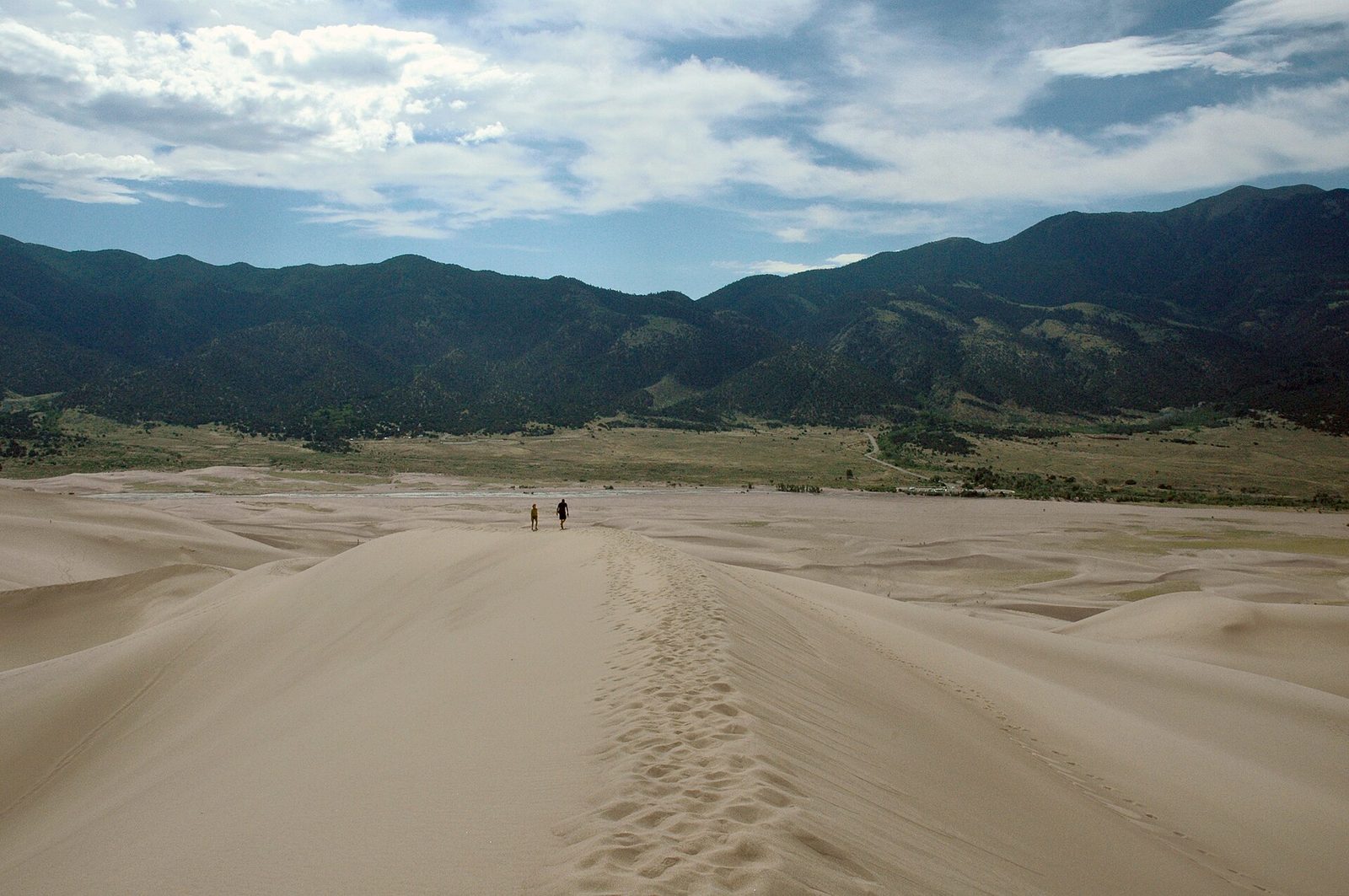
From the main parking area, you cross Medano Creek and simply start climbing, with no trail, following the sharp crests of the dunes upward. High Dune, on the first ridge, is not the tallest dune in the park, but it is the usual goal, with a view over a sea of sand to the peaks and the valley. Walking along the crests is easier than climbing the faces. Coming down, take the steep slopes in long, sliding leaps.
- Distance: about 2.5 miles (4 km) round trip, with no trail
- Climb: about 700 feet (210 m)
- Allow: 2 to 3 hours
- Start: Dunes Parking Lot, near the visitor center
- When: all year; early morning or evening in summer
- Suits: fit walkers
2. Play in Medano Creek
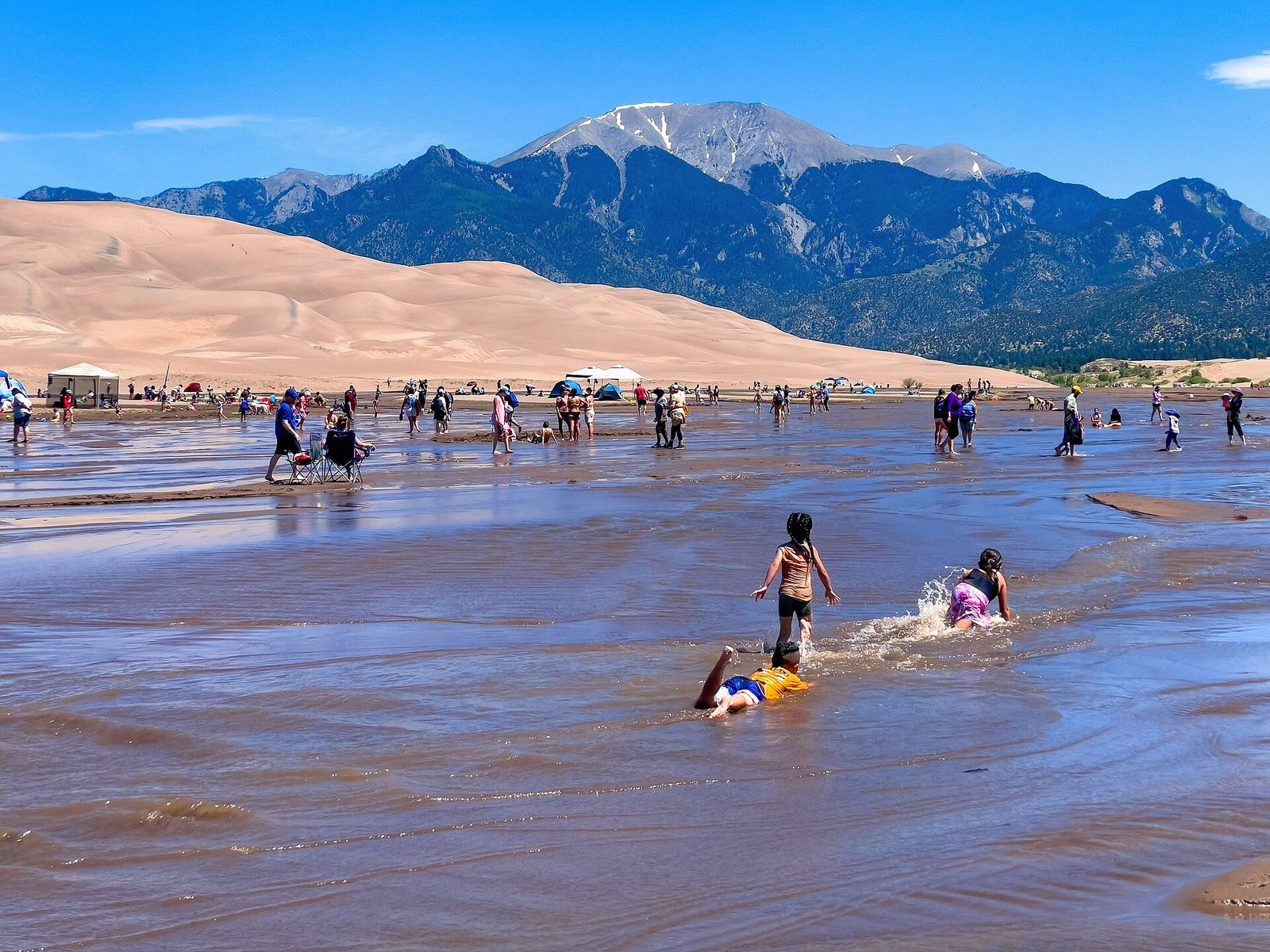
In late spring, snowmelt from the mountains spreads Medano Creek in a wide, shallow sheet across the sand at the foot of the dunes, and small ripples called surge flow, which build and break like little waves, run down it every few seconds. Families come to splash, build sand castles and float on inner tubes in water only inches deep: it is the closest thing to a beach in Colorado. The flow peaks in late May or early June and usually dries up by midsummer, and in dry years it barely reaches the dunes.
- Allow: 2 hours to half a day
- Start: Dunes Parking Lot
- When: about mid-May to June, varying with the year’s snow
- Suits: everyone, small children most of all
3. Sandboard or sled down a dune
The steep faces of the dunes make long, fast runs on a sandboard or a sand sled, which are made to slide on sand and work far better than snow sleds. You rent them outside the park, at the store near the entrance or in the towns of the valley. Pick a steep slope, wax the board, and climb up for the next run, which is the hard part. Dry sand slides best, so go after a few dry days.
- Allow: 2 hours to half a day
- Start: Dunes Parking Lot; the best slopes are on the first ridges
- When: spring to fall; mornings in summer
- Suits: everyone
4. Trek to Star Dune
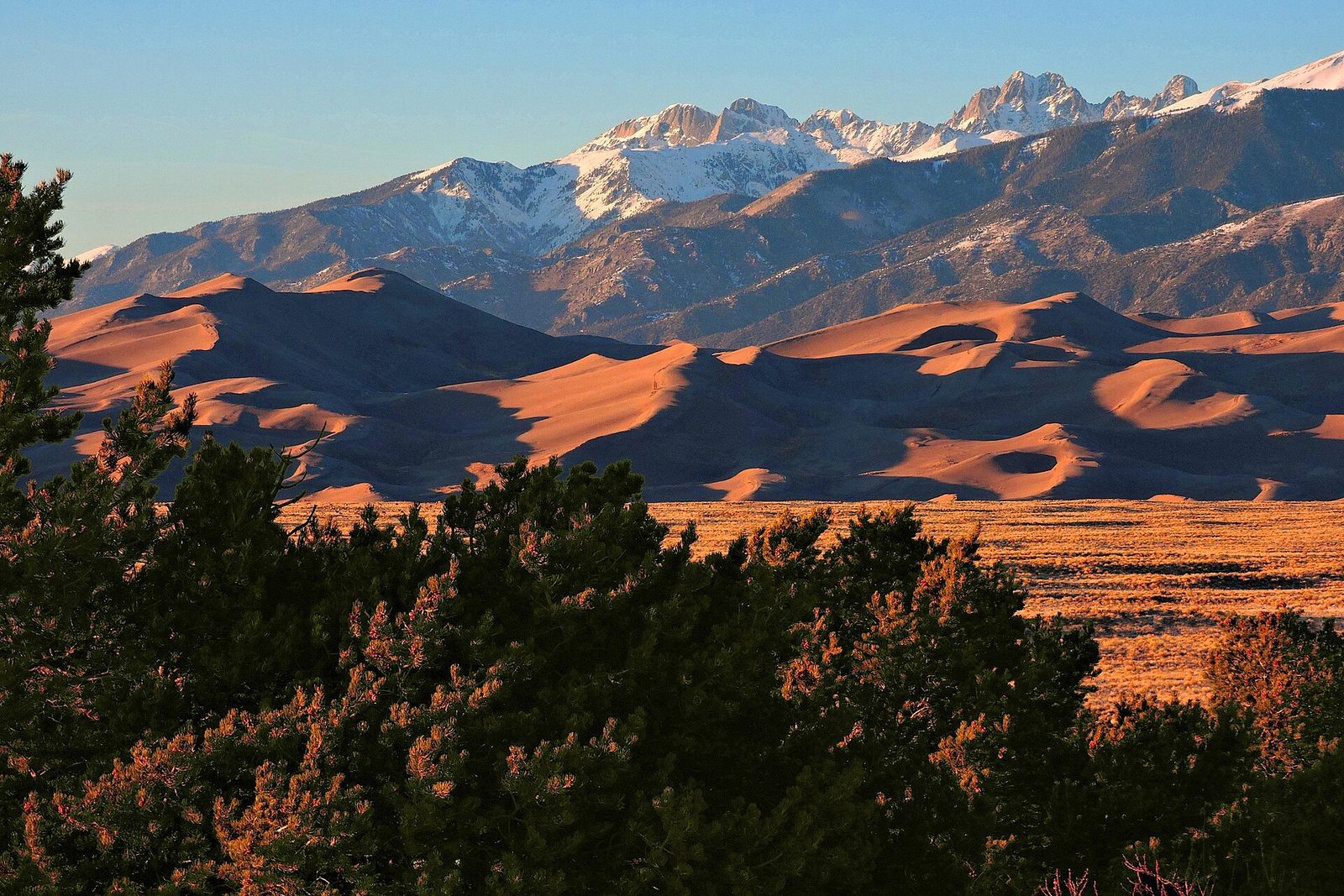
Star Dune, about 750 feet (229 m) from base to summit, is the tallest dune in North America. It stands deep in the dunefield, and there is no trail: most people walk up the dry bed of Medano Creek along the edge of the dunes, then climb its long ridges. From the top, the sand stretches away in every direction, with the snowy Crestone Peaks above. It is a long, hard day in the sand, best begun at dawn.
- Distance: about 8 miles (13 km) round trip, much of it in soft sand
- Allow: 5 to 7 hours
- Start: Dunes Parking Lot
- When: spring and fall; early morning in summer
- Suits: fit hikers carrying plenty of water
5. Hike the Mosca Pass Trail
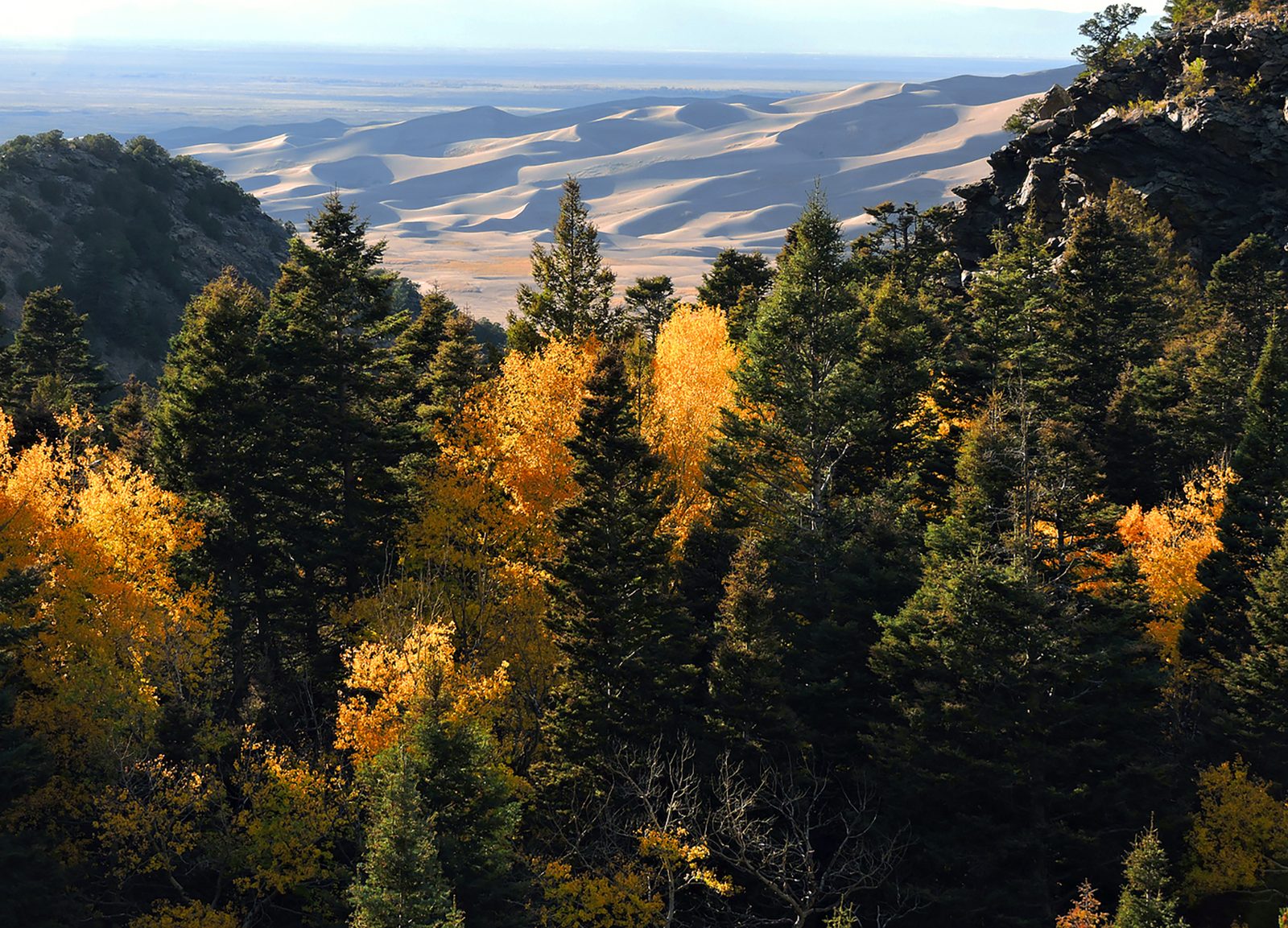
This trail climbs gently up a forested valley along a creek, through aspen and pine, to Mosca Pass in the Sangre de Cristo Mountains, on an old route used by Indigenous peoples and later by settlers crossing into the valley. It is a cool, shady change from the dunes on a hot day, and in late September the aspens turn gold.
- Distance: 7 miles (11 km) round trip
- Climb: about 1,700 feet (520 m)
- Allow: 4 hours
- Start: Montville trailhead, just north of the visitor center
- When: May to October; late September for aspen colour
- Suits: steady walkers
6. Walk the Montville Nature Trail
From the same trailhead as the Mosca Pass Trail, this short loop follows Mosca Creek through the forest, past the site of the small settlement of Montville, with signs about the plants, animals and history of the area. It ends at a viewpoint over the dunes and the valley. It is an easy walk for families, and good at the end of the day.
- Distance: about half a mile (800 m) loop
- Allow: 30 minutes
- Start: Montville trailhead
- When: spring to fall
- Suits: everyone
7. Drive the Medano Pass Primitive Road
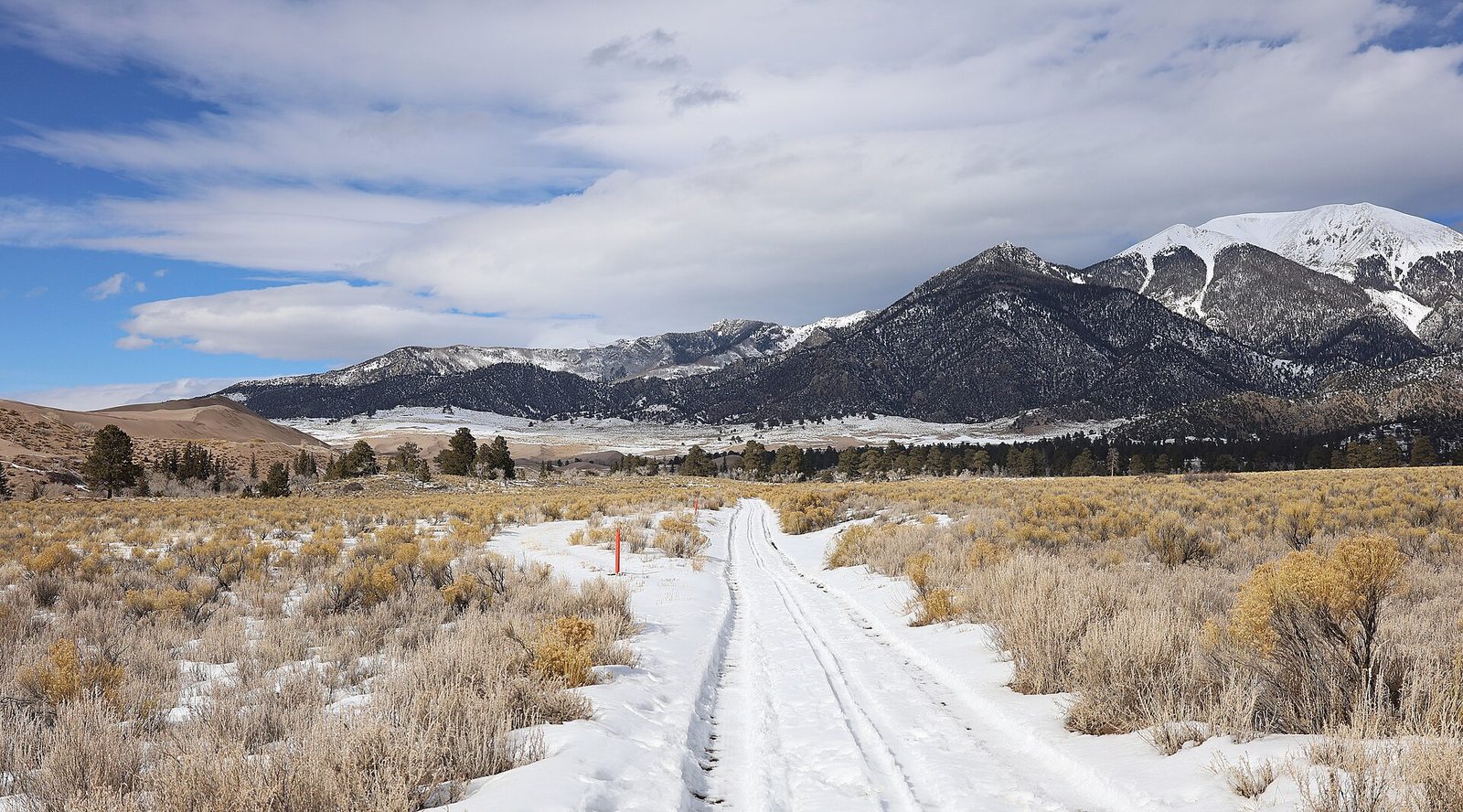
This rough road runs along the edge of the dunes in deep sand, then climbs into the mountains through the forest, crossing Medano Creek again and again, over Medano Pass and down the far side. It is one of the classic four-wheel-drive routes in Colorado, with campsites along the way. You need a high-clearance four-wheel-drive vehicle and lower tire pressure for the sand, and the creek crossings can be deep in spring.
- Distance: about 22 miles (35 km) to Colorado Highway 69
- Allow: half a day to a day
- Start: the end of the paved road, beyond Piñon Flats Campground
- When: summer and early fall
- Suits: experienced drivers with a high-clearance 4WD
8. Hike to the Sand Creek Lakes
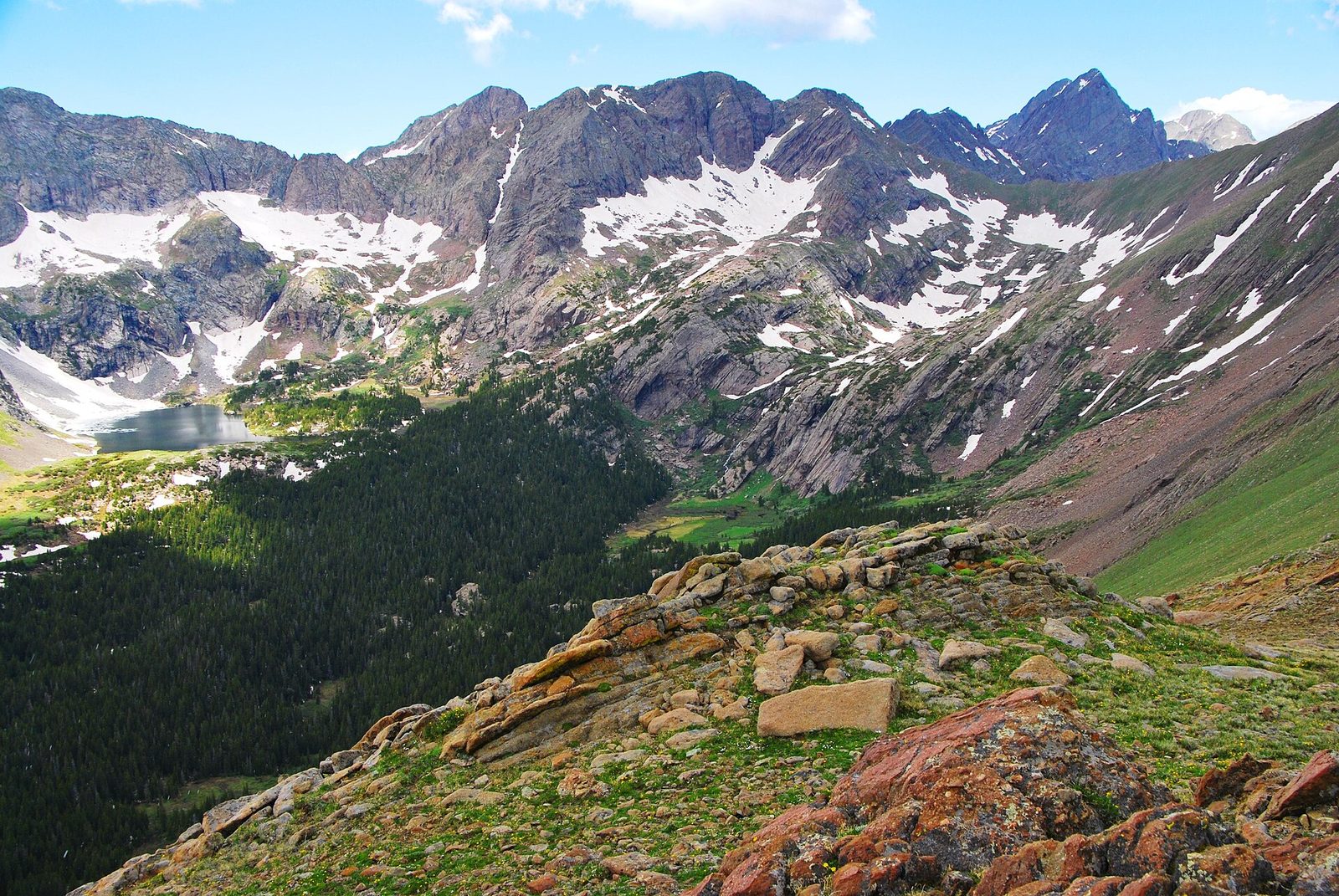
On the far side of the Sangre de Cristos, in the national preserve, a trail climbs steeply to Music Pass on the crest, with a view down into the wild Sand Creek basin, then drops into it and climbs to two alpine lakes below jagged peaks. It is a long day hike or a fine overnight, and it shows a completely different side of the park, far from the sand.
- Distance: about 9 miles (14.5 km) round trip to Upper Sand Creek Lake
- Climb: about 2,000 feet (610 m)
- Allow: 6 hours
- Start: Music Pass trailhead, on the east side of the range, reached by a rough road off Colorado Highway 69
- When: July to September
- Suits: fit hikers
9. Stay for the stars
The San Luis Valley is wide, high, dry and dark, and Great Sand Dunes is an International Dark Sky Park. On a moonless night the Milky Way stretches across the sky above the pale dunes. Walk a short way onto the sand from the parking lot, lie back and look up. The full moon is worth it too, when the dunes glow silver and you can walk on them without a light.
- Allow: an hour or two after dark
- Start: Dunes Parking Lot, or Piñon Flats Campground
- When: all year; near the new moon for stars, the full moon for moonlit dunes
- Suits: everyone
Before you go
This list covers what stays the same from year to year. Closures, Medano Creek’s flow, road conditions and storm warnings change, and the National Park Service posts them on its own site. The link is on our Great Sand Dunes National Park guide, with the map and how to get there.