

Top 7 things to do in Kouchibouguac National Park
Kouchibouguac National Park lies on the east coast of New Brunswick, facing the Northumberland Strait, where a chain of barrier islands of sand dunes runs for about 16 miles (25 km) offshore, sheltering warm lagoons, salt marshes and river estuaries. Inland are peat bogs, Acadian forest and slow rivers. Its name comes from the Mi’kmaq for “river of the long tides”. The park is known for its warm saltwater beaches, its long network of cycling paths, and the seals and seabirds of its lagoons and sandbars. These are the seven outings we would put first. The order starts with what the park is known for, then goes by what an outing gives back for the time and effort it takes. Distances are approximate; times are our estimates and do not include stops.
The dunes are fragile and are the nesting ground of the endangered piping plover: stay on the boardwalks and marked paths, and respect any beach areas closed for nesting birds. Rip currents can form off the barrier beaches, so swim where lifeguards are on duty in summer. Ticks and mosquitoes are common in the woods and marshes in summer.
1. Swim at Kellys Beach
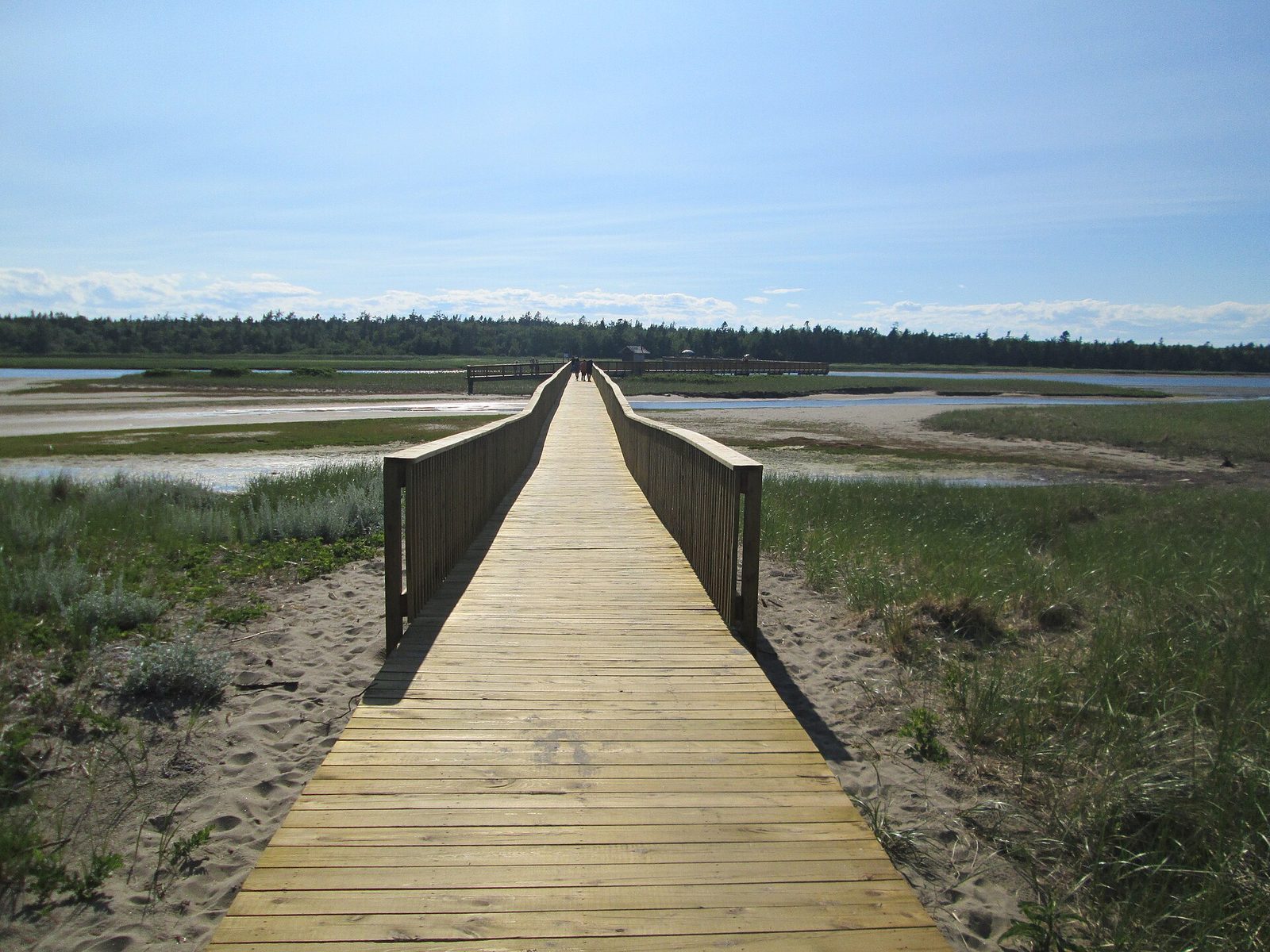
From the parking area, a boardwalk crosses a lagoon and salt marsh, then the dunes, to Kellys Beach, a long, pale beach on a barrier island facing the open strait. The water here is often called the warmest salt water north of Virginia in late summer, and on the lagoon side it is shallow and calm enough for small children. Walk along the shore and you will soon leave the crowds behind.
- Distance: about 0.4 miles (600 m) of boardwalk each way
- Allow: half a day to a day
- Start: Kellys Beach parking area
- When: July and August for swimming; June and September for walks
- Suits: everyone
2. Cycle the park’s trails
Kouchibouguac has one of the best networks of cycling paths of any Canadian national park: wide, level trails of crushed stone through forest, along rivers and past lagoons and marshes, linking the campgrounds, beaches and day-use areas. Bicycles can be rented in the park in summer, and the paths suit families and young children as well as longer rides.
- Distance: about 37 miles (60 km) of cycling paths
- Allow: 2 hours to a day
- Start: the Visitor Centre, the campgrounds or the main day-use areas
- When: June to September
- Suits: everyone
3. Walk the Bog Trail
A boardwalk leads out across a raised peat bog thousands of years old, with a small observation tower in the middle for a view over the open bog. Pitcher plants, sundews, orchids and cranberries grow in the sphagnum moss, and stunted black spruce, centuries old though only head-high, dot the surface. Signs along the way explain how the bog formed and grows.
- Distance: about 1.2 miles (1.9 km) round trip
- Allow: 45 minutes
- Start: Bog Trail parking area, on the main park road
- When: May to October; June for orchids
- Suits: everyone
4. Paddle the lagoons and rivers
The lagoons behind the barrier islands and the slow, winding rivers that run into them are made for a canoe or kayak. Paddle the sheltered water among the salt marshes, watching for herons, ospreys and terns fishing; one of the largest common tern colonies in North America nests on an island in the park. Out toward the sandbars, grey and harbour seals often haul out to rest. Rentals are available in the park in summer.
- Allow: 2 hours to half a day
- Start: Ryans day-use area, or the launches at Callanders Beach and the campgrounds
- When: June to September; stay in the lagoons when the wind is up
- Suits: everyone who can paddle
5. Walk the Salt Marsh Trail
This short boardwalk trail crosses a salt marsh at the mouth of a river, where the tide flows in and out among the grasses twice a day. It is a good place to see wading birds, crabs and the plants that live with salt water, and the views over the marsh to the lagoon are lovely at sunset.
- Distance: a short boardwalk loop
- Allow: 30 minutes
- Start: Salt Marsh Trail parking area, on the main park road
- When: May to October
- Suits: everyone
6. Spend a quiet afternoon at Callanders Beach
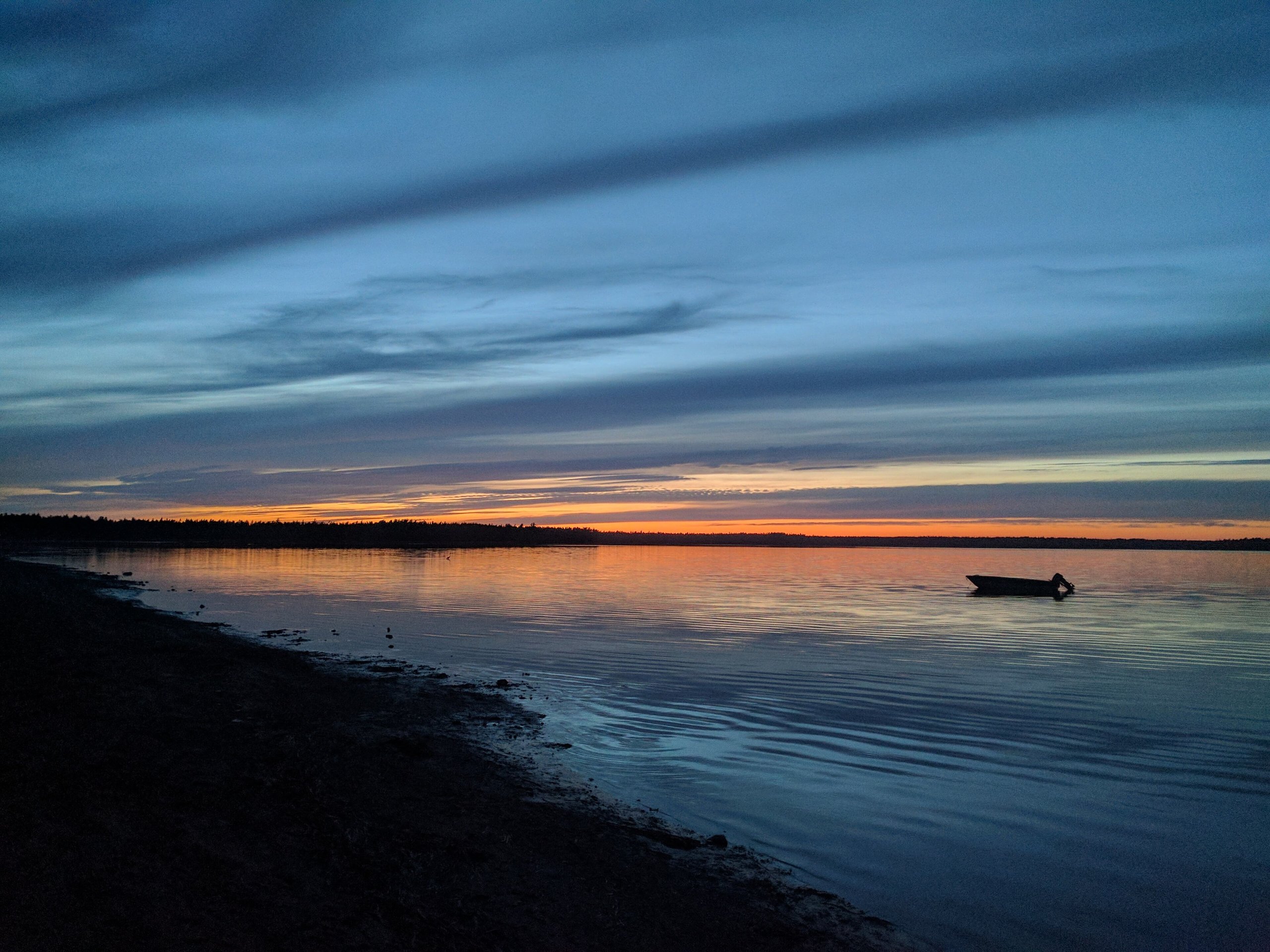
On the sheltered lagoon side of the park, Callanders Beach is a small beach with calm, shallow water, a picnic area and a view across the lagoon to the dunes. It is a good place for small children to paddle, for launching a kayak, and for watching the sunset over the water.
- Allow: 2 hours
- Start: Callanders Beach, on the main park road
- When: June to September
- Suits: everyone
7. Ski and snowshoe in winter
In winter many of the park’s cycling paths are groomed for cross-country skiing and snowshoeing, through the snowy forest and along the frozen rivers, with warm-up shelters on the way. It is quiet and peaceful, and the tracks of foxes, hares and moose are everywhere in fresh snow.
- Allow: half a day
- Start: the park’s winter trailheads
- When: about January to March, with snow
- Suits: everyone dressed for cold
Before you go
This list covers what stays the same from year to year. Closures, beach supervision dates, nesting-bird closures and trail conditions change, and Parks Canada posts them on its own site. The link is on our Kouchibouguac National Park guide, with the map and how to get there.