

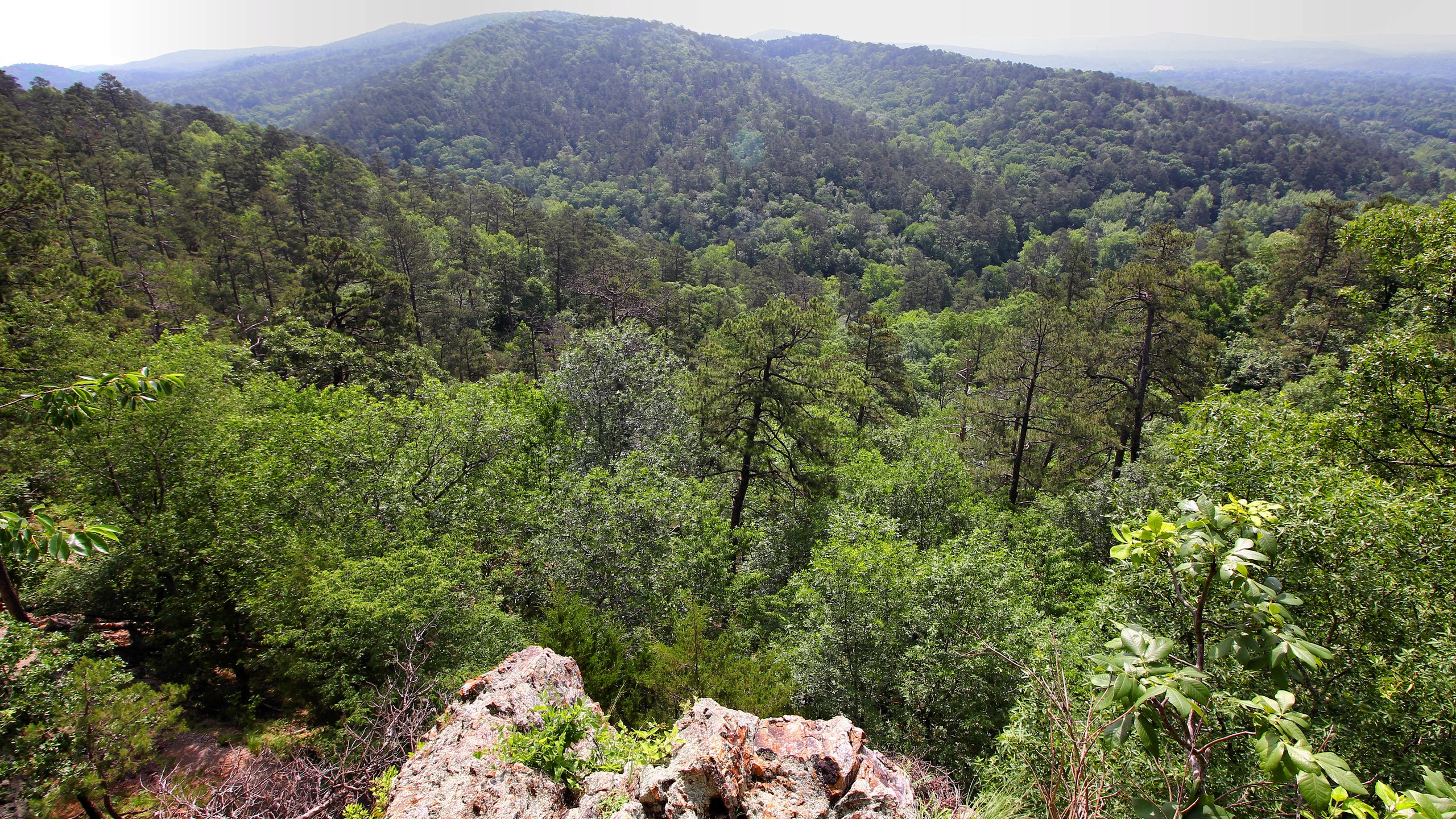
Top 8 things to do in Hot Springs National Park
Hot Springs National Park is the oldest area the United States government set aside for protection, in 1832, forty years before Yellowstone. It protects 47 springs that rise at about 143°F (62°C) at the foot of Hot Springs Mountain, after some 4,400 years soaking slowly down into the rock and back up. A city grew up around them, and the park is half town and half forest: a row of grand bathhouses on the main street, with oak and pine ridges of the Ouachita Mountains climbing behind them. These are the eight outings we would put first. The order starts with what the park is known for, then goes by what an outing gives back for the time and effort it takes. Distances are approximate; times are our estimates and do not include stops.
The spring water is hot enough to scald, so keep your hands out of the open springs and the cascade. Summers here are hot and humid. On the mountain trails, watch for ticks and chiggers in warm weather and for copperheads on rocks and in leaf litter.
1. Walk Bathhouse Row
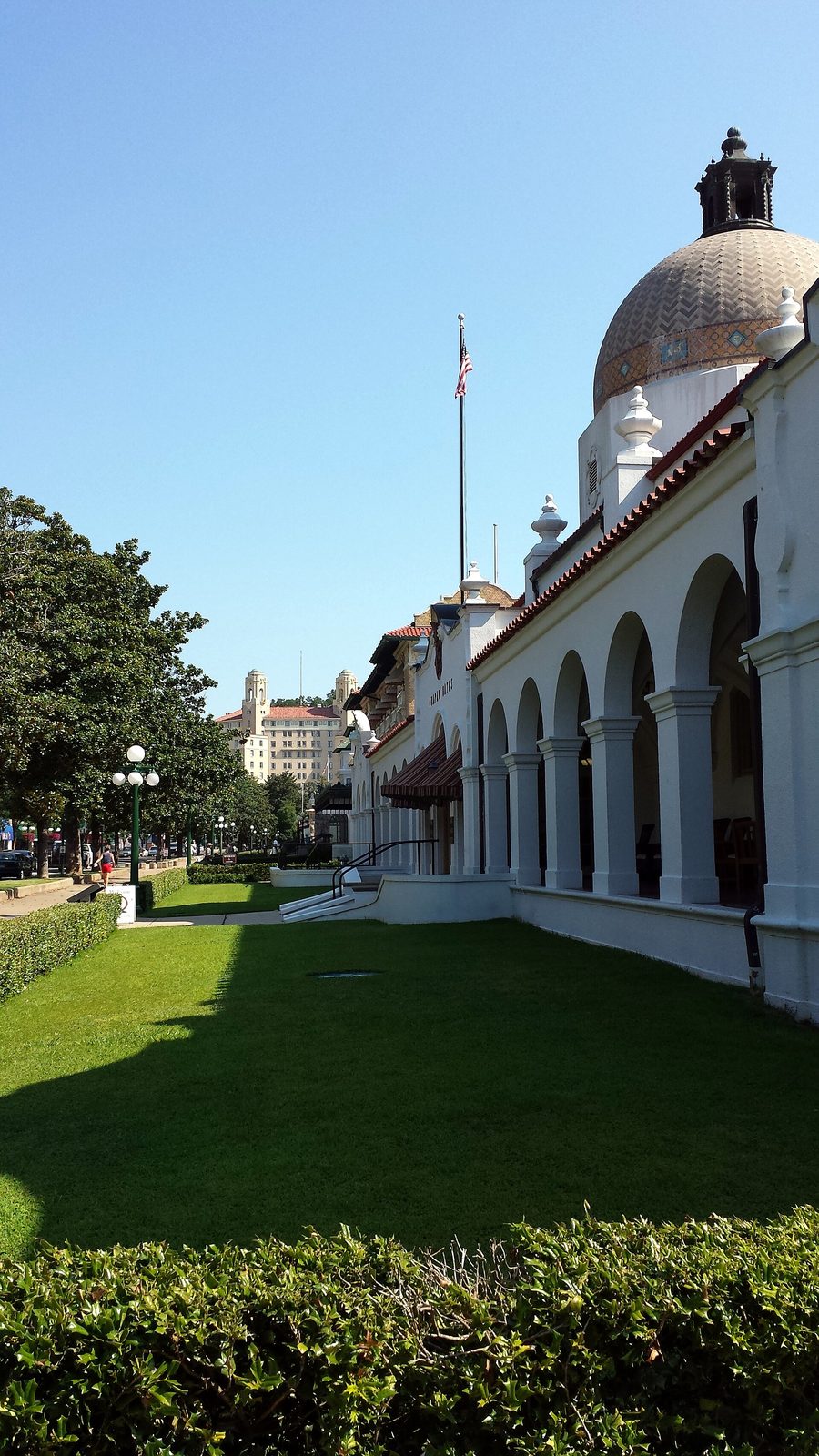
Eight bathhouses, built between 1892 and 1923, stand in a line on the east side of Central Avenue under a canopy of magnolias. At their peak, in the 1940s, the bathhouses gave about a million baths a year, to people who came by train hoping to be cured of everything from arthritis to syphilis. The buildings show it: Spanish, Italian and Classical Revival fronts, stained glass and marble. Each now has a different use, from a museum to a spa to a brewery, and walking the length of the Row is the way to start.
- Distance: about a quarter mile (400 m) end to end
- Allow: 30 minutes, longer with stops inside
- Start: anywhere on Central Avenue between Reserve Street and Fountain Street
- When: all year; early morning is quiet
- Suits: everyone
2. Tour the Fordyce Bathhouse
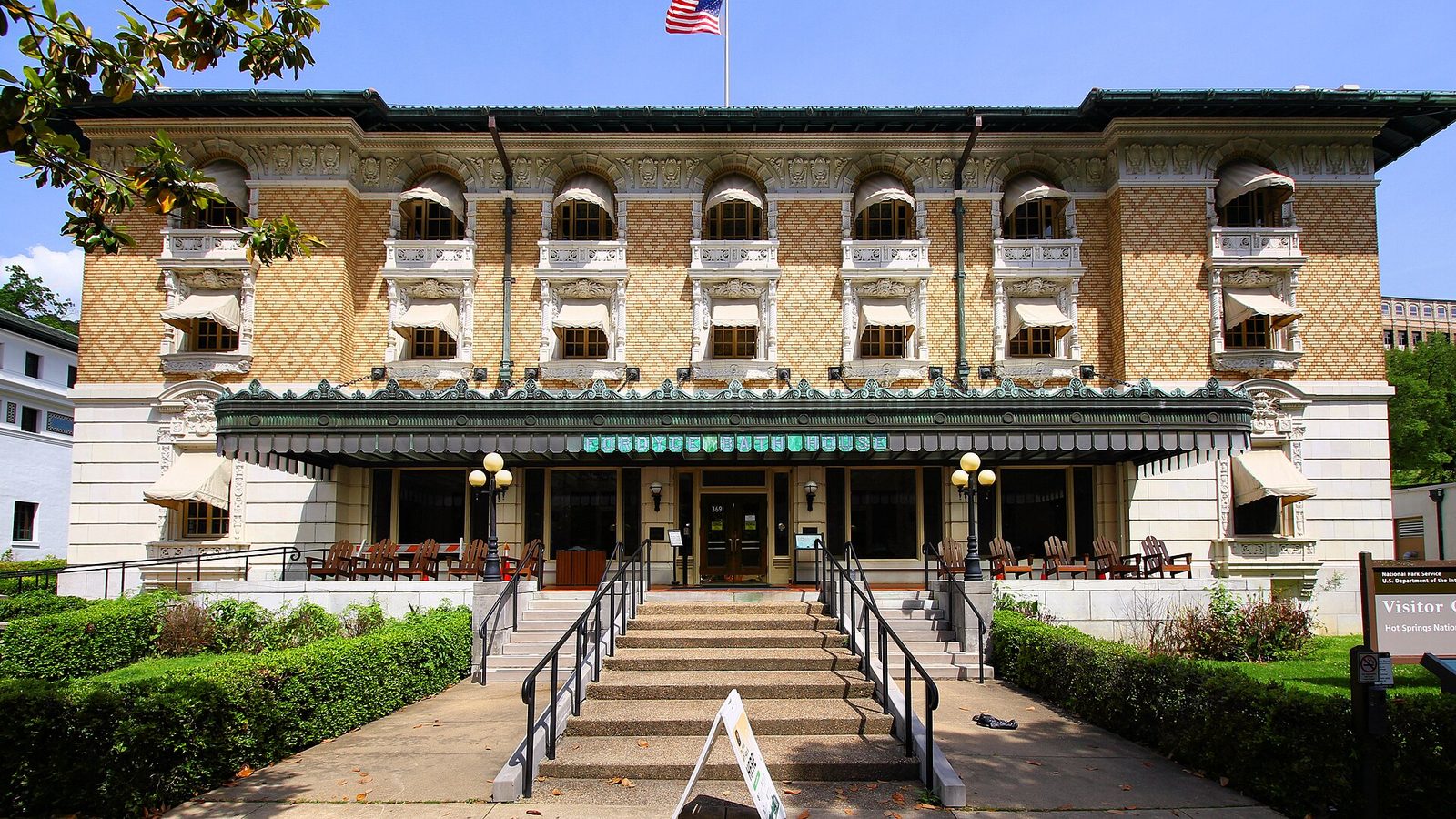
The Fordyce was the grandest bathhouse on the Row when it opened in 1915, and the Park Service has restored it to show how a bath worked in its heyday. You walk through the men’s bath hall under a stained-glass ceiling, past the needle showers, steam cabinets and hydrotherapy machines that look half like medicine and half like torture, and up to the gymnasium, the music room and the roof garden. A spring is visible through a window in the basement. It is also the park’s visitor center, and entry is free.
- Allow: 1 hour
- Start: Fordyce Bathhouse, Central Avenue
- When: open daily for most of the year
- Suits: everyone; there is an elevator
3. Take a bath in the thermal water
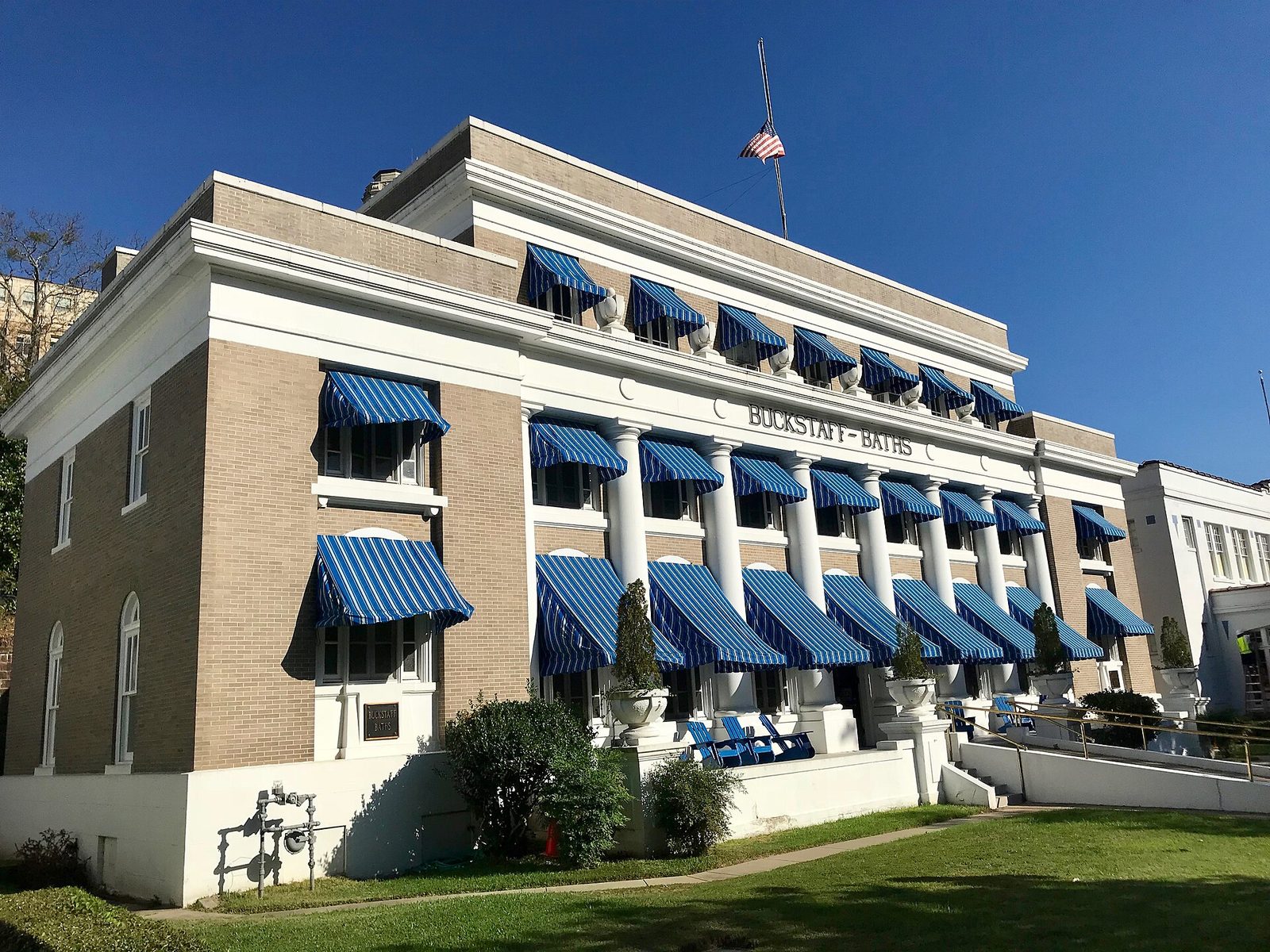
This is the one national park where soaking in the water is the point. Two bathhouses on the Row still use the springs. The Buckstaff has given the traditional bath since 1912: a private tub of hot spring water, a steam cabinet, hot packs and a needle shower, with an attendant guiding you through. The Quapaw, under its tiled dome, has large shared pools of thermal water at different temperatures, and private baths. Both are private businesses working under contract to the Park Service, so prices, hours and what each offers can change. Book ahead for a weekend.
- Allow: 1.5 to 2 hours
- Start: the Buckstaff or the Quapaw, Central Avenue
- When: all year; winter is the most atmospheric time
- Suits: adults; children’s rules vary by bathhouse
4. Walk the Grand Promenade and see the springs
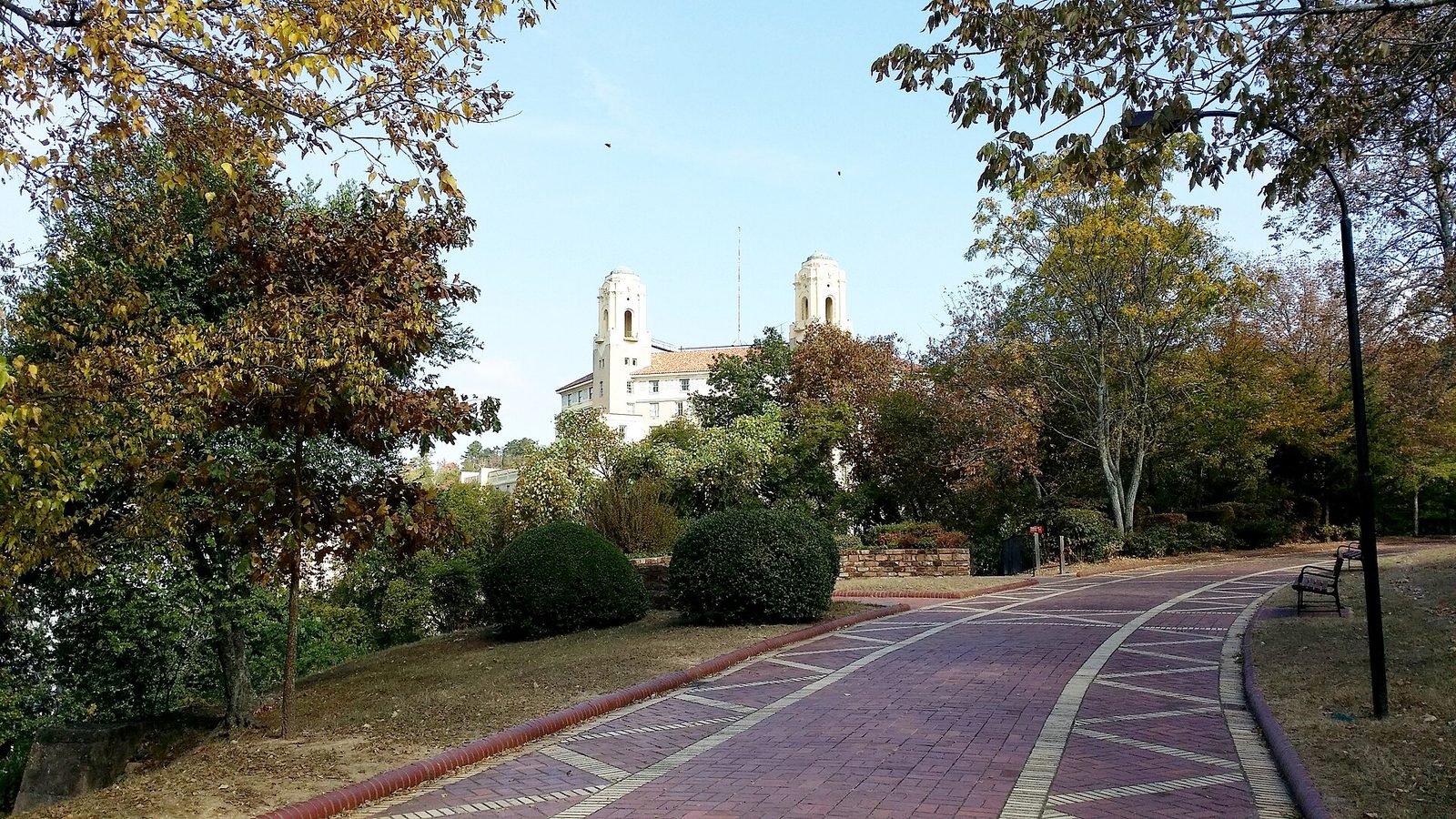
Behind the bathhouses, a brick promenade runs along the hillside above the Row, with benches and views over the rooftops. It is where you see the water itself. At the Display Spring the water flows out of the rock steaming even in summer, and the Hot Water Cascade, at the north end on Arlington Lawn, tumbles down over tufa built up by its own minerals. Most of the springs are capped to keep the water clean, and their flow is piped to the bathhouses and to public fountains along Central Avenue, where locals fill jugs to take home. The water is safe to drink.
- Distance: about half a mile (800 m)
- Allow: 30 minutes
- Start: either end of Bathhouse Row; steps lead up from Central Avenue
- When: all year; the steam is best on a cold morning
- Suits: everyone; the promenade is paved
5. Ride up the Hot Springs Mountain Tower
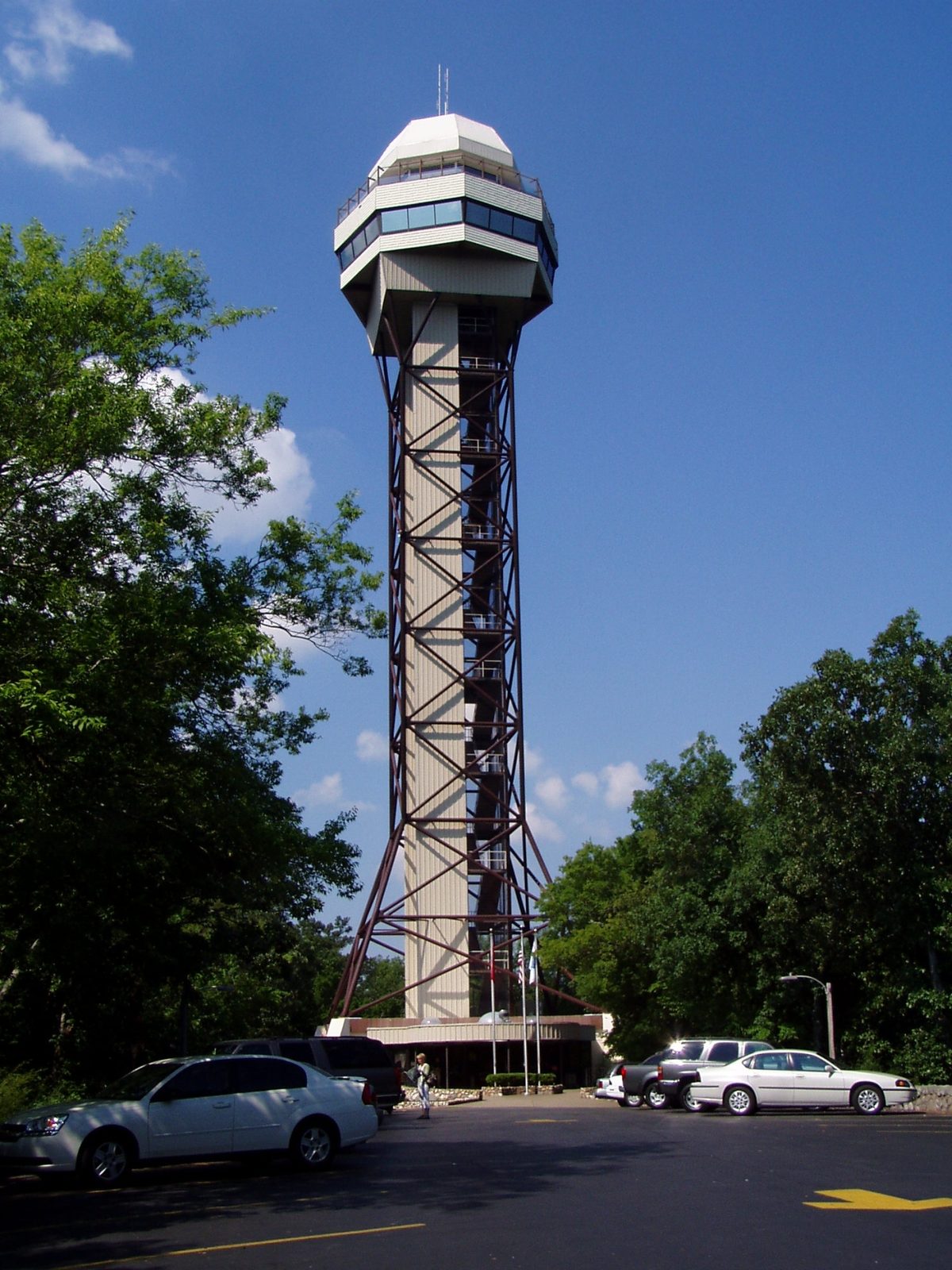
A road winds up Hot Springs Mountain to a steel tower 216 feet (66 m) tall, with an elevator to an open deck and an enclosed one at the top. From there you look down on the town and across the ridges of the Ouachitas, at their best in late October and early November when the oaks and hickories turn. The tower is run by a private company and charges admission. The drive up is worth taking even without the tower, for the overlooks and the picnic areas on the way.
- Allow: 1 hour with the drive
- Start: Hot Springs Mountain Drive, which leaves Central Avenue near the north end of the Row
- When: all year; fall colour peaks around early November
- Suits: everyone
6. Climb to Goat Rock
Goat Rock is an outcrop of novaculite, a hard, glassy stone that Indigenous people quarried for tools across this region for thousands of years and that is still cut for knife-sharpening stones. It juts out of North Mountain with a view over the ridges to the east. The steadiest way up is from the Gulpha Gorge Campground, climbing on the Gulpha Gorge Trail and then following the Goat Rock Trail along the slope. It is the park’s best short hike away from town.
- Distance: about 3 miles (5 km) round trip from Gulpha Gorge
- Climb: a steep start up from Gulpha Creek
- Allow: 2 hours
- Start: Gulpha Gorge Campground, off US 70B east of downtown
- When: October to May; summer is hot and humid
- Suits: steady walkers
7. Hike the Sunset Trail
The Sunset Trail is the park’s longest, and the place to find the woods quiet. It runs along the ridges of West Mountain, Music Mountain and Sugarloaf Mountain, through oak, hickory and shortleaf pine, past Balanced Rock and down through quiet hollows, and it can be walked in sections from the trailheads on the mountain roads. The West Mountain end has the views over the town; the far end is the most remote ground in the park.
- Distance: about 10 miles (16 km) end to end, usually walked in shorter sections
- Allow: 1.5 hours for a section; a full day end to end with a car shuttle
- Start: West Mountain Summit Drive for the views; the other trailheads are marked on the park map
- When: October to May
- Suits: steady walkers; experienced hikers for the full length
8. Camp at Gulpha Gorge
The park’s one campground sits in a wooded hollow beside Gulpha Creek, a few minutes’ drive from the Row but out of earshot of it. Sites have hookups for trailers, and trails leave from the campground up North Mountain and Hot Springs Mountain, so you can walk to the tower or to Goat Rock without driving. It is a good base for a weekend that mixes a bath in town with a hike.
- Allow: a night or two
- Start: Gulpha Gorge Campground, off US 70B east of downtown
- When: all year
- Suits: everyone
Before you go
This list covers what stays the same from year to year. Bathhouse hours, tower opening times and trail closures change, and the National Park Service posts them on its own site. The link is on our Hot Springs National Park guide, with the map and how to get there.