

Top 7 things to do in Dry Tortugas National Park
Dry Tortugas National Park lies about 70 miles (113 km) west of Key West, at the far end of the Florida Keys: seven small sandy islands in a sea of clear turquoise water, coral reefs and seagrass, with a vast brick fort on one of them. It is reached only by ferry, seaplane or private boat, and most of the park is open water. The islands are named for the sea turtles Ponce de León’s sailors found here in 1513, and “dry” because there is no fresh water. These are the seven outings we would put first. The order starts with what the park is known for, then goes by what an outing gives back for the time and effort it takes. Distances are approximate; times are our estimates and do not include stops.
There is no fresh water, food or shade on the islands beyond what you bring or what the ferry provides, and the sun is fierce: carry water and cover up. Currents can be strong near the reefs and the channels between the islands, so snorkel with a partner and stay inside the swimming areas. Do not touch or stand on the coral. Hurricane season runs from June to November, and the crossing can be rough in winter winds.
1. Explore Fort Jefferson
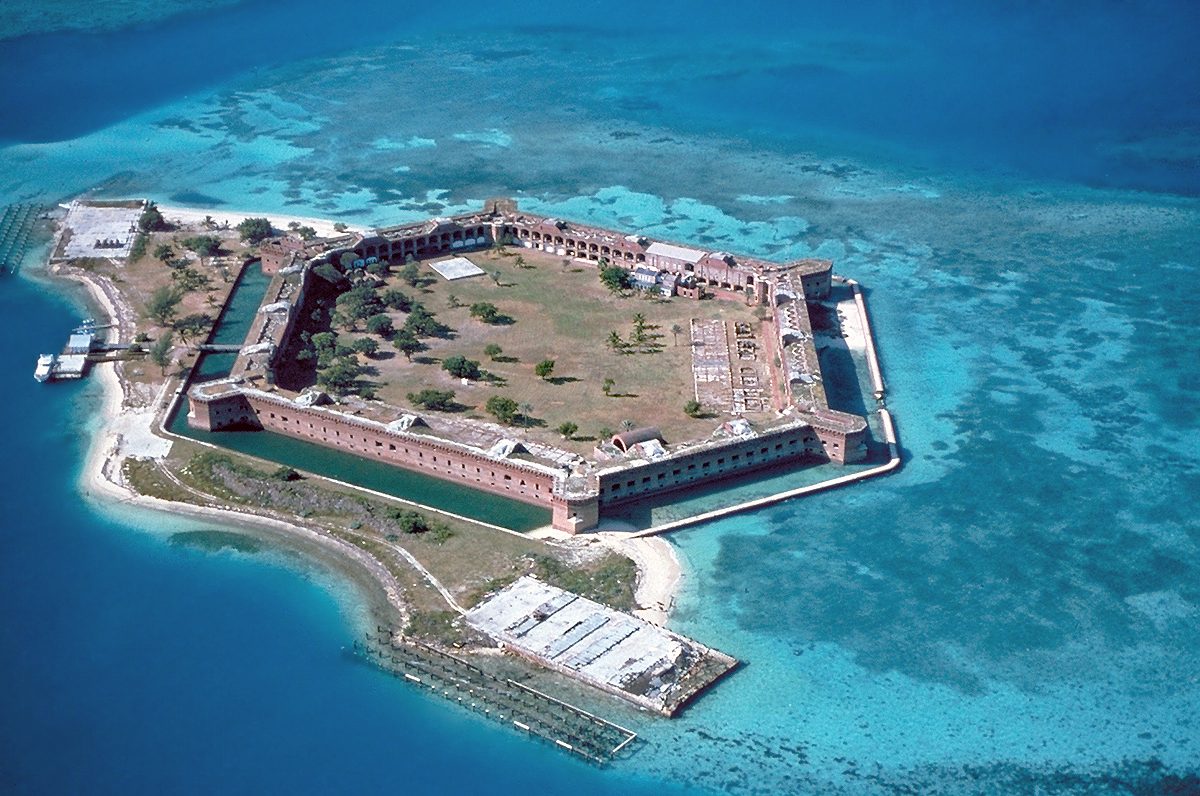
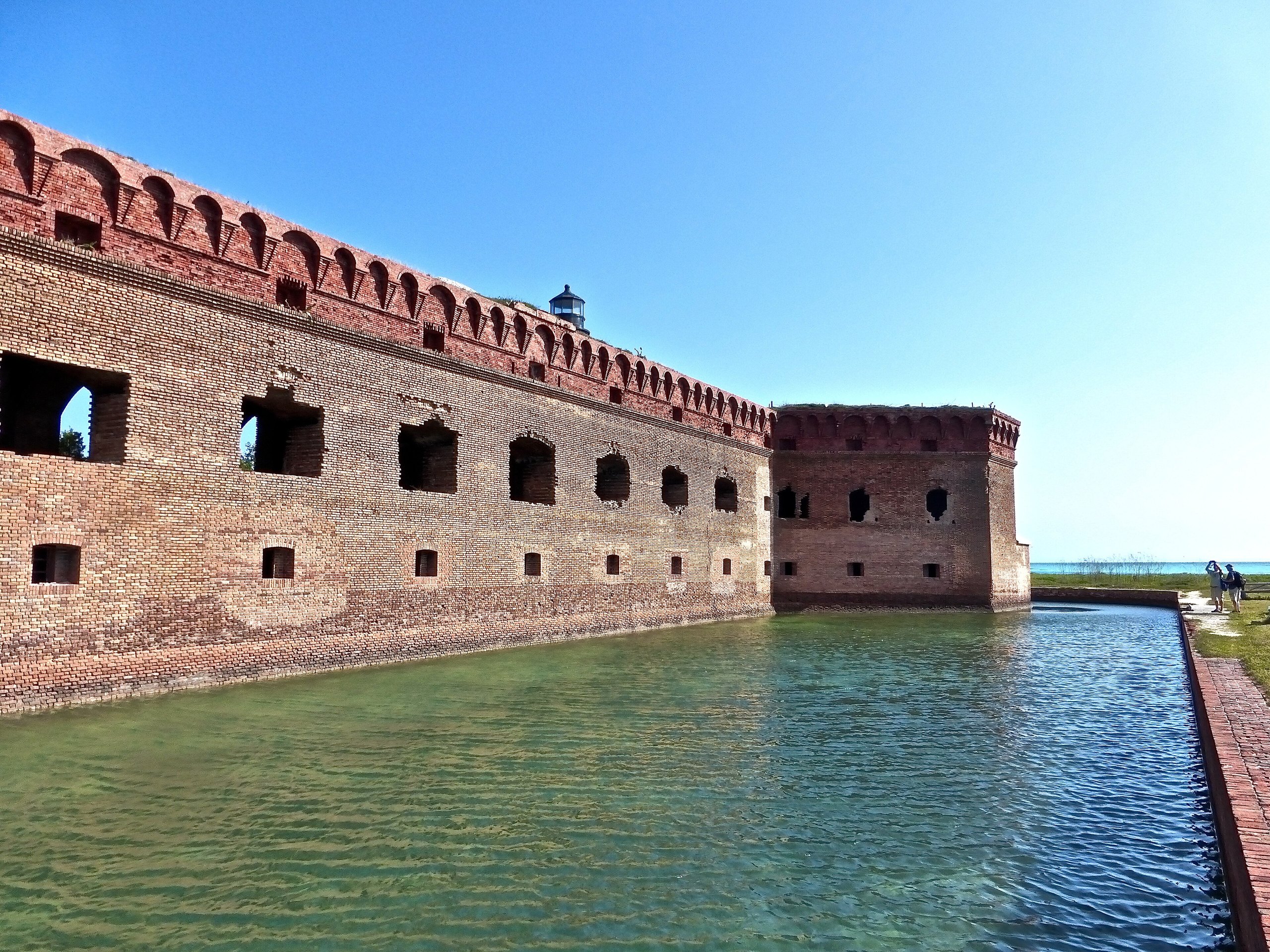
Fort Jefferson is the largest brick masonry structure in the Americas, a six-sided fortress of more than 16 million bricks built between the 1840s and 1870s to guard the shipping lanes of the Gulf of Mexico, and never finished. Walk through its echoing arched gun rooms, climb to the top of the walls for a view over the moat and the sea, and see the cell where Dr. Samuel Mudd, convicted for his part in the Lincoln assassination conspiracy, was imprisoned. Rangers and ferry guides lead tours.
- Allow: 2 hours
- Start: Garden Key, by ferry or seaplane from Key West
- When: all year
- Suits: everyone
2. Snorkel along the moat wall
The outer wall of the fort’s moat has become an artificial reef, and snorkelling along it from the beach on Garden Key, in clear, shallow water, you can see brain coral, sea fans and sponges growing on the old bricks, with parrotfish, angelfish, barracuda and sometimes nurse sharks and sea turtles. The ferry provides snorkel gear, and the swimming beaches beside the fort make it easy to get in. It is some of the easiest good snorkelling in the Keys.
- Allow: 1 to 2 hours
- Start: the swimming beaches on Garden Key
- When: all year; summer for the calmest, warmest water
- Suits: anyone who can swim
3. Fly in by seaplane
The fastest and most dramatic way to reach the park is by seaplane from Key West, flying low over the Marquesas Keys, shallow flats, sandbars and shipwrecks, with sea turtles, sharks and rays often visible in the clear water below, before landing on the water beside Fort Jefferson. Half-day trips leave time to explore the fort and snorkel. It costs more than the ferry, but the flight is unforgettable.
- Allow: half a day to a full day
- Start: Key West, with the park’s seaplane concessioner
- When: all year, weather permitting
- Suits: everyone
4. Watch the seabird colony on Bush Key
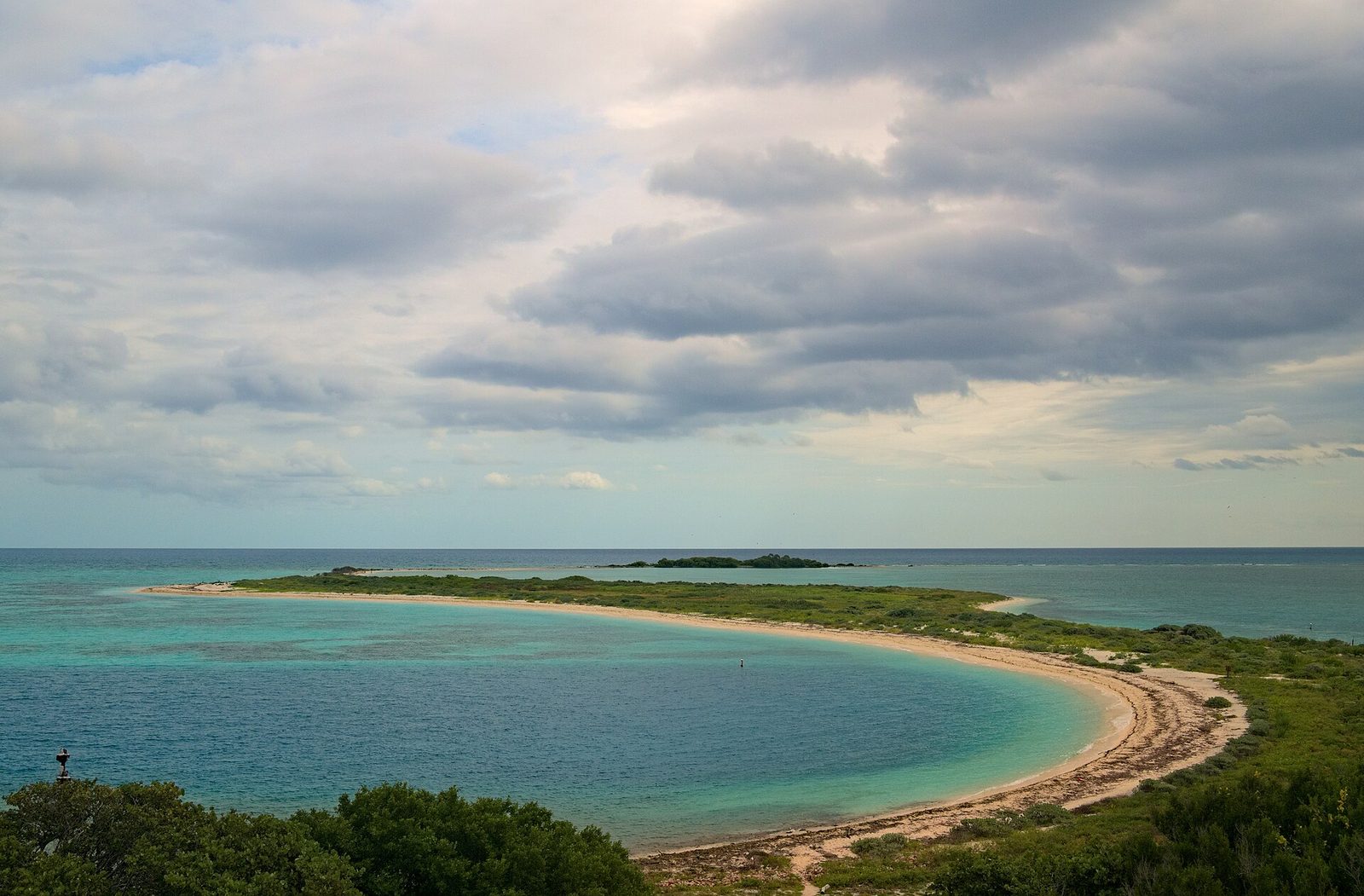
Each spring and summer, tens of thousands of sooty terns and brown noddies come to nest on Bush Key, next to Garden Key, the only large colony of these birds in the continental United States. The key is closed while they nest, but from the fort walls and the beach you can watch the clouds of birds wheeling and calling overhead, with magnificent frigatebirds soaring above them. The Dry Tortugas are also a famous stopping place for migrating songbirds in spring.
- Allow: 30 minutes, or longer with binoculars
- Start: the walls of Fort Jefferson and the beaches of Garden Key
- When: about February to September for nesting; April and May for migrating songbirds
- Suits: everyone
5. Camp on Garden Key
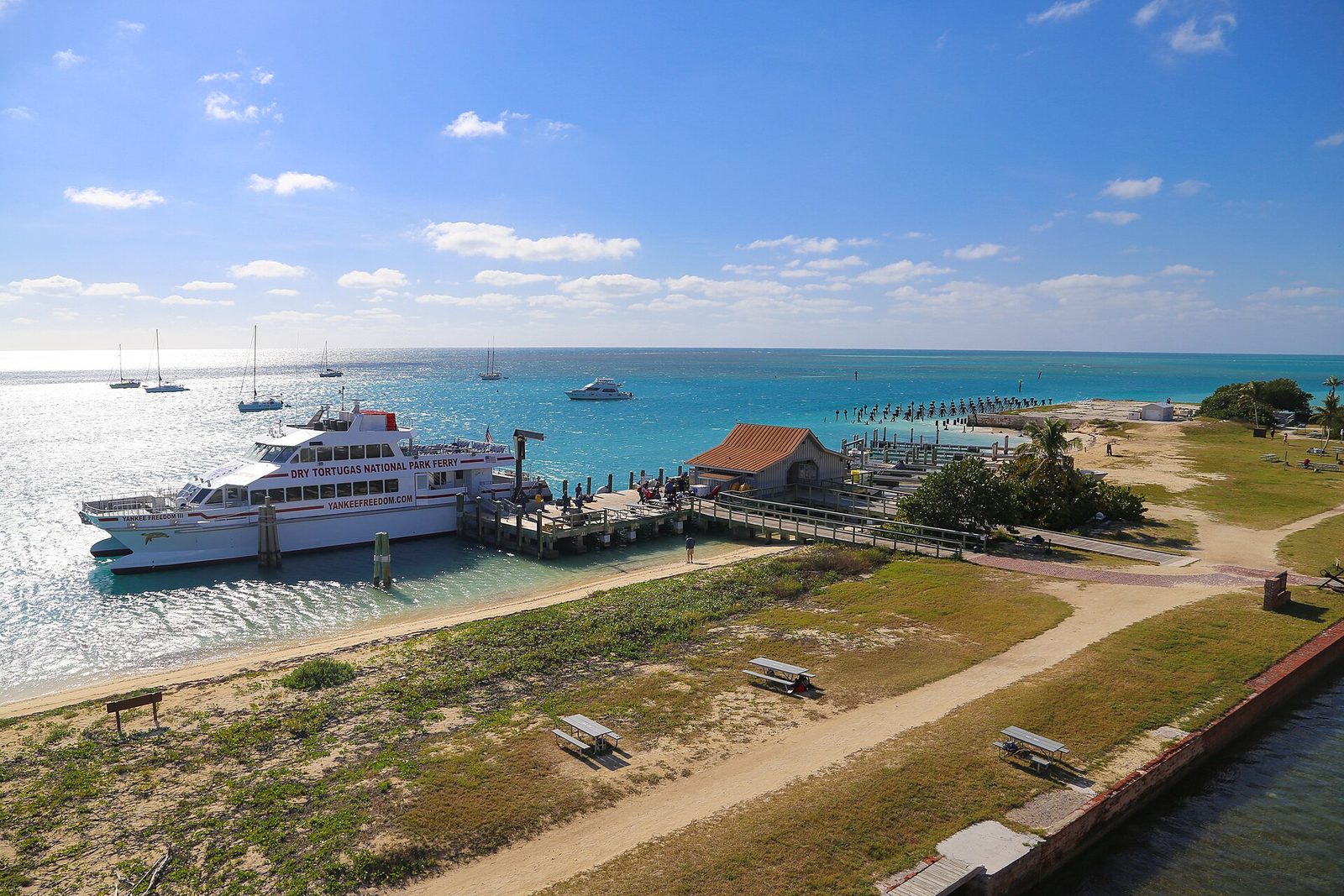
A small, primitive campground sits beside the fort on Garden Key, and spending a night there is one of the most memorable camping trips in the country. Once the day visitors leave, you have the fort, the beaches and the reefs almost to yourself, with sunset over the sea, the cries of the terns, and a sky full of stars, far from any city lights. Bring everything you need, including all your water, and book your place on the ferry well ahead.
- Allow: a night or more
- Start: Garden Key, by ferry with your camping gear
- When: all year; winter and spring for cooler nights
- Suits: anyone comfortable with simple, self-sufficient camping
6. Visit Loggerhead Key
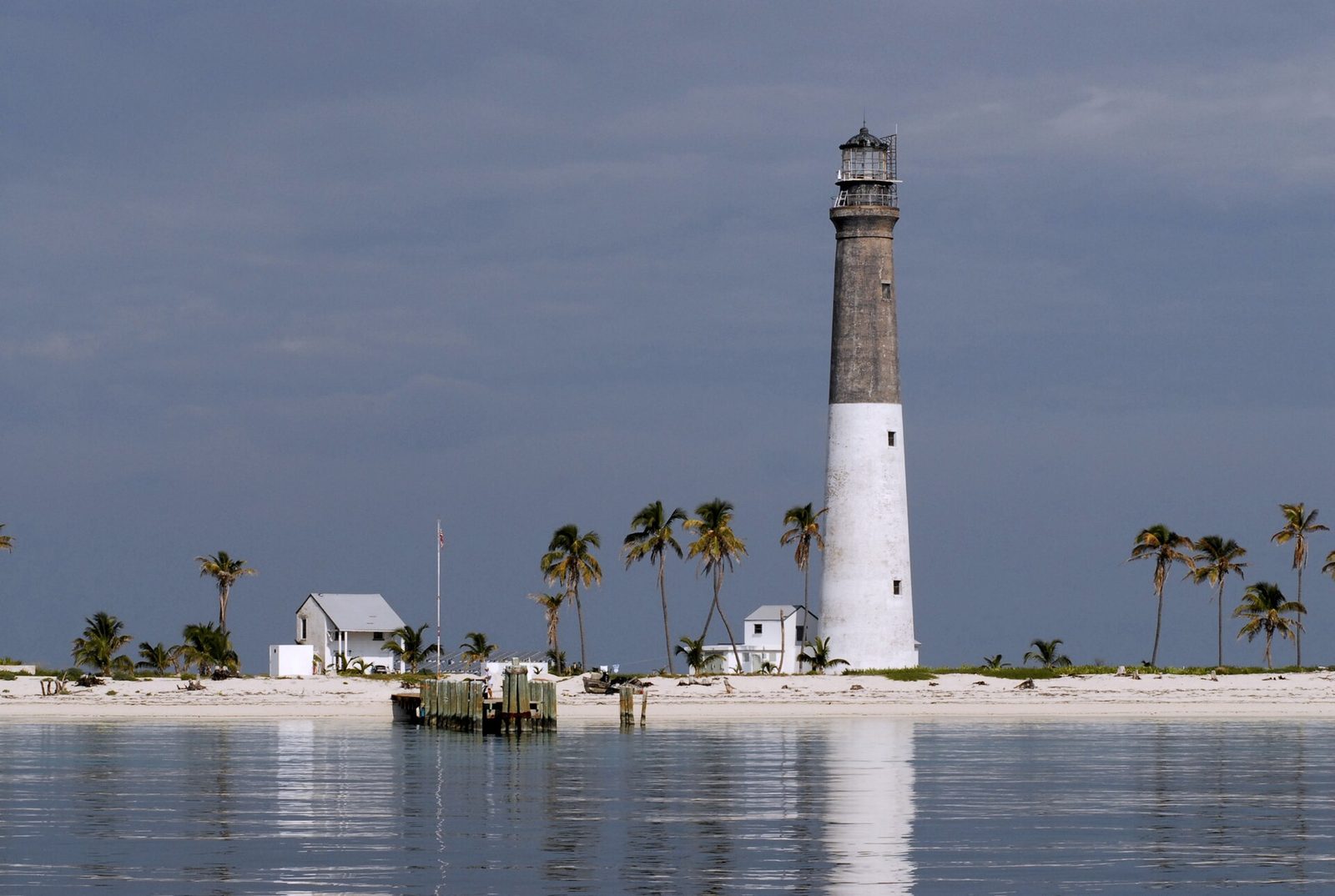
Loggerhead Key, the largest island in the park, is about 3 miles (5 km) west of Garden Key, with a tall lighthouse built in 1858, a lightkeeper’s house, and long, empty beaches where loggerhead and green turtles nest. Off its shore lies Little Africa, a reef of colourful coral. It can only be reached by private boat or kayak, and crossing the channel from Garden Key needs calm water and experience.
- Allow: half a day to a day
- Start: by private boat, or by kayak from Garden Key in calm conditions
- When: calm days, mostly in summer
- Suits: experienced boaters and kayakers
7. Dive or snorkel the Windjammer wreck
Near Loggerhead Key, the iron hull of a three-masted sailing ship that ran onto the reef in 1907 lies broken in shallow water, now home to coral, schools of fish and the occasional goliath grouper. It is one of the best wreck dives and snorkels in Florida, reached by private boat or with a dive charter from Key West. Mooring buoys protect the reef, so do not anchor on it.
- Allow: half a day
- Start: by private boat or a dive charter
- When: calm days, mostly in summer
- Suits: strong swimmers and certified divers
Before you go
This list covers what stays the same from year to year. Closures, ferry and seaplane schedules, camping rules and weather warnings change, and the National Park Service posts them on its own site. The link is on our Dry Tortugas National Park guide, with the map and how to get there.