

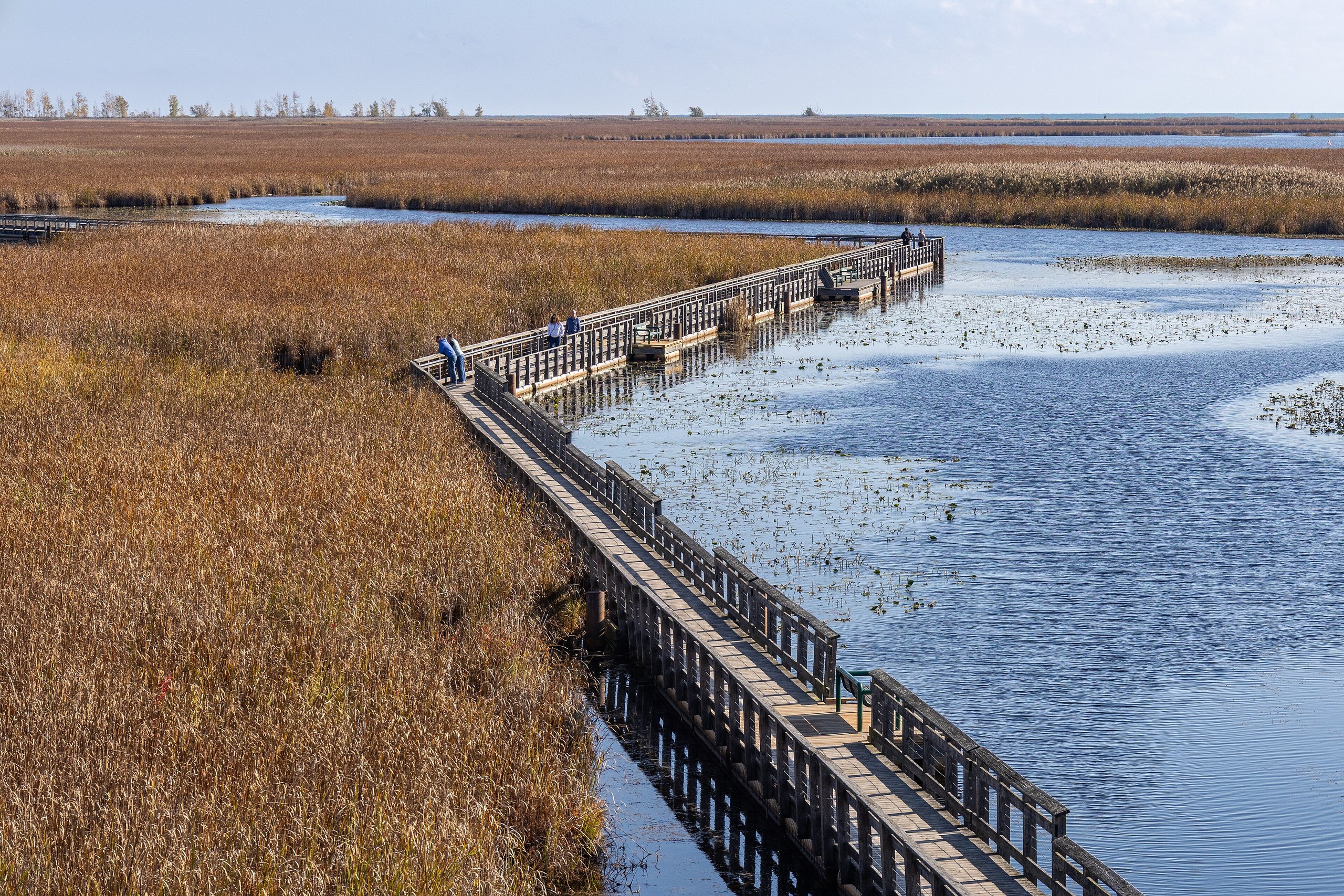
Top 9 things to do in Point Pelee National Park
Point Pelee National Park is a narrow spit of sand reaching south into Lake Erie from the Ontario shore near Leamington, ending at the southernmost point of mainland Canada, at about the same latitude as Rome and northern California. It is one of the smallest national parks in the country, and two-thirds of it is marsh, but it lies on two great flyways, and each spring and fall millions of songbirds and monarch butterflies pass through, making it one of the best places in North America to watch migration. Its forests and savannas are at the northern edge of the Carolinian forest, a southern woodland that in Canada grows only in this corner of Ontario. These are the nine outings we would put first. The order starts with what the park is known for, then goes by what an outing gives back for the time and effort it takes. Distances are approximate; times are our estimates and do not include stops.
Poison ivy grows almost everywhere in the park, along trails and on the beaches: learn its three leaves and keep to the paths. Ticks are common in the warm months. Lake Erie’s currents are strong and unpredictable off the point, and swimming is not allowed at the Tip; at the beaches there are no lifeguards, so stay close to shore and out of the water when the waves are up.
1. Stand at the Tip of Canada
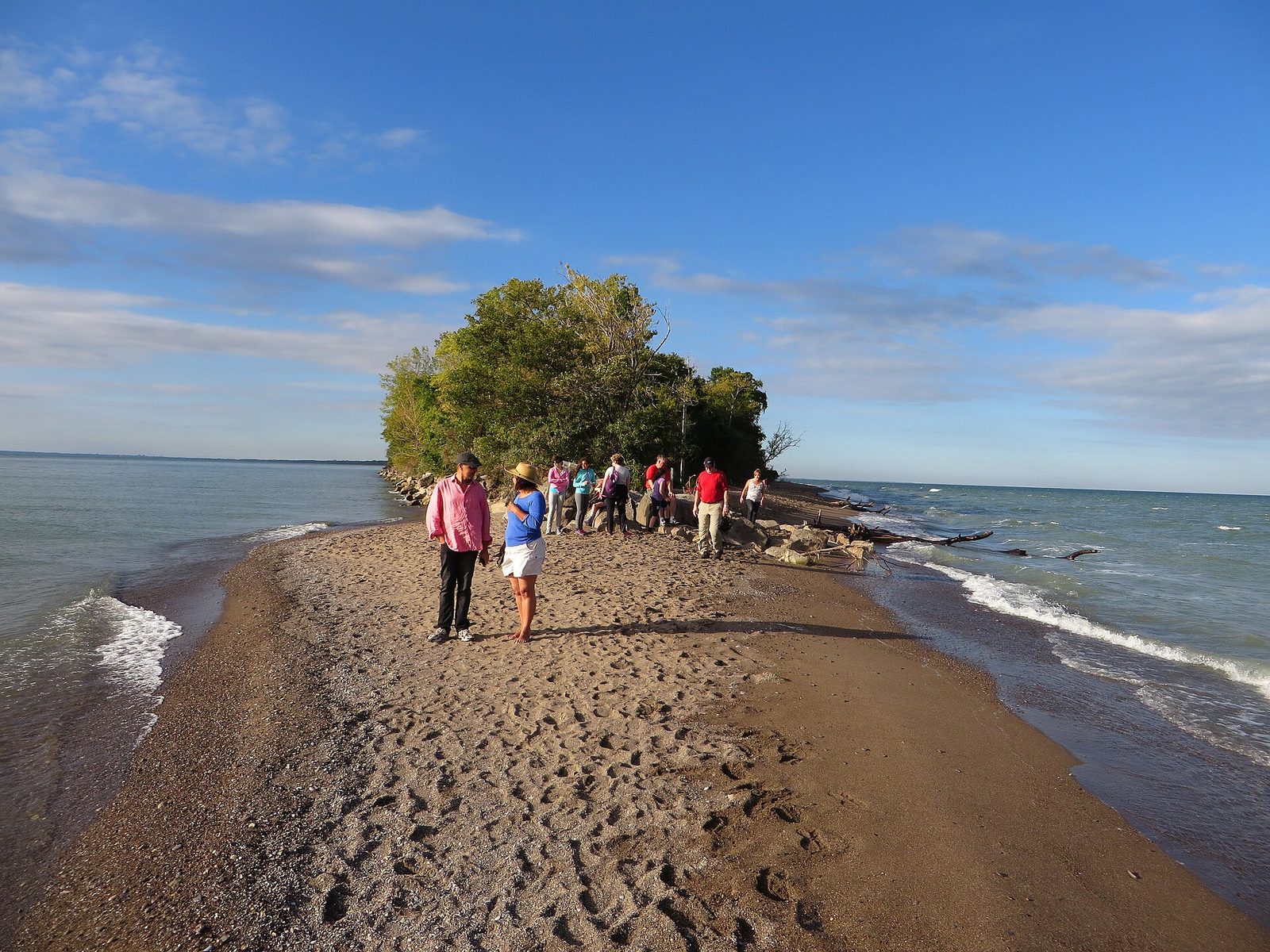
At the end of the point, the land narrows to a sand spit that runs out into Lake Erie, shaped and reshaped every year by the waves from both sides, and you can stand at the very southern end of mainland Canada with water on three sides. In spring at dawn, birders gather here to watch the songbirds that have flown across the lake overnight arrive over the water, and in fall the monarchs gather here before crossing it. A shuttle runs to the Tip from the visitor centre in the main season, or you can walk.
- Distance: a short walk from the shuttle stop to the end of the spit
- Allow: 1 hour
- Start: Tip shuttle stop; the shuttle leaves from the Point Pelee Visitor Centre
- When: April to October for the shuttle; sunrise in May and September for migration
- Suits: everyone
2. Watch the spring songbird migration

In May, songbirds heading north to breed rest and feed at Point Pelee after flying over Lake Erie, and on a good morning the trees are full of warblers, vireos, tanagers, orioles and thrushes, often low down and close. More than 390 species of birds have been recorded in the park. Birders come from around the world for the peak, in the first two weeks of May, when the park holds its spring birding festival with guided walks. Arrive at first light, and check the sightings board at the visitor centre.
- Allow: a morning, or several
- Start: the Tip, Tilden Woods and the woods around the Point Pelee Visitor Centre
- When: late April to late May, peaking in the first two weeks of May
- Suits: everyone; bring binoculars
3. Walk the Marsh Boardwalk
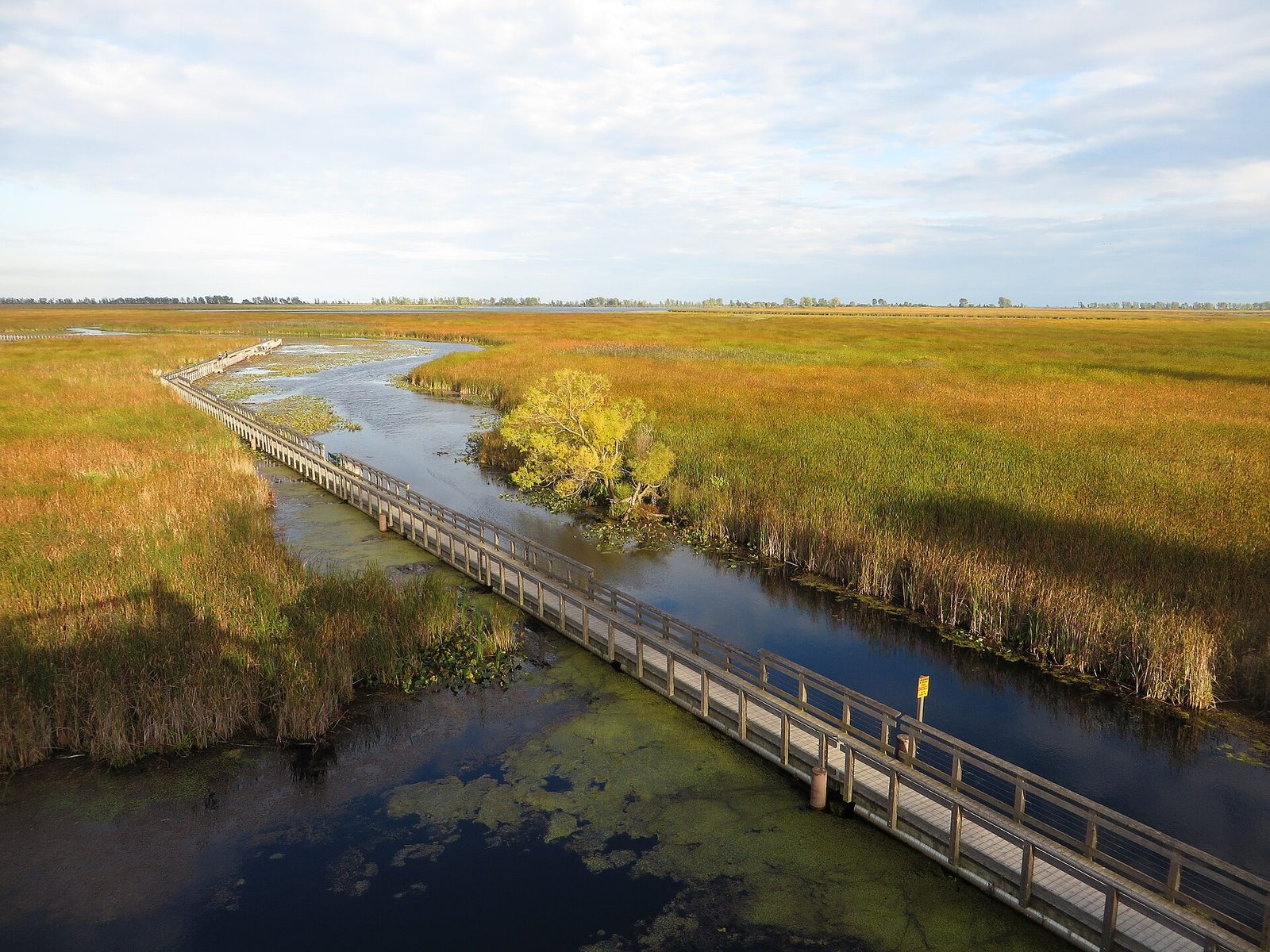
Most of Point Pelee is a vast freshwater marsh of cattails, open ponds and channels, one of the largest on the north shore of Lake Erie. This boardwalk floats out into it in a loop, with an observation tower at the start for a view over the whole marsh. Look for marsh wrens, red-winged blackbirds, herons, turtles basking on logs, and muskrats. Come early or late in the day, when the animals are most active.
- Distance: about 0.6 miles (1 km) loop
- Allow: 45 minutes to 1 hour
- Start: Marsh Boardwalk parking area, near the park entrance
- When: all year; spring and summer for wildlife
- Suits: everyone; the boardwalk is level
4. Paddle the marsh
The best way to see the marsh is from the water. From the Marsh Boardwalk area, canoes and kayaks can be rented in summer to paddle the channels and ponds among the cattails, where you may glide close to herons, ducks, turtles and water snakes, with water lilies blooming in summer. Stay in the open channels and watch the wind, which can pick up quickly on the open ponds.
- Allow: 1 to 2 hours
- Start: the canoe launch at the Marsh Boardwalk
- When: June to September
- Suits: everyone who can paddle; beginners on calm days
5. See the monarchs gather in fall
In late summer and early fall, monarch butterflies heading south for the winter in Mexico gather at Point Pelee before crossing Lake Erie, waiting for a north wind. On some evenings in September they roost in the trees near the Tip by the hundreds or thousands, hanging in orange clusters from the branches. Ask at the visitor centre where they have been seen, and go late in the afternoon.
- Allow: 1 to 2 hours
- Start: the trees and fields near the Tip
- When: late August to late September
- Suits: everyone
6. Walk through Tilden Woods
This short loop near the visitor centre winds through swamp forest and cedar savanna on trail and boardwalk, and is one of the best places in the park for spring warblers. In the wet hollows, look for the round white flowers of buttonbush in summer, and in early spring listen for the chorus of frogs. It is quiet in the heat of summer and a good walk for a calm evening.
- Distance: about 0.6 miles (1 km) loop
- Allow: 30 minutes
- Start: Point Pelee Visitor Centre
- When: all year; May for birds
- Suits: everyone
7. Visit the DeLaurier Homestead
People lived on the point for thousands of years, first the Indigenous peoples who fished, hunted and gathered here, and later farmers, fishers and cottagers. This loop trail passes a restored homestead and leads through old fields and woods, with signs telling the story of the families who made a living on this narrow spit, until the park took over the land. It is a quiet walk through a different side of the park.
- Distance: about 0.75 miles (1.2 km) loop
- Allow: 45 minutes
- Start: DeLaurier parking area, on the main park road
- When: all year
- Suits: everyone
8. Find the cactus in the Cactus Field
A cactus in Ontario sounds unlikely, but the dry, sandy savanna on the point is home to the eastern prickly pear, which is endangered in Canada and grows wild in only a handful of places. A short trail leads through a restored patch of savanna where it grows, low and spiny among the grasses. In late June and early July it opens big yellow flowers. Look but do not touch: the spines are fine and hard to remove.
- Allow: 20 minutes
- Start: Cactus Field parking area, on the main park road
- When: all year; late June to early July for flowers
- Suits: everyone
9. Stay for the stars
Point Pelee is a Dark Sky Preserve, and its beaches face open water to the south and west, away from town lights. On a clear night the stars come down to the lake’s edge, and the park holds evening events around the dark sky in some months. Any of the west-side beaches is a good place to sit and look up, and to watch the sun set over Lake Erie beforehand.
- Allow: an hour or two around sunset and after dark
- Start: the west-side beaches
- When: all year, near the new moon
- Suits: everyone
Before you go
This list covers what stays the same from year to year. Closures, park hours, shuttle dates and event schedules change, and Parks Canada posts them on its own site. The link is on our Point Pelee National Park guide, with the map and how to get there.