
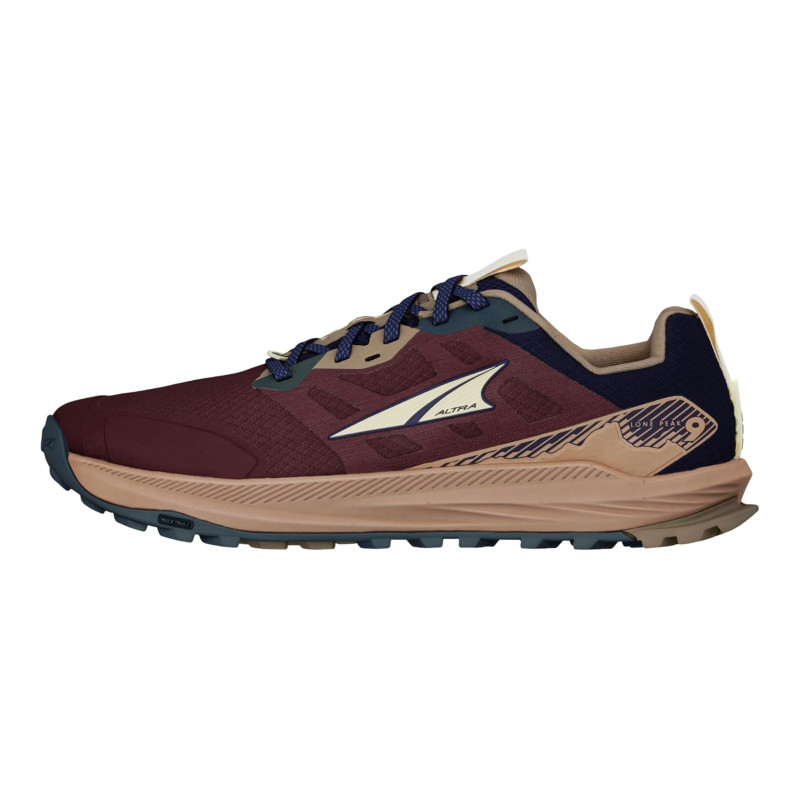
Altra Lone Peak 9 (men’s) review: the long-trail shoe with room for your toes
Walk any long trail in North America and you will see more Lone Peaks than any other shoe. The reason is not cushioning or speed. It is shape: a foot-shaped toe box that lets your toes spread as your feet swell over a long day, on a level, zero-drop platform. The Lone Peak 9 keeps that formula and asks one thing of you in return, which is time for your feet and calves to adapt.
Quick take
The trail runner for high-mileage hikers whose toes feel crushed in ordinary shoes. The roomy FootShape toe box and zero drop are the whole point, a StoneGuard insert softens sharp rock, and the shoe drains and dries fast. The MaxTrac sole is only average on wet rock and roots, the upper wears faster than the sole, and zero drop needs a gradual transition. Buy it for fit and long days on dry to mixed trail, not for slick, rooty ground.
What it does
The Lone Peak 9 is Altra's rugged-trail shoe and the long-distance hiker's default. Its defining features are the Original FootShape fit, which is wide through the forefoot and roomy through the midfoot, and a zero-drop platform that keeps heel and forefoot the same height off the ground, with about 25 mm of stack under both. Altra EGO foam gives moderate cushioning with good ground feel. A StoneGuard insert underfoot takes the edge off sharp stones without making the shoe rigid. The MaxTrac rubber outsole uses multi-directional lugs for dirt, gravel and packed trail. A ripstop mesh upper with no-sew overlays breathes and dries quickly, and a hook-and-loop GaiterTrap tab at the heel takes a low trail gaiter without straps under the sole.
What verified buyers say
Across verified-purchase reviews, the same points come up:
- The toe box is why they buy it, and why they come back. Owners with wide feet, bunions or a history of toe blisters describe it as the only trail shoe that does not squeeze, and many are on their fourth or fifth pair of Lone Peaks.
- It is comfortable from the first mile. Little or no break-in is a consistent report, including from nurses and others on their feet all day.
- Long-trail mileage is real for many. Several owners report 500 to 700 miles (800 to 1,100 km) on a pair, including on the Appalachian Trail.
- Wet traction is the common complaint. A recurring group finds the MaxTrac sole slippery on wet rock and roots, and some who switched from the Vibram-soled 9+ noticed the difference on day one.
- The upper can wear early. Tears where the mesh meets the overlays, and wear at the heel collar, show up in a minority of reviews within a few hundred miles.
- The heel counter splits opinion. Some find it stiffer than the Lone Peak 8 and report Achilles rubbing until it softens.
Worth knowing
Zero drop is a real change if you have been hiking in boots or conventional shoes with a raised heel. Your calves and Achilles tendons take up work the heel used to do, and switching straight to long days is how people get tendon pain. Build up over several weeks of shorter hikes. On wet, rooty or slabby trail, the standard MaxTrac outsole is the weak point of this shoe; if that is your usual ground, the Lone Peak 9+ uses Vibram Megagrip rubber on the same upper and grips far better when wet. And the roomy fit that saves a wide foot can feel sloppy on a narrow one.
Who it is for
The Lone Peak 9 is for long-distance and high-mileage hikers with average to wide feet who carry a light pack on dry to mixed trail, and for anyone whose toes go numb or blister in conventional shoes. If you want more cushioning, a heel-to-toe drop you are already used to, and a firmer grip on rocky mountain trail, the Brooks Cascadia 19 is the more protective choice. If you mostly walk maintained trails and want the softest ride, the Brooks Ghost Trail is easier to get used to. If you carry a heavy load over rough ground, a boot such as the Salomon Quest 4 GTX will serve you better.
Specs at a glance
- Typerugged-trail running shoe
- FitOriginal FootShape, wide toe box, regular and wide
- Drop0 mm, about 25 mm stack
- Listed weight1.4 lb (635 g) · pair, men's
- SoleMaxTrac rubber, StoneGuard insert, Altra EGO foam
- Trade-offsaverage wet traction, upper wears before the sole, zero drop needs adapting
- Best forlong days and long trails with a light pack
Wilderness Experts is reader-supported. As an Amazon Associate we earn from qualifying purchases; when you buy through links on our site we may earn a commission at no extra cost to you. It never changes what we recommend.
The Verdict
The Lone Peak has earned its place on long trails because it solves the problem that ends more hikes than any other shoe issue: feet that swell into a shoe too narrow for them. The Lone Peak 9 keeps that roomy, zero-drop shape and adds a protective underfoot insert and a quick-drying upper. It is not the grippiest shoe on wet ground, the upper will not outlast the sole, and the zero-drop transition deserves respect. For a hiker who has been fighting their toe box for years, none of that outweighs the fit. Women's sizing is covered in our women's Lone Peak 9 review, and how trail runners compare with boots and approach shoes is in hiking boots, trail runners, or approach shoes.