
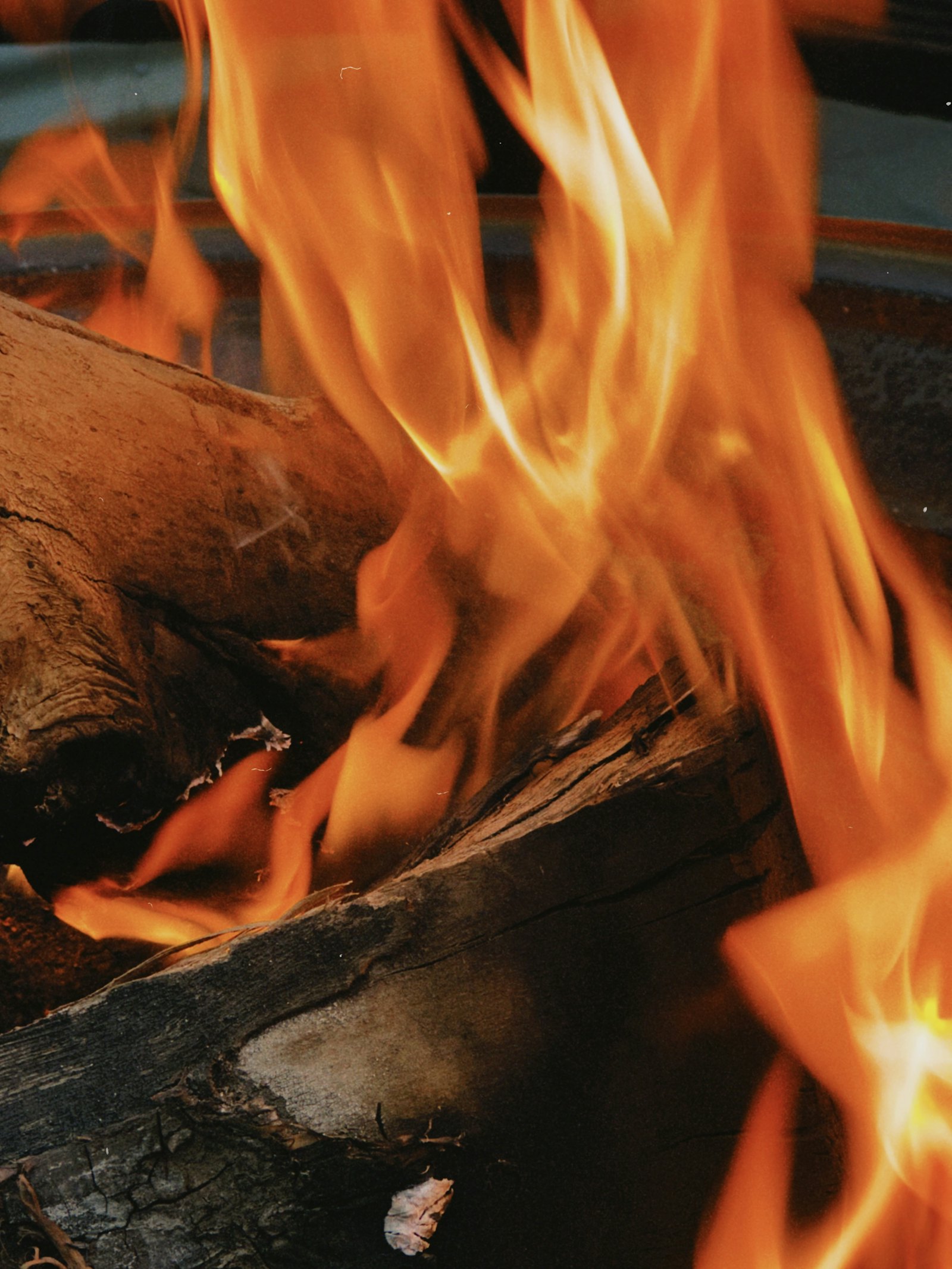
How to start a fire in any conditions
A fire can be the difference between a hard night and a dangerous one. It warms you, dries your gear, purifies water, cooks food, and, not least, steadies your mind. The trick is being able to build one when conditions fight you: no lighter, high wind, soaking wood, or deep snow. This guide covers the full range, from a fire kit in your pocket to nothing but your hands.
Every fire runs on three things: air, heat, and fuel. Picture a triangle. Remove any side and the fire goes out. Most fires that fail do so because one of the three is short. Usually air, or dry fuel small enough to catch. Solid wood does not actually burn; the heat drives off a gas, and that gas is what burns. That is why you always build from tiny to large: a spark cannot light a log, but it can light fluff, which lights twigs, which light branches.
Choose and prepare the site
Look for a dry, wind-protected spot near your shelter but not so close that a spark can reach it. Clear a circle at least a meter (three feet) across down to bare soil so the fire cannot creep into surrounding brush or duff. A ring of logs or rocks on the windward side reflects heat toward you and blocks gusts, while still letting enough air through to feed the flames.
Caution
Do not ring or build your fire with wet or porous rocks, including river stones. Trapped moisture can turn to steam and make them crack or explode. And never leave a fire unattended. Clearing a wide bare circle is what keeps a warming fire from becoming a wildfire.
Two site tricks earn their keep when conditions are bad. In strong wind, dig a Dakota fire hole: a fist-to-forearm-deep pit with a second angled tunnel on the upwind side feeding it air xe2x80x94 fast work with a folding entrenching tool, slow going by hand in hard or rocky ground. It hides the flame, resists wind, and burns hot and clean for cooking. In snow, never build straight on the snowpack. It melts, sinks, and drowns the fire. Lay a platform of green logs in two crossed layers to keep the fire up on a dry base.
Gather fuel in three sizes, before you light
Collect everything first, because once a flame is going you will not have a spare hand, and in wind or wet, you get one good ember and no time to go hunting. You need three grades:
- Tinder , material that catches from a spark or match: dry grass, birch bark, pine needles, cattail fluff, shredded inner bark, or a cotton ball. It must be bone dry.
- Kindling . Pencil-thin to thumb-thick dry twigs and split wood that carry the flame up from the tinder.
- Fuel wood , wrist-thick and larger, to sustain the fire once it is established.
Gather more tinder and kindling than you think you need. Dead branches still attached to a tree, and the dry heartwood inside a split log, are far drier than anything lying on wet ground.
Two tinders are worth preparing in advance because they shrug off bad weather. Char cloth , cotton heated in a near-airless tin until it blackens but does not burn to ash. Catches a spark instantly and holds an ember; make it at home and keep it in an airtight tin. Fatwood, resin-soaked pine, lights even when damp and burns long enough to catch stubborn kindling. A pack of natural fatwood tinder sticks is the single best wet-weather tinder you can carry, shave a pile of curls off the end and drop your spark or match into it.
Field tip
Do not use wood lying flat on the ground. It soaks up moisture even when it looks dry, and for friction methods it will not give enough grip. Standing deadwood and the dry heart of split pieces are your friends.
Lay the fire so air can move
How you stack the wood decides whether a small flame survives long enough to grow. Leave gaps for air. Packing it tight is the most common mistake. Light the tinder low and on the upwind side so the flame climbs into the kindling. Match the lay to your conditions:
- Teepee , tinder and kindling stacked in a cone, lit in the center. It draws air upward and concentrates heat, so it is the best choice for damp or marginal wood. As it burns, the outer sticks fall inward and feed it.
- Lean-to , lay a thick log across the wind as a windbreak, put the tinder against its sheltered side, and lean kindling against the log over the tinder. Good in light, steady wind because the log shelters the flame.
- Log cabin , lay two sticks either side of the tinder, two more across their ends, and keep stacking in pairs to build a hollow square, like the walls of a cabin, with a handful of kindling over the tinder inside. Air reaches the middle from every side, and the square burns slowly and evenly and settles into a bed of coals, which makes it a good choice for cooking.
- Cross-ditch , scratch a shallow cross about a hand-span wide in the soil, put tinder in the middle, and build a kindling pyramid over it. The ditch feeds a draft from below when the air is still.
- Pyramid (self-feeding) , stack layers of logs, largest on the bottom, each layer smaller and crossed over the last, and light the top. It burns downward and needs little tending, the one to build for overnight warmth.
Light it: from a lighter to nothing
Carry at least two ways to make fire, stored in separate places, and work down this list depending on what you have and what the weather allows.
A lighter is your default. A plain butane lighter is the fastest ignition there is. Carry two, keep one in a pocket close to your body (butane struggles in the cold. Warm it in your hands first), and treat it as your everyday tool. But a lighter can run dry, jam, or get soaked, which is exactly why it is the default and not the whole plan.
Stormproof matches handle wind and rain. When wind snuffs a lighter and blows out ordinary matches, stormproof matches keep burning. They light in a stiff breeze and relight even after being dunked in water. Their sealed case keeps them and the strikers dry in your pack. This is the tool that makes the “it is blowing a gale” scenario solvable.
A ferro rod is the answer to “no matches or lighter.” A ferrocerium rod throws a shower of sparks near 3,000°C (5,500°F) when you scrape it with a striker or the spine of a knife , soaking wet, freezing cold, at altitude, and for thousands of strikes. It needs good dry tinder (this is where your fatwood or char cloth earns its place), but it will make sparks when nothing else will. Every backcountry kit should hold one, such as this thick ferro rod with a multi-tool striker. Technique matters, and the rule is that the blade does not travel toward you. To keep from scattering the tinder, hold the striker still just above the pile and pull the rod back toward you, out from under it: the sparks drop straight into the tinder and nothing pushes forward into it. The other way is to hold the rod still and strike downward along it, away from your body, stopping short of the pile. If the striker is a knife, use the spine, with the cutting edge turned up, away from the rod and the hand holding it. Aim the sparks into the heart of the fluff, then gently blow the glowing ember into flame.
On a bright day, sunlight alone will do it. A magnifying lens, from binoculars, a camera, or a purpose-made card, focuses the sun to a pinpoint on your tinder until it smolders. It is silent, uses no fuel, and never runs out, but it needs direct, strong sun. A wallet-sized fresnel lens fire starter weighs nothing and doubles as a magnifier for splinters and maps, a no-batteries, no-fuel backup.
No dedicated tool but you have a battery? Bridge the terminals with a thin wire, steel wool, or a foil gum wrapper next to your tinder. The short-circuit heats the metal and can ignite fine tinder. It works with a headlamp, phone, or vehicle battery in a pinch. Be quick and careful: it gets hot fast and can vent the battery.
When you have nothing: primitive fire
With no manufactured igniter at all, fire is still possible. It just costs sweat and patience. These are last resorts, not party tricks; practice them at home before your life depends on one.
- Flint and steel , the easiest primitive method. Strike a hard, sharp-edged rock with a piece of high-carbon steel (stainless will not spark well) to shave off burning steel particles. Catch them on char cloth, then blow to flame.
- Fire-plow , plow the blunt tip of a hardwood shaft up and down a groove cut in a softwood base. The friction pushes out wood dust and, with enough speed and pressure, ignites it.
- Bow and drill , the most dependable friction method, and the most work. A bow spins a hardwood drill against a softwood fire board; the friction grinds hot dust into a notch until it forms a glowing ember you transfer to a tinder bundle. It needs a socket, drill, fire board, bow, and real persistence.
Why a spark tool still wins
Friction fire punishes damp and dull materials, even skilled hands fail with poor wood. Use seasoned, non-aromatic hardwood, keep everything bone dry, and never use wood off the ground. That difficulty is exactly why a ferro rod lives in every serious kit: it does the one hard part for you, in any weather.
Beating wind, wet, and snow
This is the part most fire guides skip. Name the condition, then adapt.
Wind, too much, or too little. Too much wind scatters sparks and strips heat before the tinder catches: shelter the fire with a wall or natural windbreak, dig a Dakota hole, build a lean-to in the lee of a log, and reach for stormproof matches or a ferro rod, since a lighter flame will not survive the gusts. Too little wind starves the fire of oxygen: use a cross-ditch or Dakota hole for draft, and blow steadily on the coals to feed them air.
Wet wood and rain. Rain does not make fire impossible. Wet tinder does. Find fuel the rain cannot reach: standing deadwood, the underside of leaning trunks, and the dry heartwood inside split logs. Split every piece; the inside is dry even when the surface is soaked, and split faces catch far faster. Build a small dry platform of bark or sticks so the fire is not sitting in mud, start with a teepee lay, and lean hard on fatwood or char cloth with a ferro rod for ignition.
Snow and extreme cold. Get the fire off the snow with a green-log platform or it will melt down and drown. Cold saps butane, so warm your lighter against your body; matches and a ferro rod do not care about temperature and are more dependable here. Daylight is short and your hands go numb, so prep everything, site, platform, tinder, graduated wood, before your fingers stop working, and keep spare tinder dry inside your jacket.
Keep it going, and put it out cold
A steady fire needs tending, not constant feeding. Add fuel a little at a time. Do not smother a young flame with a big log, and keep a small reserve of dry wood under cover for the morning or a sudden rain. Once you have a hot bed of coals, the self-feeding pyramid will burn down through the night with little attention. A fire can also be used to purify water when your other methods fail: a rolling boil for one minute makes it safe to drink.
Put it dead out
A fire is not out until it is cold to the touch. Drown it with water, stir the ashes, and drown it again until you can hold your hand in them. Buried or “banked” coals can smolder for hours and start a wildfire after you have left. Scatter cold ashes, disguise the site, and pack out anything that did not burn.
Common mistakes, and how to recover
- Too much fuel, too soon. Dumping big wood on a baby flame smothers it. Add wood one size up at a time, and only once the current size is burning well.
- Wet or ground-lying wood. Looks dry, is not. Split it and use the dry inside, or switch to standing deadwood.
- Tinder not truly dry. If a spark will not take, your tinder is damp or too coarse. Shave it finer, fluff it up, and add fatwood.
- Nothing staged. The flame dies while you hunt for kindling. Gather all three sizes first, every time.
- Fighting the wind. If gusts keep killing it, stop and build a windbreak or Dakota hole rather than burning through your matches.
- Ember fading? Cup it in a loose tinder bundle and blow long, steady breaths. Starve-then-feed it air until it flames. Panic-blowing scatters it.
Recommended fire kit
You do not need all of this, but you should carry at least two ignition methods plus a wet-weather tinder, kept in separate places. Prepare a fire in daylight even if you plan to light it after dark. Keep a headlamp handy, because sorting tinder is far easier while you can see.
- Überleben ferro rod , solves no lighter, wet, cold, and wind. Up to ~20,000 strikes in any weather. The one ignition tool every kit should have.
- UCO stormproof match kit , solves high wind and rain. Windproof, waterproof matches that relight after a dunk, in a sealed case with strikers.
- Fresnel lens card , solves no fuel on a sunny day. A wallet-thin solar igniter that never runs out, and a handy magnifier.
- Fatwood tinder sticks , solves wet wood and marginal tinder. Resin-rich fatwood that lights damp and burns long enough to catch stubborn kindling.
- All-in-one fire kit , for a first setup: a ferro rod, tinder, and bellows in one pouch, so you have everything the no-lighter method needs.
See the ferro rod we recommend
Key takeaways
Pick a safe, dry site and clear it wide. Gather tinder, kindling, and fuel wood before you strike a spark. Carry two ignition methods plus a wet-weather tinder, and match your lay and your igniter to the conditions, a ferro rod for wet, stormproof matches for wind, a green-log base for snow. Give the flame air, build up slowly, and drown the ashes cold before you leave. Practice at home so the skill is there when the weather turns.
Adapted in part from the U.S. Army Survival Field Manual (FM 3-05.70 / FM 21-76), Chapter 7, “Firecraft,” with modern civilian Leave No Trace practice.
Wilderness Experts is reader-supported. As an Amazon Associate we earn from qualifying purchases; when you buy through links on our site we may earn a commission at no extra cost to you. It never changes what we recommend.